All

What the Ocean Says — Research for National Defense, Environmental Insight
Since coming to NJIT in 1994, Professor Eliza Michalopoulou has been listening to the world’s oceans, researching how new knowledge about sound propagation in the marine environment can enhance the U.S. Navy’s antisubmarine defenses. But the analytical tools she uses have other applications as well, including the potential to yield greater understanding of oceanic pollution patterns and climate change.
A Good Match
From Combustion to Consumption — Researching the Atmospheric Mystery of Mercury
Mercury: We know that substantial amounts of this highly toxic element are released into the atmosphere through the burning of coal and petroleum for fuel and the incineration of our civilization’s garbage. We also know that mercury entering the atmosphere can eventually find its way into the soil and, especially, the world’s oceans, where it poses a threat to health by accumulating in many species of fish that we eat.

Mane Event
It’s not everyday you find a course that dissects the symbolism of hair—at a technology university, no less.But twice a week at NJIT, on the third floor of the Central King Building, adjunct professor Patti O’Brien-Richardson teaches “HAIR: Culture, Politics and Technology,” a senior seminar offered by the humanities department in the College of Science & Liberal Arts.
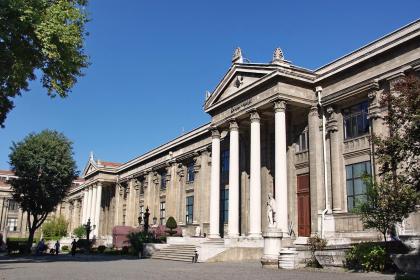
Buildings and Meanings — Interpreting Cultural Expression in Architecture
Buildings and Meanings — Interpreting Cultural Expression in Architecture
Distinguished Professor Zeynep Çelik is an internationally honored interpreter — of buildings. Çelik, who has a joint appointment in NJIT’s New Jersey School of Architecture and the Department of History, is an architectural historian whose career has been dedicated to interpreting the meanings buildings communicate about the cultures that create them.