All
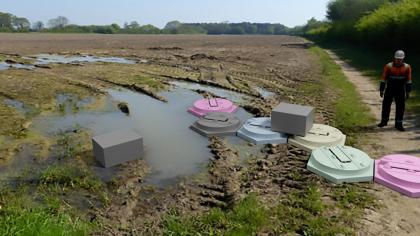
NJIT, with $5M from the NSF, Will Develop Robotic System to Speed Disaster Recovery
New Jersey Institute of Technology (NJIT) has been awarded a cooperative agreement worth $5 million from the U.S. National Science Foundation to develop a self-assembling robotic conveyor system to improve the rebuilding of infrastructure, particularly after disasters.

From Argentina to NJIT: Fulbright Scholar Tackles Forensic Cases of the Unidentified
There are currently over 13,000 unsolved forensic cases aiming to identify unknown human remains in the U.S. alone (NamUs, 2025), but NJIT graduate researcher Maria Castagnola is helping pioneer new DNA-based forensic methods that may one day lead to breakthroughs.
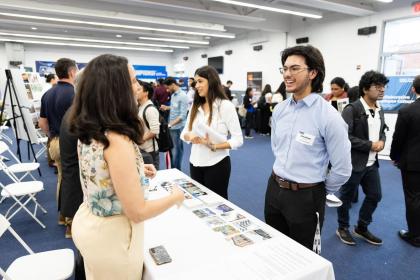
NJIT's Fall Career Fair Connects Thousands of Students with Employers
More than 3,300 students and alumni filled the Joel & Diane Bloom Wellness and Events Center and Naimoli Tennis Center on Sept. 17 for NJIT’s Fall 2025 Career Fair, one of the largest STEM-focused career fairs in the region. Nearly 240 organizations — spanning engineering, computing, architecture, life sciences, management and public service — were on hand to recruit for internships, co-ops, and entry-level roles.
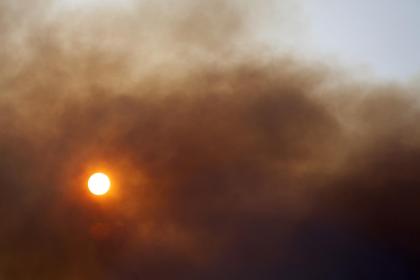
Soot's Climate-Altering Properties Change Within Hours of Entering Atmosphere
Billions upon billions of soot particles enter Earth’s atmosphere each second, totaling about 5.8 million metric tons a year — posing a climate-warming impact previously estimated at almost one-third that of carbon dioxide.
Now, researchers say the climate-altering properties of these particles can change within just hours of becoming airborne, rather than days as previously assumed.
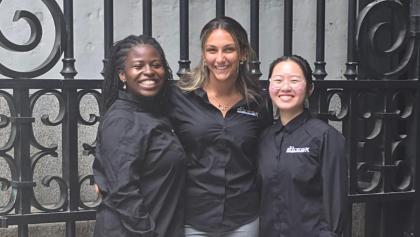
Forensics Team from NJIT Uses Cellphone Location Data to Help Free Wrongly Accused
For more than a year, Ray Wooden sat in a Pennsylvania jail for a crime he didn’t commit. Now, he’s free after two recent graduates and a current student of NJIT’s forensic science program uncovered key digital evidence that helped clear his name.
Wooden’s ordeal began in January 2024, after he tipped off police about a woman involved in a local home invasion, which led to the arrest of the woman and her boyfriend, who was found illegally carrying a firearm but later released on bail.

NJIT Celebrates Graduates' Impact and Excellence with Alumni Achievement Awards
A cornerstone of NJIT’s annual Homecoming Weekend, the Alumni Achievement Awards recognize alumni whose professional and personal achievements stand as a testament to the values instilled at the university. These awards honor individuals for their exceptional accomplishments in fields ranging from technology and finance to community service and entrepreneurship — contributions that bring distinction to NJIT while advancing society in meaningful ways.
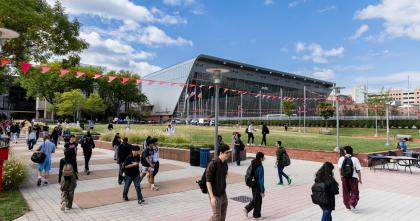
NJIT: Premier Polytechnic and Princeton Review Best College Since 1992
The Princeton Review continues to recognize New Jersey Institute of Technology as one of the best universities in the U.S.
NJIT is featured in this year’s edition of the educational services company’s guide, The Best 391 Colleges. Just 15% of all four-year colleges and universities made the guide, which NJIT has been in since its inception in 1992. The selections are listed alphabetically.
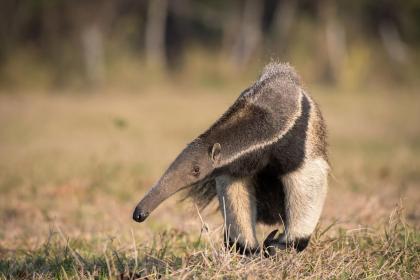
Mammals Evolved into Ant Eaters 12 Times Since Dinosaur Age, Study Finds
A first-of-its-kind study traces the rise of ant- and termite-eaters, reveal
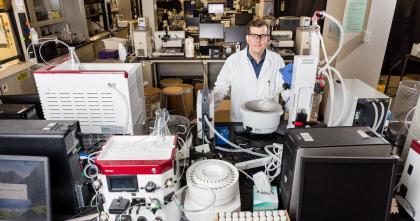
NJIT Chemist Leads Effort to Create the Circular Plastic Economy of the Future
Less than 13% of our plastic waste is truly recycled today, with most consumer plastics either downcycled into lower-quality products or joining the billions of tons discarded in landfills and oceans each year. But what if our plastics could be endlessly recycled, like aluminum?
As Director of NJIT’s Polymer Laboratory for the Advancement of Sustainable Technology and Innovative Chemical Synthesis (PLASTICS), Trevor Del Castillo aims to do just that.
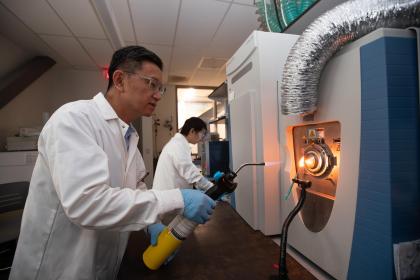
NJIT Researchers Develop Rapid Method to Detect Micro- and Nanoplastics in Seconds
Microplastics and nanoplastics — tiny fragments shed from everyday plastic products — are increasingly found in our food, water, soil and even inside the human body. Their accumulation has been linked to fertility issues, metabolic disorders and other potential health risks in animal models. Yet detecting these pollutants has remained a time-consuming challenge.