Department physics
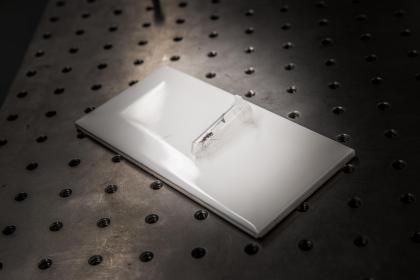
Researchers Shine New Light on Disease-Spreading Mosquitoes
When the West Nile virus (WNV) was initially isolated in two patients at a Queens, N.Y., hospital in the summer of 1999, it would have been hard to anticipate how quickly one common species of house mosquito, Culex pipiens, would help begin to spread the virus throughout the western hemisphere.
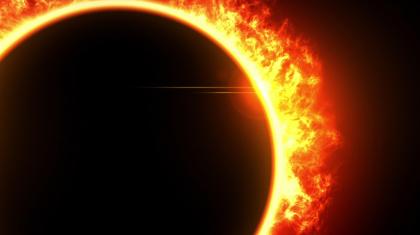
NJIT Launches A Potent Research Hub: The Institute for Space Weather Sciences
Both on land and in space, Earth’s technology-centered civilization is increasingly vulnerable to the powerful bursts of electromagnetic radiation, energetic charged particles and magnetized plasma known as space weather. As the complexity of engineered systems increases, as new technologies are invented and deployed, and as humans venture ever further beyond Earth’s surface, both human-built systems and humans themselves become more susceptible to the effects of the planet’s space environment.
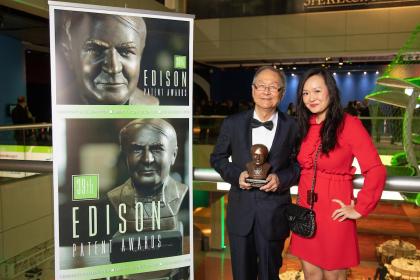
Physicist Ken Chin Wins an Edison Patent Award for Next-Generation Solar Cell Technology
Physicist Ken Chin, a scientist, author and inventor, received a Thomas Alva Edison Patent Award last night from the Research & Development Council of New Jersey for his work on a promising new method for advancing sustainable energy production: next-generation solar cells.
Chin focuses on improving the performance and efficiency of thin-film solar cells based on cadmium telluride (CdTe), which are potentially a lower-cost alternative to silicon because they require fewer natural resources to produce electricity and take up much less space on buildings.
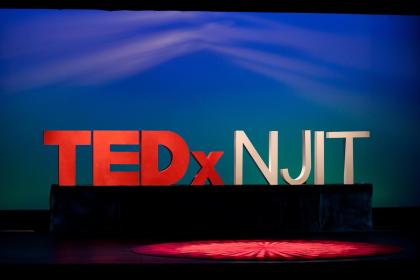
TEDxNJIT Event on November 8
New Jersey Institute of Technology (NJIT) will host a TEDxNJIT event Nov. 8, 2018 in the Jim Wise Theatre on the NJIT campus and via an accompanying live simulcast available to viewers worldwide. The independently organized event, licensed by TED, is themed “ReFraming” and will feature leaders from business, academia and the arts addressing a range of topics.
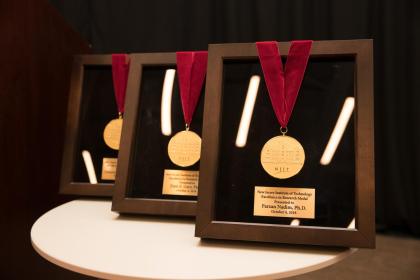
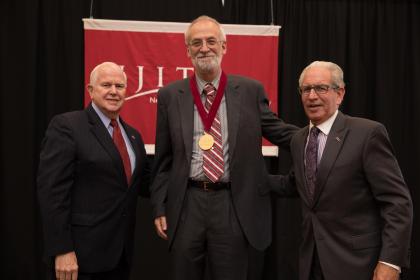
A Neurobiologist, a Solar Physicist and a Chemical Engineer Are Awarded for Research Excellence
Faced with a formidable list of nominees for the annual Excellence in Research Prize and Medal, the Board of Overseers opted this year for its own brand of novelty and innovation: the prize committee picked three. The sector-spanning winners, all at the forefront of their fields, included a solar physicist, a chemical engineer and a neurobiologist.
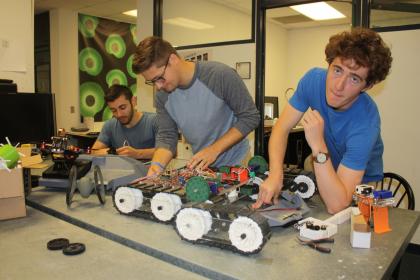
Research Lives! Undergraduates Take on Neurotoxins, Cave Disasters and Other Challenges
A robotic fleet built to penetrate dark and narrow cave passages, cellular studies into alcohol’s role in hastening neurodegeneration in people with HIV, plants that absorb pernicious pollutants from the air and new methods for eliminating noise from data searches are a few of the research projects that drew students back to campus laboratories this summer.
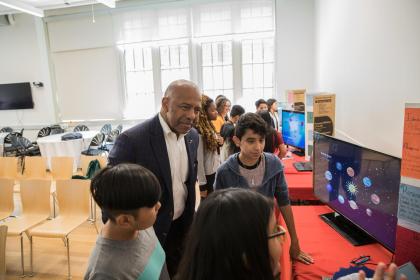
60+ Educators, 24 Campers and 1 Astronaut: A Special NJIT Pre-College Day
July 19 was an especially busy day for NJIT’s Center for Pre-College Programs (CPCP). Not only was CPCP overseeing its various summer offerings taking place across campus, it was also welcoming educators in science, technology, engineering and mathematics (STEM) to a special forum that intertwined a bit with students attending the annual Bernard Harris Summer STEM Camp (BHSSC). Before the forum’s keynote speaker and camp namesake Dr.
NJIT-Led Research Team Records Blazing-Fast Changes of Metal Nanofilms
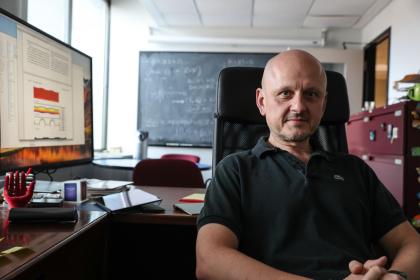
Traditionally, many engineers and developers of solar cell technology have turned to crystalline silicon — a tried and tested material absorber capable of efficiently converting solar radiation to electricity at just four times the thickness of a strand of hair.
At up to a 100th the thickness of a hair strand, nano-thin metal films offer an even more cost-effective and flexible material alternative, holding promise in the future development of everything from solar power to sensor technology.
New Instruments and Funding Expand Views of the Sun at Big Bear
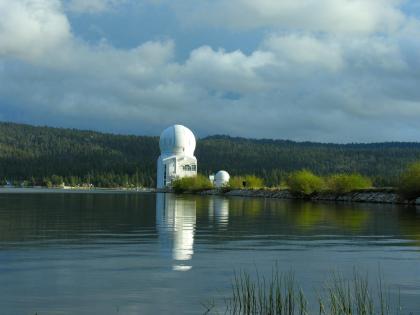
A solar telescope that captures images of the entire disk of the Sun, monitoring eruptions taking place simultaneously in different magnetic fields in both the photosphere and chromosphere, is now installed beside the Goode Solar Telescope (GST) at NJIT’s California-based Big Bear Solar Observatory (BBSO).