All
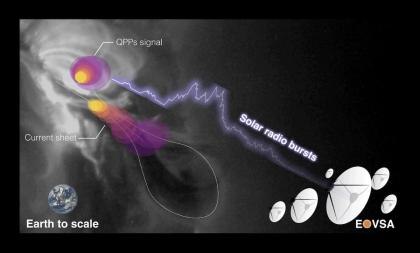
Researchers Discover Mysterious Source of 'Heartbeat-like' Radio Bursts in a Solar Flare
A solar radio burst with a signal pattern, akin to that of a heartbeat, has been pinpointed in the Sun’s atmosphere, according to a new study.
In findings published in the journal Nature Communications, an international team of researchers has reported uncovering the source location of a radio signal coming from within a C-class solar flare more than 5,000 kilometers above the Sun’s surface.
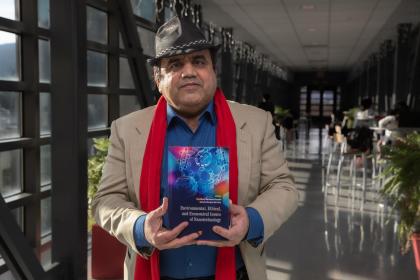
Book from NJIT Professor Explores the Pros and Cons of Nanotechnology
The latest book from NJIT’s Chaudhery Mustansar Hussain captures the dichotomy of nanotechnology: it facilitates everything from the delivery of medicine and sunblock to the development of smart phones and filtration of wastewater but also produces tiny particles that are invisible to the eye and therefore can easily be absorbed by soil or humans.
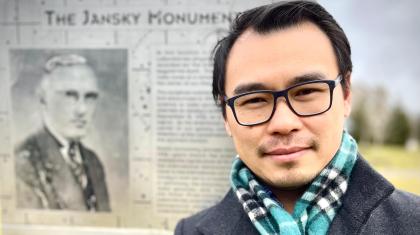
NJIT Physics Professor Wins 2023 Karen Harvey Prize for Solar Physics Research
Bin Chen, associate professor of physics and researcher at NJIT’s Center for Solar-Terrestrial Research (CSTR), has been awarded the 2023 Karen Harvey Prize from the Solar Physics Division of the American Astronomical Society (AAS) for “significantly advancing” our understanding of the fundamental physics driving the largest explosions in our solar system — solar flares.

From Jaws to Finding Nemo, NJIT Researcher Separates Fact from Fiction in Shark Cinema
Just how realistic are the nail-biting shark attack scenes we see portrayed on the big screen?
Recently, NJIT Ph.D. student and shark researcher Amani Webber-Schultz sat down with Business Insider to take a deep dive into 10 memorable shark attack scenes from TV and Hollywood, lending some expert commentary and ranking how each stacks up to actual science.
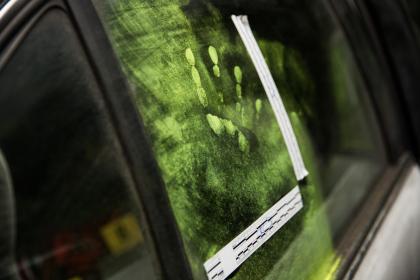
Science in the Pursuit of Justice: Center for Pre-College Programs Helps Generate STEM Interest
At NJIT’s annual STEM Leadership Forum, teachers, administrators and curriculum builders for elementary thru high school students attended to find out more about why forensic science has inspired so many students to pursue STEM degrees, and how they can incorporate it into their teachings.
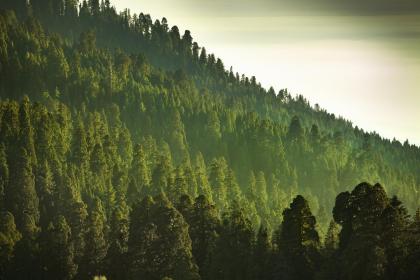
Forest Resilience Linked with Higher Mortality Risk in Western U.S., Study Finds
A forest’s resilience, or ability to absorb environmental disturbances, has long been thought to be a boost for its odds of survival against the looming threat of climate change.
But a new study suggests that for some Western U.S. forests, it’s quite the opposite.
In the journal Global Change Biology, researchers have published one of the first large-scale studies of U.S. forest land exploring the link between forest resilience and mortality.
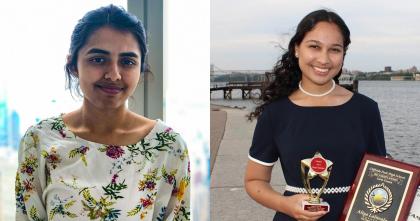
Two NJIT Students Are Among this Year's 128 Governor's STEM Scholars
NJIT students Aliya Laliwala and Mrunmayi Joshi have been selected to be part of this year’s Governor’s STEM Scholars class, which includes 128 scholars from 20 New Jersey counties — the program’s largest cohort ever.
The Governor’s STEM Scholars program was created to engage the next generation of research and innovation leaders in the state’s vast STEM economy early. Sixty-four percent of the class identify as female and 83% as students of color. When they graduate in May 2023, they will join an alumni cohort of over 700 Scholars.
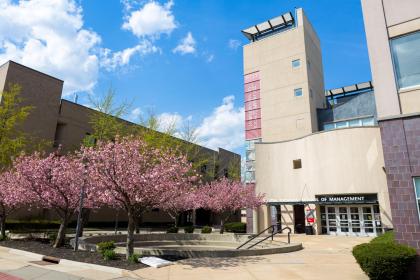
NJIT Ranked Best Public School in Northeast for Undergraduate Entrepreneurship
New Jersey Institute of Technology is the top public university in the Northeast for undergraduate entrepreneurship studies, according to The Princeton Review and Entrepreneur Magazine.
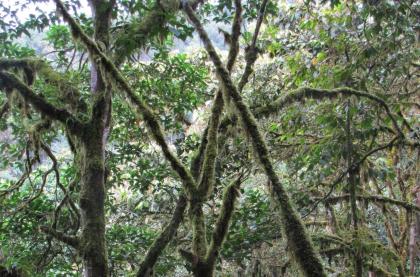
NJIT Biologist Among Semifinalists in $10M XPRIZE Rainforest Competition
A U.S.-based team of scientists joined by NJIT biologist Eric Fortune is inching closer to the $10 million XPRIZE Rainforest Competition’s grand prize for improving our understanding of rainforest ecosystems, having recently been named semifinalists.
NJIT Researchers Awarded $620k Grant to Study Climate Change Impact of Soot
NJIT researchers have received a $620,000 grant from the National Science Foundation to advance our understanding of the way in which soot particles from combustion of fossil fuels are driving climate change in the Earth’s atmosphere.
Associate Professor of Chemistry Alexei Khalizov and Associate Professor of Chemical and Materials Engineering Gennady Gor will lead the project, “A Multiscale Model for Restructuring of Atmospheric Soot Particles”.