Department physics

NJIT Undergrads Explore Space Weather During 2024 Total Eclipse
While thousands traveled westward and northward from New Jersey through bumper-to-bumper traffic to reach the totality of the solar eclipse on April 8, NJIT undergraduate physics students Anneliese Schmidt ’24 and Joseph Visone ’25 were finally able to relax. For them, the race to the eclipse was over, having finally finished deploying instrumentation in upstate New York to explore the question — How does the eclipse change the space environment near Earth?

NJIT Aims to Be an Innovation Nexus Under Its New Strategic Plan
New Jersey Institute of Technology aims to be a nexus of innovation that embraces new tech, commercializes groundbreaking research, leverages its diversity and tackles global environmental and socioeconomic challenges under a new strategic plan that extends through 2030.
The plan, NJIT Makes An Innovation Nexus, identifies six priorities, spells out the university’s mission to be a leader in research, innovation and entrepreneurship, and reaffirms its core values, including collaboration, social responsibility, diversity and sustainability.
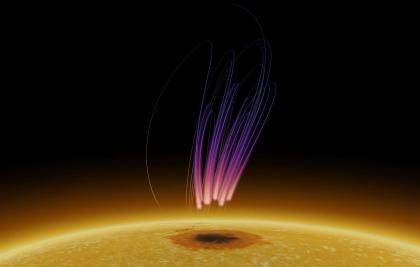
NJIT Scientists Uncover Aurora-Like Radio Emission Above a Sunspot
In a study published in Nature Astronomy, astronomers from New Jersey Institute of Technology’s Center for Solar-Terrestrial Research (NJIT-CSTR) have detailed radio observations of an extraordinary aurora-like display — occurring 40,000 km above a relatively dark and cold patch on the Sun, known as a sunspot.
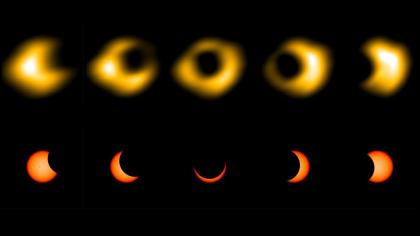
Researchers Capture First Images of a Radio 'Ring of Fire' Solar Eclipse
Researchers at New Jersey Institute of Technology’s Center for Solar-Terrestrial Research (NJIT-CSTR) have captured the Oct. 14 solar eclipse in a way never seen before — recording the first radio images of an annular eclipse’s famous “ring of fire” effect.
The eclipse was partially visible to much of the continental U.S. for several hours that Saturday, though the full “ring of fire” effect was only visible for less than five minutes, and only for those within its 125-mile-wide path of annularity.
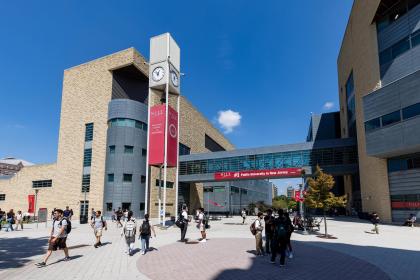
NJIT Rises to No. 86 Among National Universities in U.S. News Rankings
New Jersey Institute of Technology’s rise in national rankings continues, with U.S. News & World Report placing NJIT No. 86 among national universities for 2024 — a jump of 11 rungs from 2023.
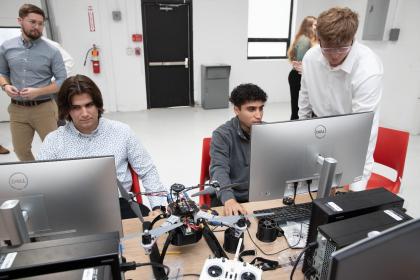
Army Supports Summer Interns, Designing New Robots at NJIT Research Center
A little-known R&D facility, operated by NJIT’s New Jersey Innovation Institute with the U.S. Army Picatinny Arsenal for its primary client, is beginning to thrive one year after moving off-campus.
The facility is called COMET — Collaborative Operationalized Manufacturing Engineering and Training — located about 30 miles northwest of NJIT’s Newark campus, close to Picatinny, which is the Army headquarters for conventional weapons development.

NJIT Showcases the Most Impactful Research and Innovation from Students
Stuti Mohan, a senior biomedical engineering student, was the winner of the top Dr. James F. Stevenson Innovation Award at the 2023 Undergraduate Summer Research and Innovation (URI) Symposium at NJIT.
Her project sought to identify a non-invasive yet precise method to diagnose the tapping foot of a subject. Mohan’s research area in the Sensorimotor Quantification and Rehabilitation Lab (SQRL) is the ongoing pursuit of improving concussion management.
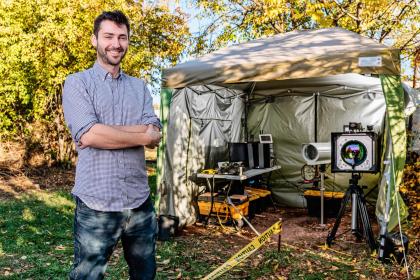
Tracking a Deadly Rise, Historic Fall of Insect Populations
An estimated 10 quintillion insects are alive on the planet, a staggering number that is at the center of a data crisis for entomologists. Researchers are struggling to understand historic shifts taking place among insect populations amid climate change and other environmental threats, from deforestation to pesticide use.
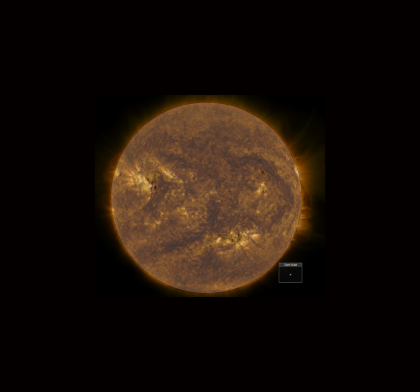
Sun's Coldest Region Stores Secret to Heating Million-Degree Corona, Study Finds
With data from Big Bear Solar Observatory’s Goode Solar Telescope, researchers discover intense wave energy in the coldest region on the Sun, the sunspot umbra, which is driving puzzling temperatures in the star’s upper atmosphere.
Nearly five thousand kilometers above the Sun’s surface lies a century-old question for solar physicists — how are temperatures in the star’s upper atmosphere, or corona, hundreds of times hotter than temperatures at the Sun’s visible surface?
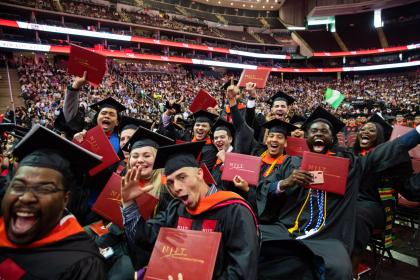
PSE&G President Tells NJIT Class of 2023 to 'Move Forward with Purpose'
The head of New Jersey’s largest utility urged the Class of 2023 at New Jersey Institute of Technology to embrace change and remain positive in the face of challenges ranging from climate change and social inequity to artificial intelligence.