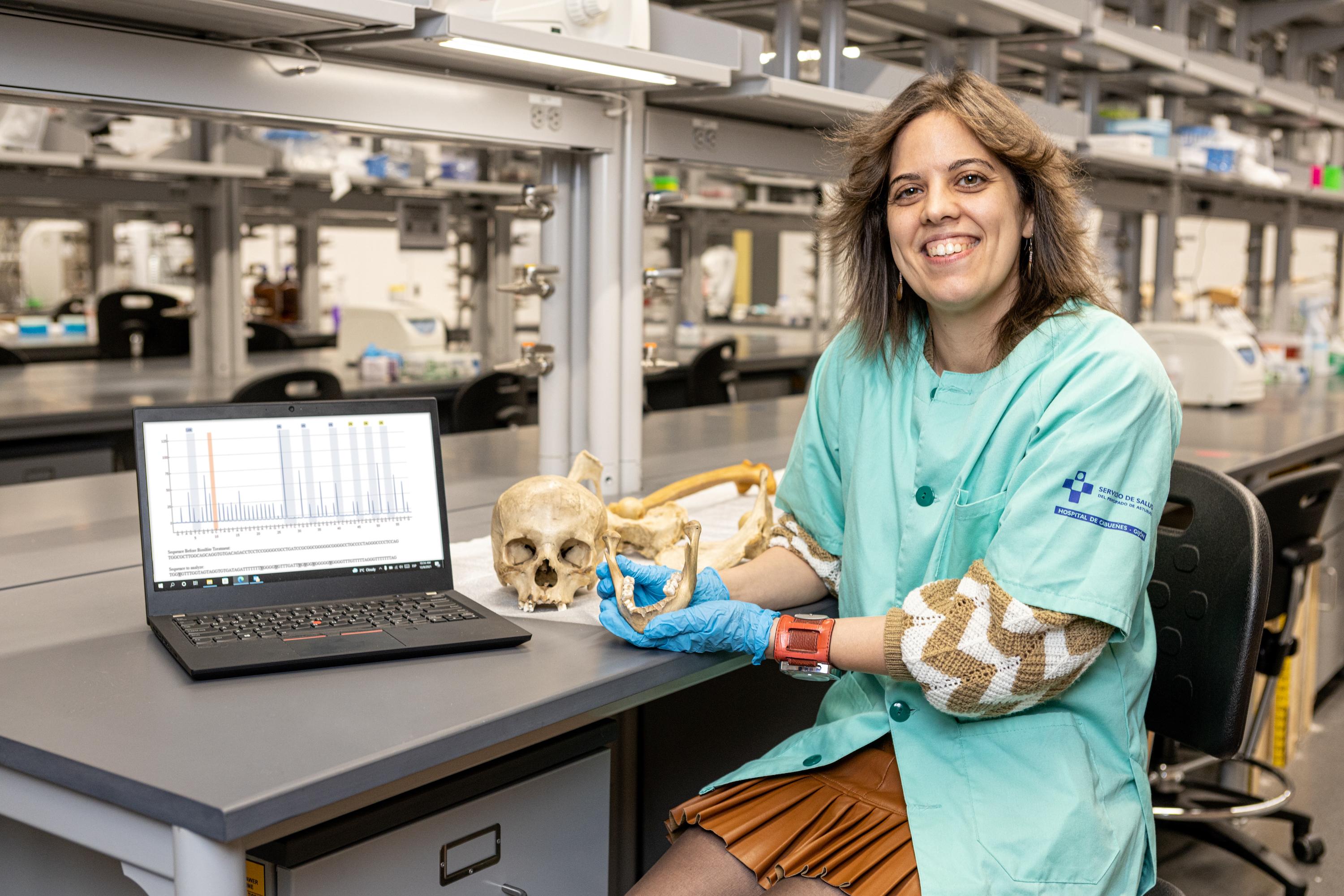
New Jersey Institute of Technology forensic scientist Sara C. Zapico has been named the 2026 Senator John Cornyn III National Higher Education Forensic Science Educator of the Year by the Consortium of Forensic Science Organizations, recognizing her contributions to forensic science education.
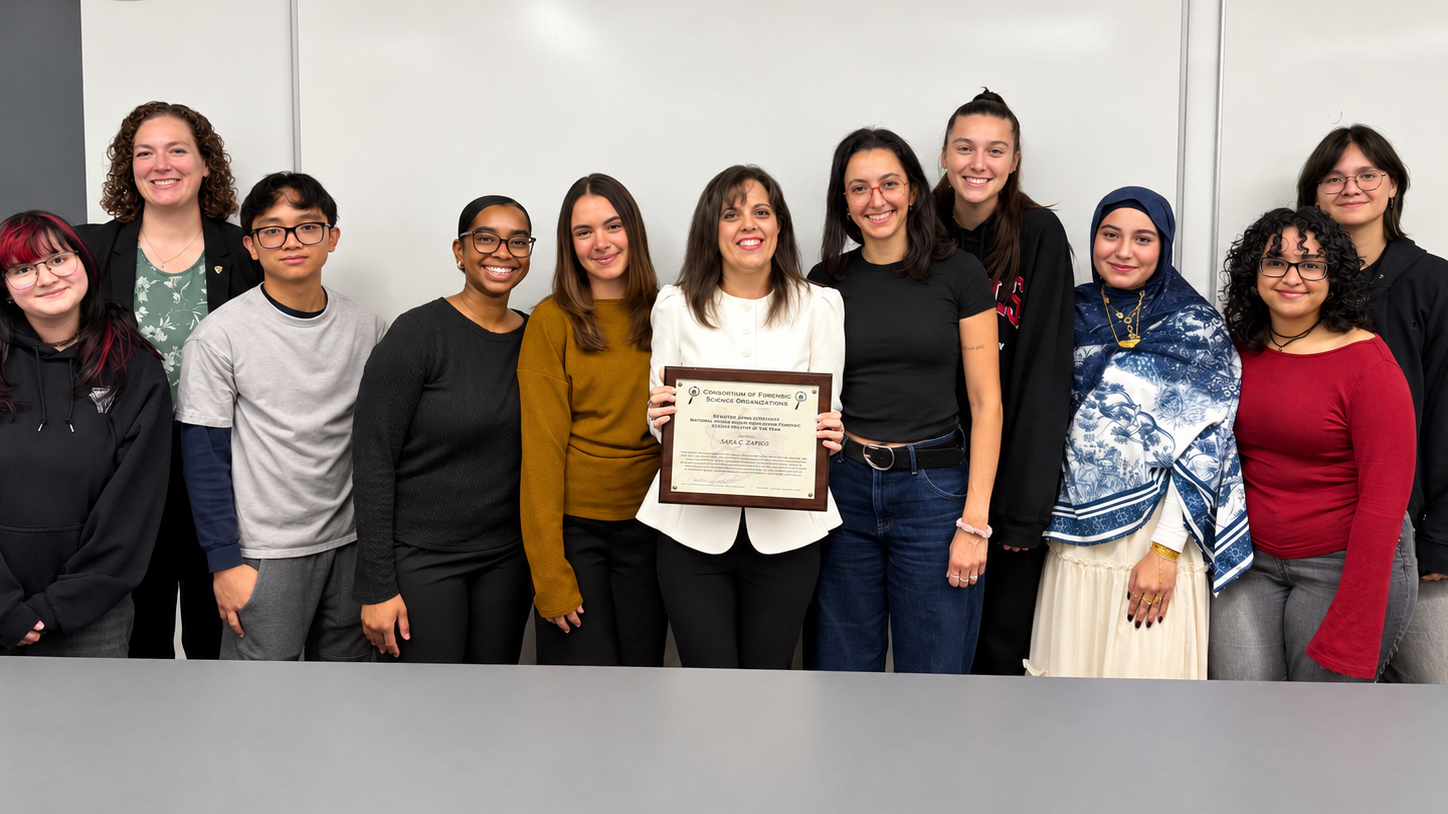
Surrounded by her students and colleagues from NJIT’s Department of Chemistry and Environmental Science, Zapico received the honor Friday, Sept. 25, during a ceremony in Tiernan Hall — home to the university’s forensic science laboratories.
The award was presented as part of National Forensic Science Week by Britton Morin, director of the Union County Prosecutor’s Office Forensic Science Laboratory.
Zapico is the first recipient of CFSO’s higher education honor, a new category introduced this year, according to CFSO.
"I am very proud of what you have accomplished, what you are doing and what you will accomplish," Zapico told her students moments after accepting the award. "You make me a better teacher every day. I learn from you — you're supposed to be learning from me, but I learn from you, too."
The honor recognizes educators for their “dedication, innovation and leadership in forensic science education.”
“At the heart of Dr. Zapico’s teaching philosophy is a simple but powerful belief: Students learn best when they are actively engaged with science and understand its relevance to real-world forensic investigations,” Morin said on behalf of CFSO, which represents more than 21,000 forensic science professionals nationwide.
“Her students do not simply learn forensic science; they practice it,” Morin continued. “They analyze evidence, test hypotheses, interpret results and communicate conclusions, gaining the skills and confidence needed to succeed as future forensic professionals. Perhaps the greatest measure of an educator's success is the inspiration they leave with their students."
Zapico said her own path into forensic science shaped how she mentors students today — and the opportunities she works to create for them.
Growing up in Spain, inspired by Agatha Christie and Sherlock Holmes stories, Zapico knew she wanted to enter forensic science, but there were few opportunities to study or train in the field in her home country.
She studied biology and biochemistry, completed her doctoral studies in cancer research and later pursued forensic science training before finding her first opportunity in forensic anthropology at the Smithsonian Institution.
"Becoming a forensic scientist was a difficult path. I encourage my students to take every opportunity they have here," Zapico said. "This award isn't only about what I've accomplished. It's also about what I can pass on to them."
Since joining NJIT in 2021, Zapico has led the ForenBioS Laboratory, where she involves students in research on emerging forensic methods, including new approaches to estimating age at death and helping identify unknown human remains.
Her work has also extended into forensic epigenetics, including the use of DNA methylation to estimate age, along with recent studies examining the molecular effects of smoking, vaping and exercise among young adults.
Among the students on hand to support Zapico was forensic science undergrad Marlene Mohammed '27, who first met her at NJIT's Accepted Students Day while still a student at Clifton High School.
Mohammed has worked on three research projects in Zapico’s lab, including one using advanced spectroscopy techniques to study skeletal remains and help improve estimates of postmortem interval — how long a person has been dead.
The pair will present the research at the Eastern Analytical Symposium in November.
“I definitely wouldn’t have realized my passion for anthropology or serology without her,” Mohammed said. “She’s a multidisciplinary researcher, so I also saw the benefits of working with different sciences and collaborating with many scientists.”
Zapico's mentorship has helped other students take their forensic work in different directions — from alumni now working in the Bronx District Attorney’s Office to Ph.D. student and Fulbright scholar Maria Castagnola, who also attended Zapico’s ceremony and is using DNA-based methods to help identify unknown human remains.
“She’s absolutely integral for our program,” said Forensic Science Program Director David Fisher, who cited Zapico’s work with undergraduate capstone and Ph.D. students, as well as her involvement in NJIT’s Forensic Science Initiative, which introduces local high school students to forensic science through hands-on coursework and laboratory experiences.
The educator award follows another recent recognition for Zapico, who in June was inducted as a Senior Member of the National Academy of Inventors for her contributions to forensic science research and innovation.
Before joining NJIT, Zapico directed a forensic science master’s program at Florida International University, conducted postdoctoral research at the Smithsonian Institution — where she is now a research associate — and worked with the forensic unit of the International Committee of the Red Cross in Geneva.
For now, after a career that has taken her through the world of forensic science, Zapico is looking ahead to what comes next for her students.
“To see how they advance in their careers is special — to see them growing as scientists and as forensic scientists — I think it’s the most rewarding thing for me,” she said.
