Friday, March 29th, 2019
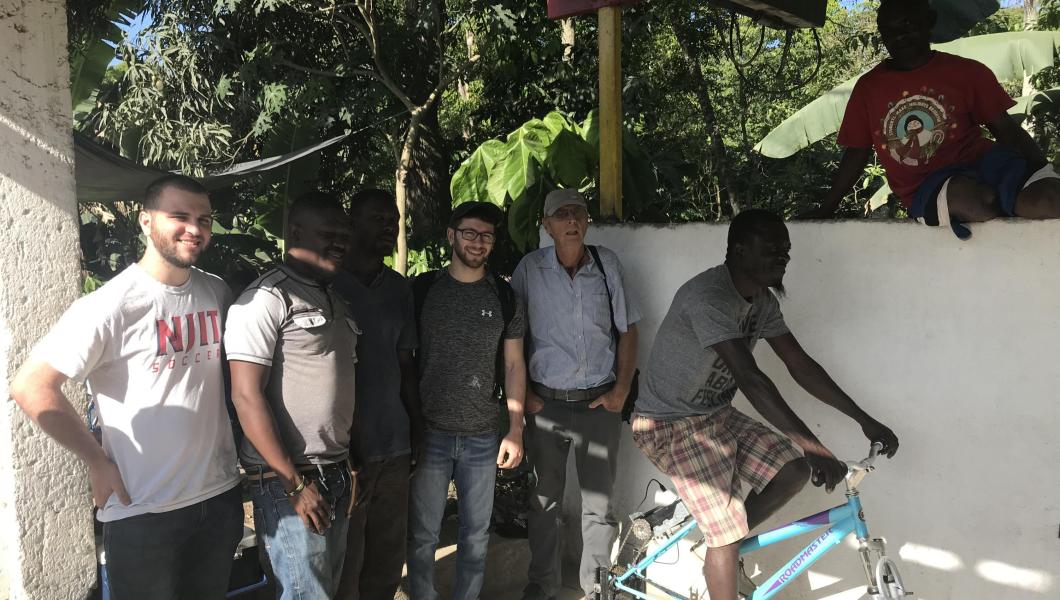
The technology that engineering students Matt Reda and Rudolph Brazdovic installed last year in the remote, hilly community of Milot, Haiti, was simple enough: a modified bicycle with a back wheel that turns a generator, producing 20 watts of electricity. What was less straightforward, they quickly learned, was how to manage it.
Unlike devices for individual dwellings, such as water filters, the NJIT Light Cycle is a public service: a cellphone charging station for the approximately 50 people living within a mile of a regional gathering place.