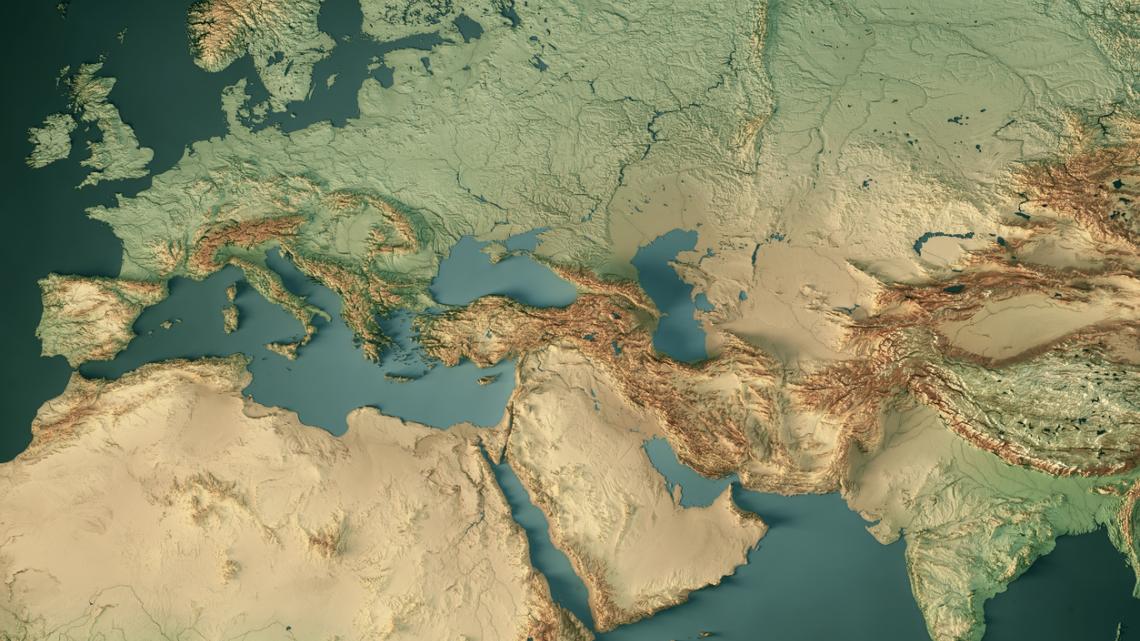
This spring, NJIT students will have the opportunity to gain a richer picture of the complex history and politics of the Middle East that continue to shape today’s headlines, drive foreign policy debates and affect global stability.
A new course opening next semester, “Middle East Conflicts: State Building, Regional Tensions, Peace Processes,” will be taught by Doron Shultziner, an associate professor at Jerusalem Multidisciplinary College and visiting scholar in NJIT’s Department of Humanities and Social Sciences.
Shultziner — who teaches in comparative politics, political development and democratization — says the class is designed to broaden how students think about the region and its challenges, spanning events from WWI to the modern day.
“When we think about the Middle East, we immediately think about the Israeli-Palestinian conflict, but there are many other conflicts — some almost unknown to most people,” Shultziner says. “Many courses on the Middle East are taught by historians. Here, we’re combining a political science lens with historical perspectives.”
According to Shultziner, a recurring focus will be on why building stable states in the Middle East has proven so difficult, and how those struggles continue to drive turmoil today.
“Many states had their borders drawn by outside powers after World War I, often with little connection to local realities. That’s still shaping the region’s politics and conflicts today,” Shultziner explains.
The course not only touches on familiar conflicts in mainstream media including the Israeli-Arab conflict but will more deeply focus on lesser-known disputes — including the Cyprus conflict and the Western Sahara conflict which intensified in the 1970s — all within a broader historical and geopolitical context.
“We’ll read primary sources, debate interpretations, and connect key turning points to the present. By exploring a range of conflicts, we can begin to see patterns in how state-building challenges, internal struggles and foreign intervention come together,” Shultziner says. “It’s not a passive lecture course. The goal is to help students become the responsible leaders in the room — people who can engage in thoughtful, fact-based conversations about a region that is often misunderstood.”
Another part of the curriculum looks at the influence of foreign powers — from European intervention after World War I to more recent American involvement — and how these outside actors continue to shape borders, alliances and rivalries.
Major events such as the 1967 Six-Day War, Shultziner says, will be used as case studies to show how brief moments can produce lasting geopolitical shifts.
“To get why today’s issues are so complicated, you have to study those turning points and understand how the past continues to shape the present,” said Shultziner, who emphasizes the new course’s relevance for students of any major.
“Understanding the connections between natural resources, geopolitics and global economics in the Middle East is critical for engineers, policymakers, and business leaders alike,” he says. “If you want to understand what’s really at stake in these conflicts, and what shapes American foreign policy, this class is for you.”
For more information, students can contact the Department of Humanities and Social Sciences or consult the spring course schedule.
