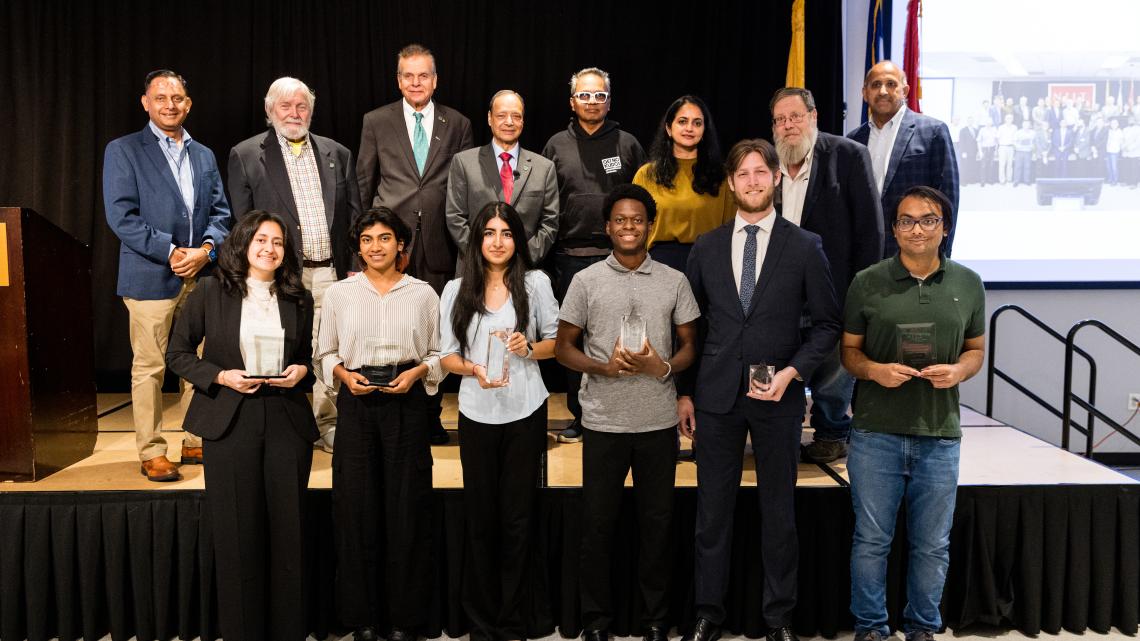
NJIT undergraduate researchers had just three minutes each to explain 10 weeks of work.
In rapid succession, students took the stage in the Campus Center Ballroom to describe projects spanning bioscience, bioengineering, materials, sustainability, artificial intelligence, robotics and data science. A panel of judges listened as each presenter identified a problem, summarized an approach and explained why the result mattered.
“Research that stays in the lab is of no use for humanity,” said Atam Dhawan, NJIT’s chief strategic innovation officer, senior vice provost for research and executive director of Undergraduate Research and Innovation. NJIT Educational Opportunity Fund (EOP) students dropped in, too, gaining a firsthand view of the research experiences available to undergraduates and the outcomes those opportunities can produce.
The compressed format brought the practical stakes of the projects into focus. One student examined a wearable, Bluetooth-enabled system for tracking upper-limb movement, with potential applications for stroke rehabilitation. Another studied how nanodroplets could contribute to more precise drug delivery, addressing the long-standing problem of treatments harming healthy cells along with tumors.
Other presentations moved well beyond conventional laboratory questions. One project examined how dental professionals might better recognize facial injury, oral trauma, behavioral changes and repeated patterns that may signal intimate partner violence. Elsewhere, students explored safer drug delivery for spinal cord injuries; environmental contaminants; advanced materials; machine learning; forensic science re-examining cold cases; and community-based issues.
Approximately 160 students participated in the two-day Undergraduate Summer Research and Innovation Symposium, representing NJIT summer research fellowships and related programs from all over, highlighting the “many doors” approach to the research symposium:
| Army Research Office | Center for Integrated Material Science and Engineering of Pharmaceutical Products START REU |
| Heritage Institute of Technology Summer Research Program | Honors Summer Research Institute |
| Improving AANAPI Student Outcomes Through Opportunities and Engagement | Mathematical and Computational Biosciences Collective |
| McNair Scholar Program | NSF Research Experience for Undergraduates Program for Cancer Diagnosis and Therapeutic Intervention |
| NSF Research Experience for Undergraduates Program for Optics and Photonics | NSF Research Experience for Undergraduates Program for Solar, Terrestrial and Space Weather Sciences |
| Provost Undergraduate Research and Innovation Summer Fellowship | Undergraduate Translational Research Internship Program |
Student Innovators Earn Honors
Eesha Oza '28, a biomedical engineering major and Albert Dorman Honors scholar, received the top Dr. James Stevenson Innovation Award for the project "Analyzing Functional Connectivity Alterations in White and Grey Matter in Parkinson's Disease." Oza's research addressed white matter dysfunction in the development of Parkinson's, using data from resting-state functional magnetic resonance imaging (rs-fMRI). White matter in the brain is bundles of nerve fibers insulated with myelin, a fatty protective layer. These structures play an essential role in communication between brain regions, but their role in Parkinson's is understudied.
Oza's preliminary analysis of rs-fMRI data from more than 300 subjects found reduced connectivity in white matter in Parkinson's patients, highlighting that white matter may play a bigger part in disease progression than once thought. Future work that includes assessments of patient motor skills and cognition will help to connect neuroimaging results to symptom severity.
"I've always been an analytical person, someone who likes to solve problems," Oza says. "That was my main goal when embarking on this project a couple of months ago."
Second place went to mechanical engineering major Chadley Gede '27, for "NanoSensor for PPT-Level PFAS Real-Time Detection in Water," which aims to develop a device for detecting PFAS (per- and poly-fluoroalkyl substances, or "forever chemicals") that is smaller, faster, more affordable and more accessible than current technologies.
PFAS in drinking water is a widespread problem, and tracking PFAS levels in communities and industry is expensive and time-consuming. A type of PFAS that is among the most common in the U.S. — perfluorooctanoic acid (PFOA) — can cause cancer in people, and Gede's nanosensor is expected to detect PFOA in water at levels of parts-per-trillion. Further modifications will fine-tune its sensitivity even more, filtering out signals from other substances in water.
Biomedical engineering major and ADHC student Owen Texter '27 earned third place for "RTCH – The Robotic TMS Coil Holder," a robotic arm that can precisely position coils used in noninvasive brain stimulation. This technique targets highly specific brain regions for several hours at a stretch, and Texter's device can maintain the correct position without drifting from the target as human operators might.
Five additional projects received honorable mentions.
The 32 highest-scoring students will receive two certificates and will be formally inducted to the NAI Chapter at NJIT Student Innovator and Inventor Club, and the National Science Foundation's Accelerating Research Translation Integrated Student Ambassador Network (ARTISAN). The ceremony is scheduled to take place in the fall.
While innovation was at the top of the list for judges, they also encouraged students to share their passion and inspiration for their projects, which play an important part in forging connections with potential investors, says judge Brian Kiernan '70, a retired vice president and chief scientist of InterDigital Communications.
Judge Harry Moore, a 45-year veteran of the electromechanical engineering industry and president of Graybeard Solutions LLC, urged presenters to practice clarity and conciseness in their presentations of research and new inventions. He urged them to always remember the three "be's": "Be brief, be brilliant, and be gone."
Keynote Connects Neuroscience Research with Real-World Impact
Paul Sanberg, president and founder of the National Academy of Inventors, used his own career in neuroscience to illustrate how research can move from discovery toward clinical and societal impact. In the 1990s, Sanberg was studying how brain cells die and exploring treatments for brain cell death, when his father suffered a stroke. While his father recovered, Sanberg pivoted his lab research to focus on damage to the brain from strokes, which affect nearly 800,000 people in the U.S. each year. His goal was to find a way to assist stroke patients during rehabilitation, repairing stroke damage and helping patients recover abilities that had been lost or reduced.
Sandberg's prior work with stem cells gave him the idea for developing a method to implant cells in a brain to regrow damaged areas. During the first few days after a stroke, the blood-brain barrier is temporarily disrupted, enabling intravenous medications and treatments to reach the brain. Sandberg realized that doctors could take advantage of this brief window of opportunity to help stroke patients, and in 2000, he filed a patent for the method "Cell Therapy for Chronic Stroke," for administering millions of neuronal cells to brains affected by a stroke.
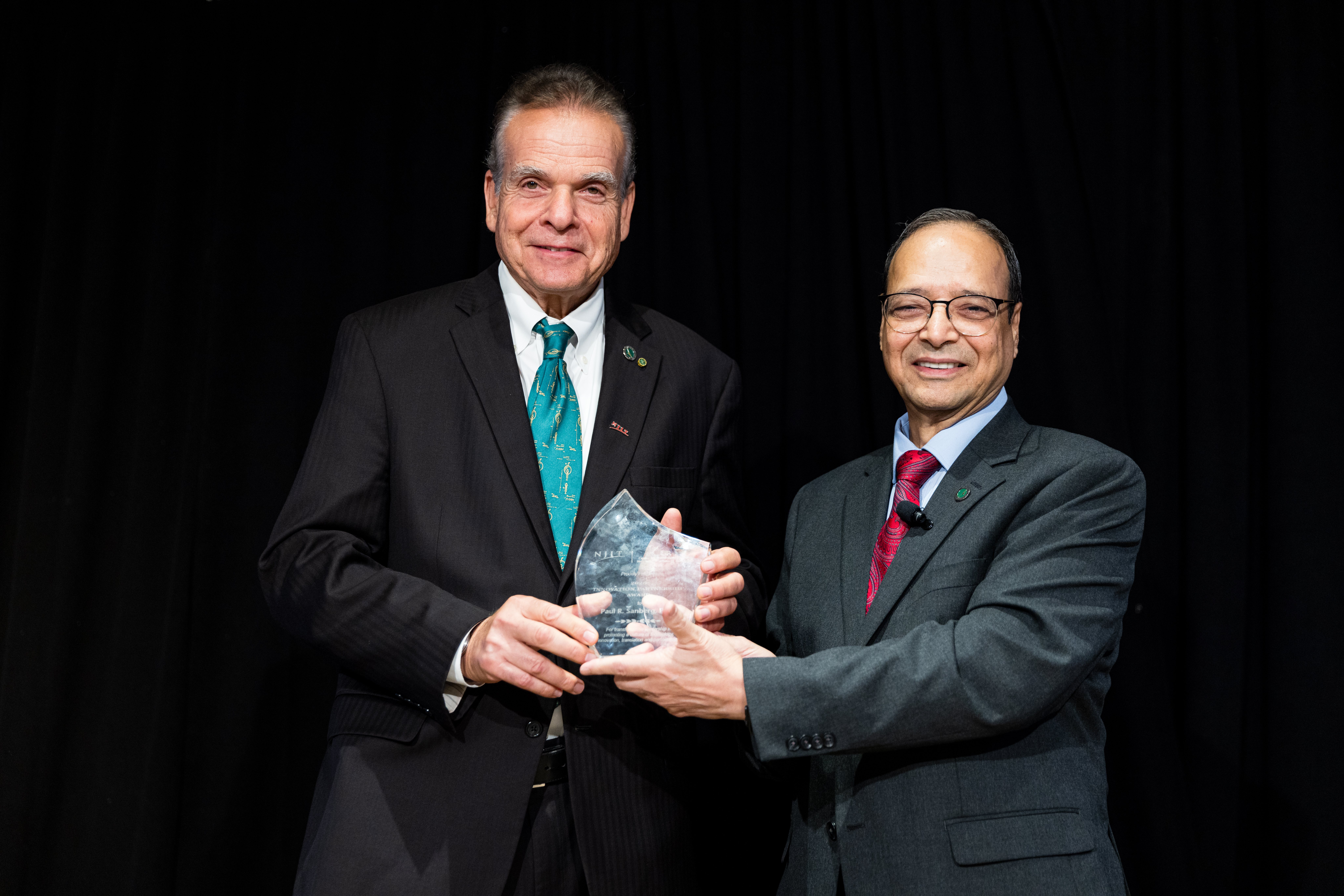
From that experience, Sanberg recognized that protecting innovative ideas with patents and intellectual property paves the way for investors, which helps new inventions reach the public more quickly.
"You've got to protect your invention," Sanberg said in the keynote. "You can do all the studies you want, but it won't get out there if people don't have a chance of protecting it from others, as well as making it into something that can receive funds."
A thriving culture of innovation
Sanberg then turned to the formation and function of the NAI, explaining why students and emerging researchers should encounter translational research, intellectual property and commercialization earlier in their academic careers.
"Under Dr. Dhawan's leadership, NJIT has built an exceptionally engaged NAI Chapter that exemplifies the value of creating meaningful opportunities for inventors, students, researchers, and industry partners to connect, collaborate, and celebrate innovation," says Sanberg.
"The Chapter has become a model for how NAI Member Institutions can leverage their membership to cultivate a thriving culture of innovation that extends well beyond recognition alone. Their commitment to cultivating the next generation of innovators is truly inspiring, and I applaud their dedication to advancing discoveries that create lasting societal and economic impact."
NAI–NJIT Recognizes Faculty and Student Inventors
Sanberg’s message was followed by a local example of that research-to-invention pathway, as the NAI–NJIT Chapter recognized and inducted NJIT faculty and student patent recipients. Founded in 2021, the chapter platforms ingenuity and achievement in NJIT students, faculty and staff. Through the chapter, NJIT innovators and inventors contribute to the development of novel technologies in a range of engineering fields, patenting new inventions and connecting research to practical applications. The ceremony recognized the teams behind the patents and welcomed team members who were newcomers to the NAI–NJIT Chapter.
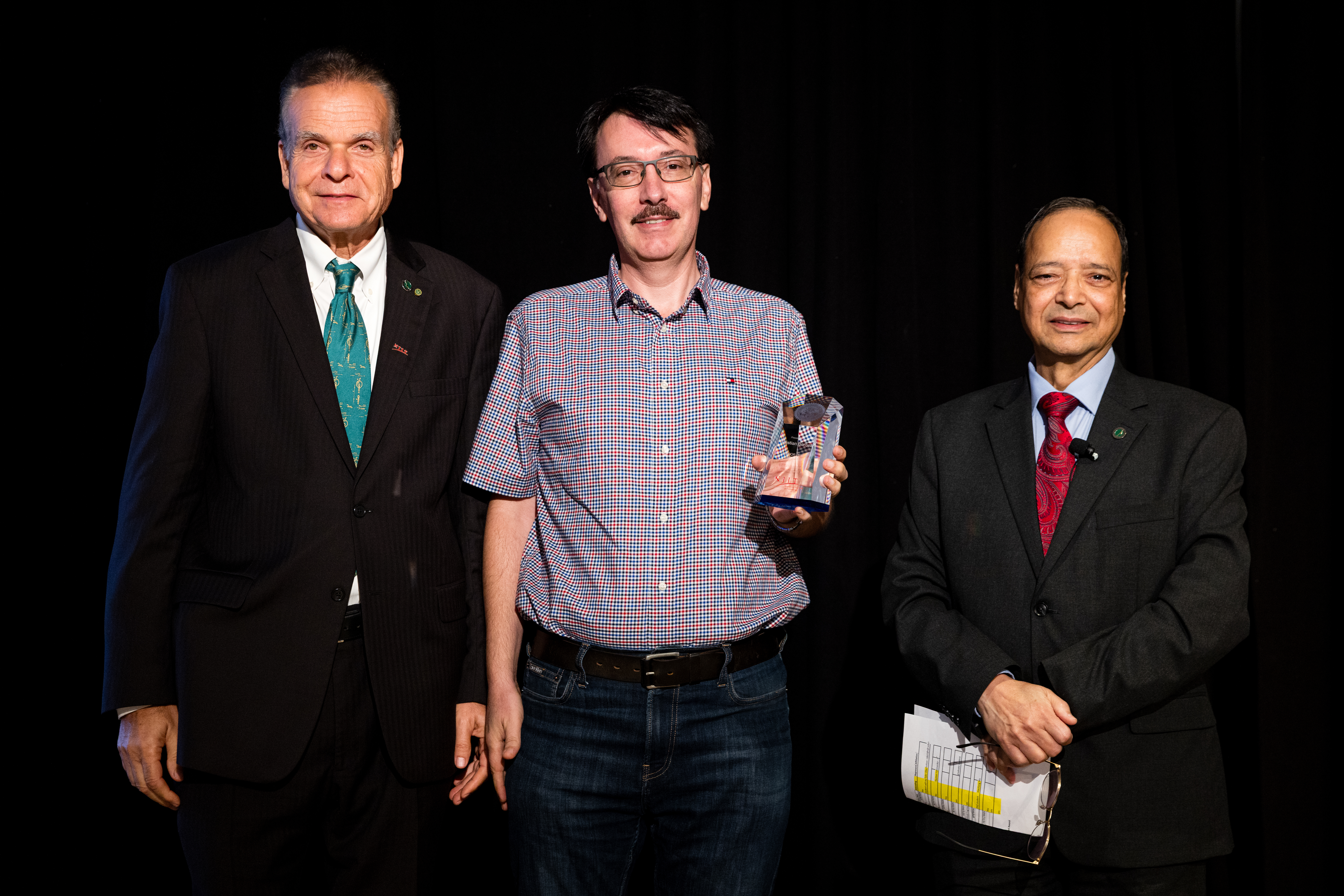
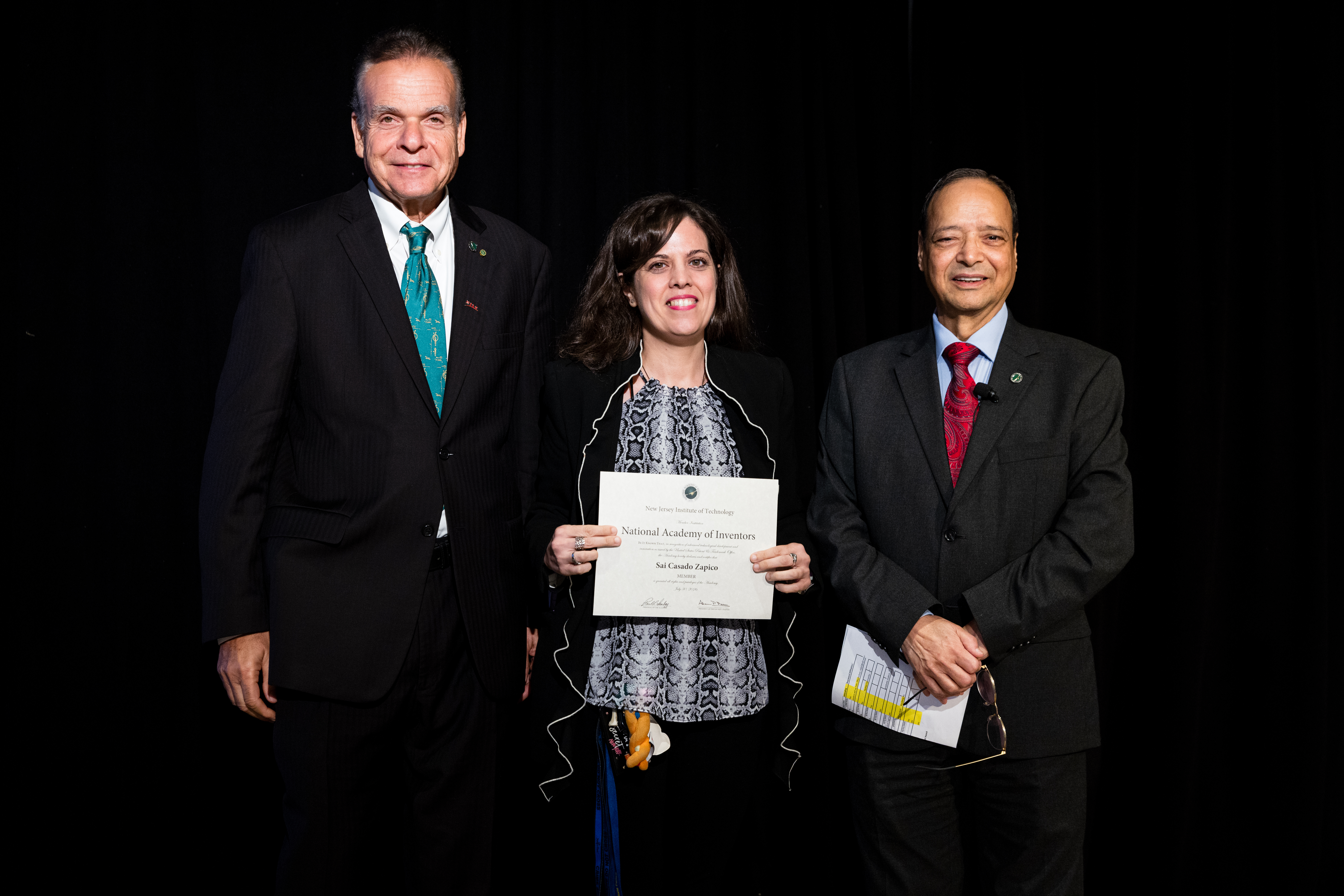
Inductees included Qian Lei '20, a postdoctoral researcher at NJIT, for patented work addressing methods for making three-dimensional crystals that control and direct light, using particles too small to see with the naked eye. Manoop Talasila '15, an NJIT adjunct instructor of computer science, was inducted for patenting techniques for location prediction in indoor spaces, using mobile devices. Cristian Borcea, an NJIT professor in the Department of Computer Science at the Ying Wu College of Computing and already a NAI member, also received recognition for his work on that patent.
| Jitendra Kewalramani*, Jay Meegoda | Ultrasound Device for Destruction of Organic Chemicals |
| Onur Günlü, Joerg Kliewer, Rafael Schaefer, Vladimir Sidorenko | Method and System for Identification via Channels and Computer Program Product |
| Mohammad Mostafa Al Mahfuz*, Shihab Bin Hafiz*, Dong-Kyun Ko | Binary Colloidal Quantum Dot Technology |
| Katherine Coombs*, Jonathan Grasman*, Cassandra Martin*, Jessica Pridmore*, Sydnee Sicherer* | In-Vitro Contractile Force Indicator |
| Paul Chaikin, Andrew Hollingsworth, Boris Khusid, Qian Lei*, William V. Meyer, Mary Murphy | Method and Apparatus for Fabrication of Large Three-Dimensional Single Colloidal Crystals for Bragg Diffraction of Infrared Light |
| Ningyuan Cao*, Shaoze Fan*, Chuang Gan, Xiaoxiao Guo, Jing Li*, Shun Zhang*, Xin Zhang | Algorithmic Circuit Design Automation |
| Cristian Borcea, Wen-Ling Hsu, Xiaopeng Jiang*, Pritam Sen*, Manoop Talasila*, Qiong Wu | Indoor Place Prediction |
*New candidates for induction and patent award
Sydnee Sicherer, a sixth-year Ph.D. student who received a B.S. from NJIT in 2020 and an M.S. in 2021 — both in biomedical engineering — was an award recipient and inductee for a patented device that measures the forces produced by organic tissues as they contract. The recognition, she says, is the culmination of years of research and testing that she pursued with team members at NJIT's Tissue Innervation and Muscle Mimetics Laboratory, to improve the device's performance for supporting implants.
"To see it be celebrated in this way at this point is really satisfying because it took a lot of work to get there — it actually became the basis for my Ph.D.," Sicherer says.
The NJIT chapter promotes translational research, entrepreneurial pathways and recognition for campus inventors. Its activities include student inventor programming, innovation events, connections to NSF I-Corps and seed funding, and support through the Newark Innovation Acceleration Center.
"I couldn't be more proud of these students' performance and how they engage with research and innovation to solve today's most pressing challenges," Dhawan says. "I strongly believe in their talents and commitment to make the world a better place for all of us. They are the future of our society."
