Hillier College of Architecture and Design Explores AI’s Expanding Role at NJIT
At NJIT’s inaugural Artificial Intelligence Exploration Day, the Hillier College of Architecture and Design (HCAD) helped show just how far artificial intelligence is reaching across the university. Through faculty presentations and student-led demonstrations, HCAD’s contributions examined AI from multiple vantage points — as physical infrastructure, as a design tool and as a creative medium. Together, they highlighted how architecture, design and performance are helping shape the broader campus conversation around a technology that is already transforming how people imagine, build and interact with the world around them.
AI’s Built Footprint Comes Into Focus
In “The Data Center Next Door: Land Use and Community in the Landscapes of AI,” dean Gabrielle Esperdy and Cornell associate professor Jesse LeCavalier urged audiences to think past AI’s digital promise and consider the physical systems that sustain it. Their presentation centered on the growing impact of data centers on land use, water consumption, energy demand and local communities, arguing that artificial intelligence is not only reshaping technology, but also the built environment itself. Esperdy emphasized that those changes are already unfolding close to home. “When we’re really thinking about land use and when we’re really thinking about challenges ahead, we should be looking in our own backyards, literally to the data center next door,” she said.
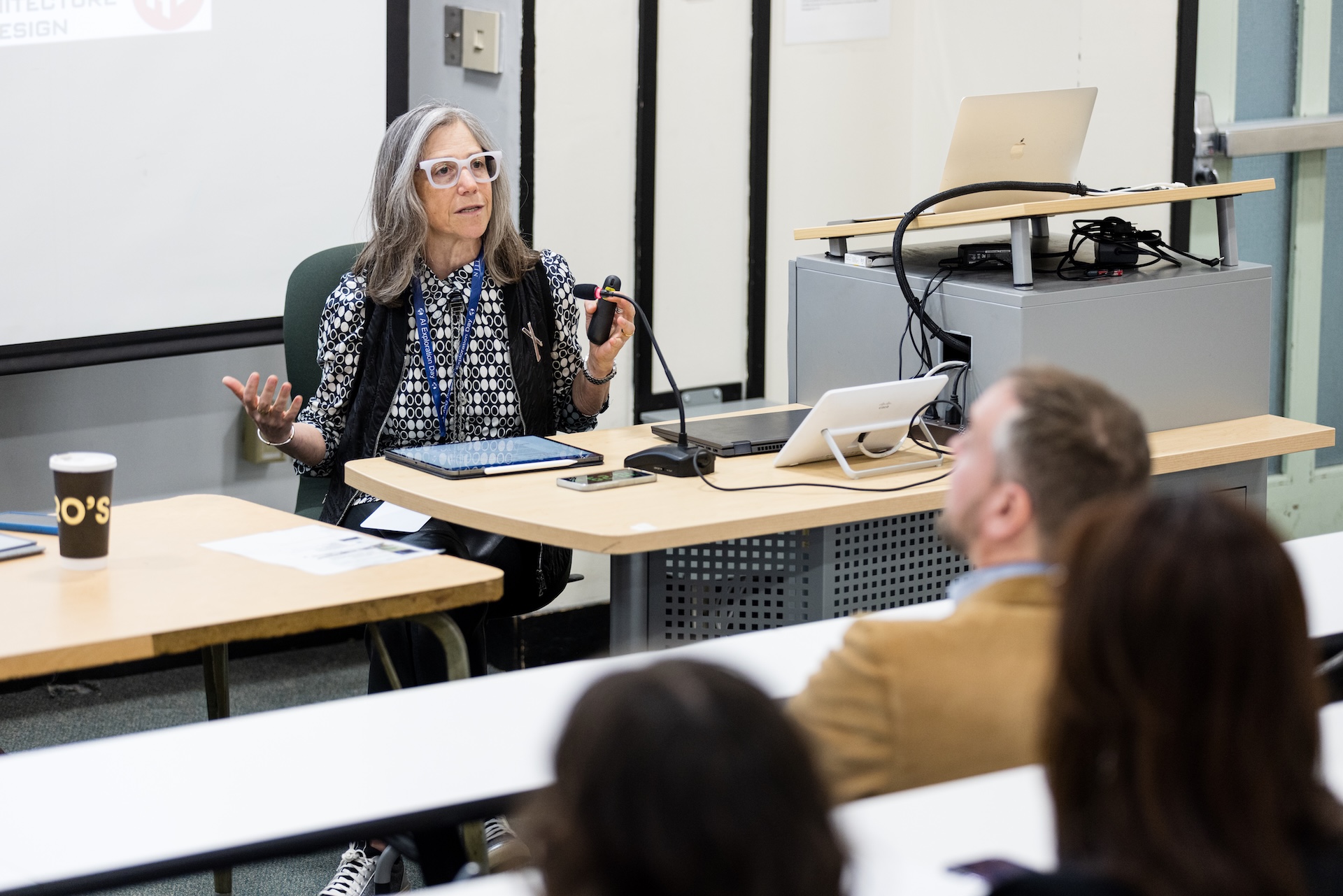
LeCavalier expanded that point by describing data centers as a new kind of infrastructure — one that often slips past traditional zoning definitions even as it places increasing pressure on surrounding communities and natural resources. He noted that public concern is growing as residents begin to understand the long-term stakes. “This new generation of data center coalitions are saying, these are existential threats,” LeCavalier said, framing AI’s infrastructure as one of the defining spatial and environmental questions of the moment.
Reimagining Design Education Through AI
As part of the presentation “Architectural Design Processes in the Age of AI,” chair of the School of Architecture Gernot Riether, alongside assistant professor Sampath Pediredla and associate professor Andrzej Zarzycki, examined how AI is reshaping architectural design, from conceptual development to visualization. Riether’s contribution focused especially on the classroom, showing how these tools can push students to think more carefully about observation, interpretation and design process rather than simply accelerate image-making.
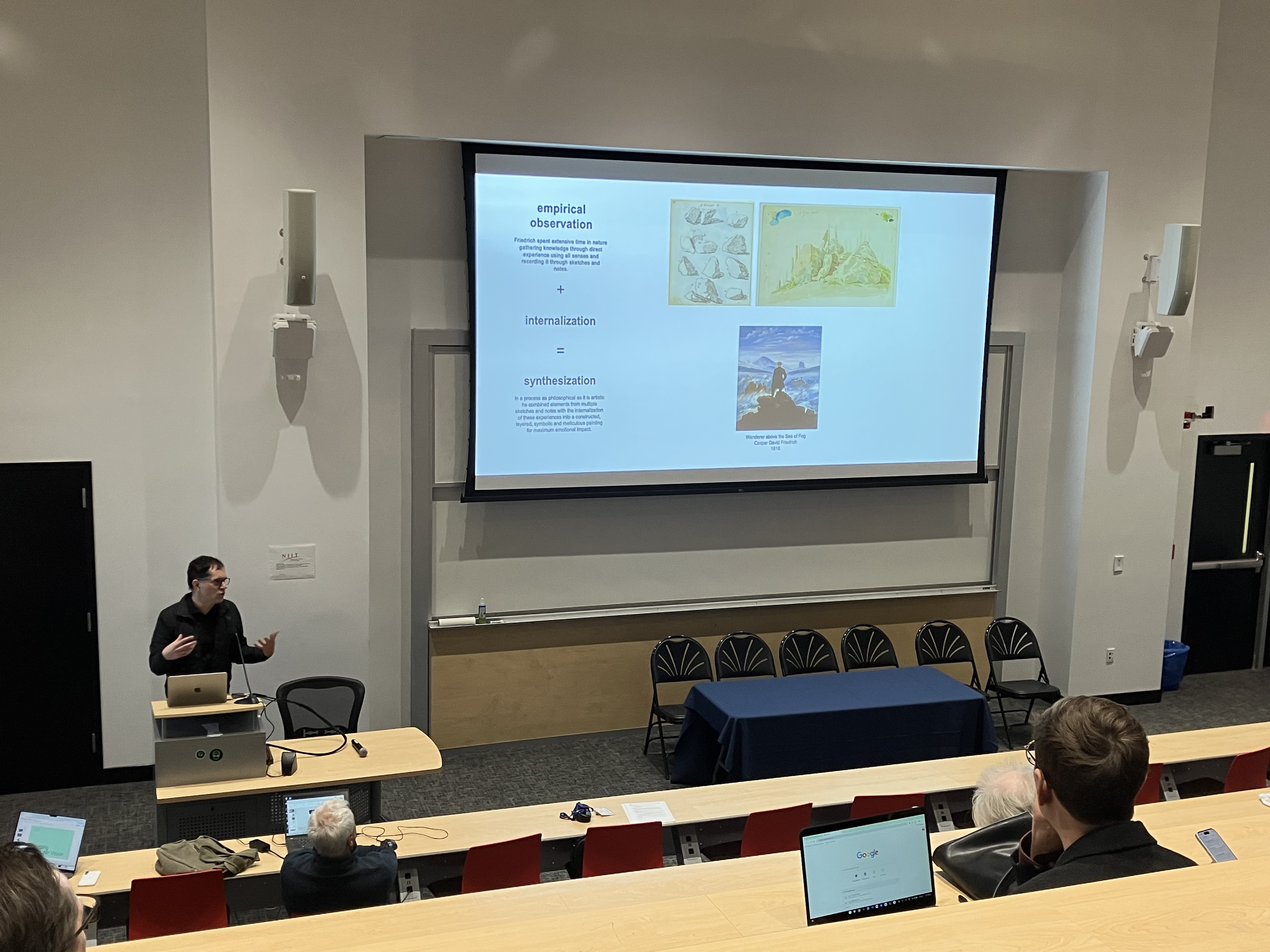
He pointed to a study abroad experience in Austria as one of the clearest examples. Inspired by the tradition of Romantic landscape painting, students were encouraged to move beyond direct documentation and instead record impressions, spatial qualities and atmosphere, then use AI to translate those observations into new visual interpretations. In that sense, AI became less a shortcut than a way of extending the act of seeing.
The Wachau Valley and a New ‘Prompt Pedagogy’
One exercise took place in Austria’s Wachau Valley, where students were challenged to generate images of the landscape without explicitly naming it or relying on its most recognizable descriptors. The goal was to teach greater precision in how they described place, mood and form. As Riether explained, “We asked the students to actually generate images using AI, not using any words that references, you know, to the landscape, and then see if you can generate an image of the landscape without using Wachau and any kind of name that you would reference.” The assignment reflected what he described as a new kind of “prompt pedagogy” — one that asks students to be more deliberate in the language and ideas that shape design.
Where Theater and Motion Capture Meet
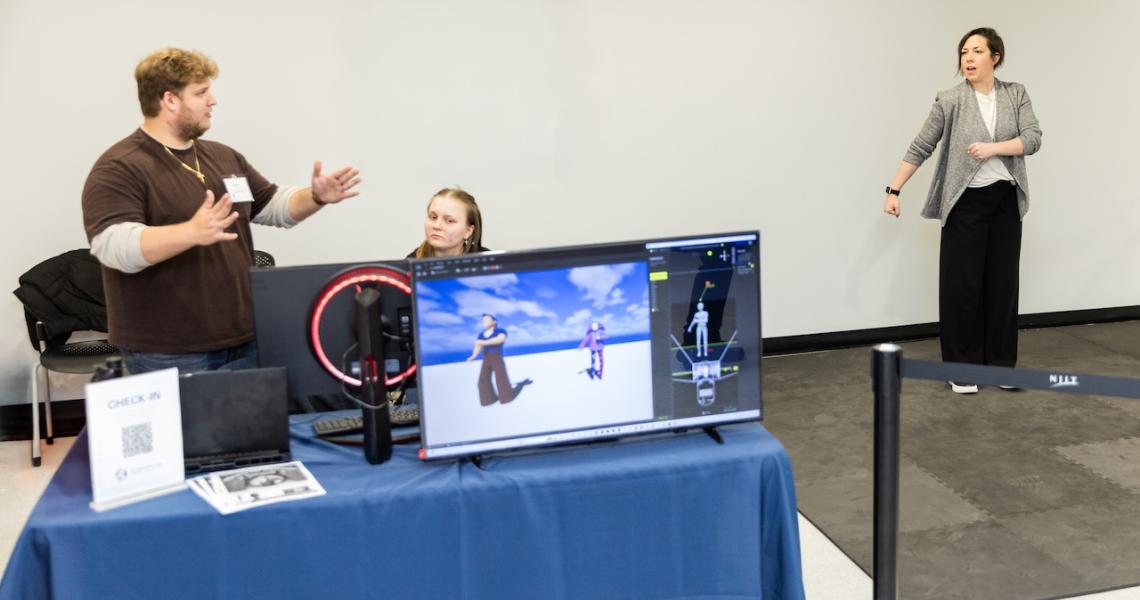
HCAD’s role in the day also extended into performance and digital media. Digital design students Giovanni Crocco and Daria Kozlenko led the AI Lab “Step Into the Spotlight: Motion Capture Meets the Theater,” demonstrating how NJIT’s theater and digital design programs are using real-time motion capture technology in the spring musical Curtains through the emerging platform Movin Tracin. The interactive setup allowed visitors to step into the capture space and see their movements translated into digital characters in real time.
Crocco said associate professor Richard Thompson’s acting background helped shape the work by encouraging performers to “act animated,” giving the system more expressive movement to translate on screen. That blend of theater and technology was part of what made the demonstration resonate so strongly with participants. “It’s been great to see people come step into the square that we have here, move around,” Crocco said. “Once they see their movements mimicked in a digital setting, people seem to be ecstatic and very happy just to see that technology.”
“So the biggest thing that we have been talking about was if the audience for this production is going to enjoy seeing projected characters or the connotation of AI in the theater production, and after today, I believe that it will get a very good and well-received reception,” he added. “It's a big jump from where we've been, where instead of having to process and composite and then bake animations into a live performance, we're now able to get live performance in CG (computer-generated) characters instantly.”