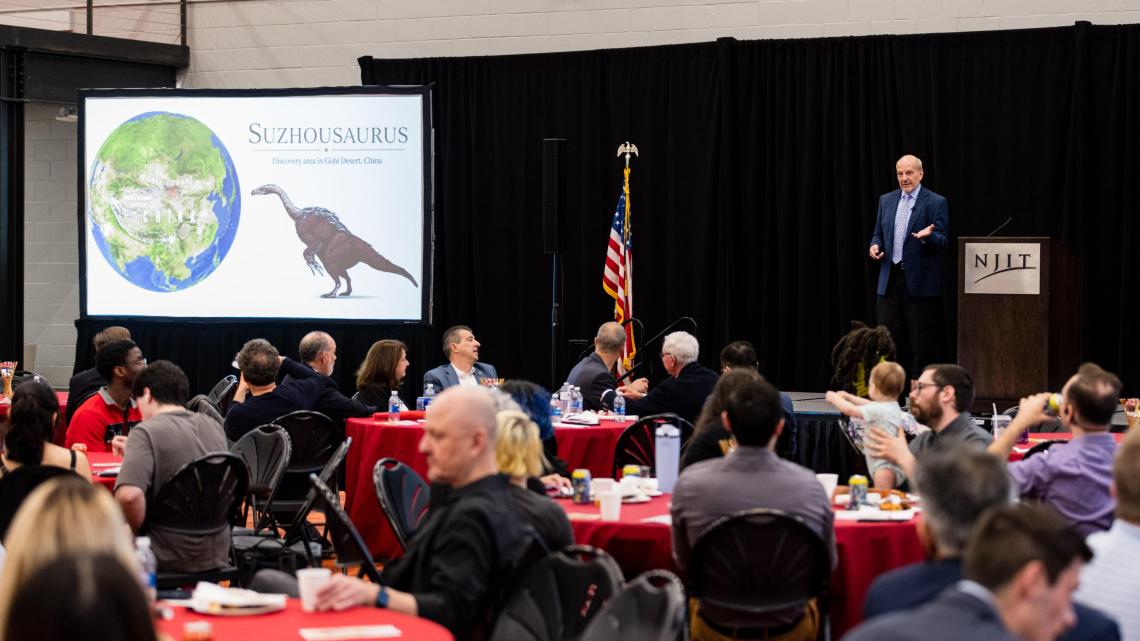
NJIT’s Jordan Hu College of Science & Liberal Arts (HCSLA) celebrated 44 years on May 6 with its annual awards ceremony, headlined by a special guest appearance from paleontologist and famed “dinosaur hunter” Dr. Kenneth J. Lacovara.
Held in the Central King Building’s Agile Strategy Lab, the event brought together students, faculty, and alumni alongside President Teik C. Lim to recognize the past year’s achievements across NJIT’s most academically diverse college, from the humanities to STEM sciences.
HCSLA Dean Kevin Belfield opened the festivities and introduced Lacovara, recipient of this year’s Jay Kappraff Award for Excellence in Science and the Arts.
A paleontologist, Lacovara is founding executive director of the Edelman Fossil Park & Museum and founding dean of Rowan University’s School of Earth & Environment.
He is perhaps best known for leading the 2005 fossil discovery of Dreadnoughtus in Patagonia — an 85-foot-long, 65-ton dinosaur among the largest land animals ever found and one of the first dinosaur finds fully documented with 3D scans and digital models, allowing researchers worldwide to study the skeleton remotely.
“It was the mass of 13 African elephants … ten tons heavier than a Boeing 737,” Lacovara said of the discovery, covered in his book Why Dinosaurs Matter. “If you’re that big, what do you have to fear? That’s why we called it Dreadnoughtus — it means ‘fears nothing.’”
He said years in the field shaped how he teaches and challenges students to take risks and embrace discomfort, especially early in their careers.
“When you’re out in the field, it’s uncomfortable. But seeing something every day that nobody has ever known before, all the comforts of home don’t matter,” he said. “Being comfortable enough is okay, but are you going to remember those moments in five years? I don’t think so. It’s the moments of discomfort that add meaning to your life.”
Lacovara dove into Earth’s deep history beyond the asteroid impact 66 million years ago that ended non-avian dinosaurs. Over 4.5 billion years, the planet has seen five mass extinctions, each triggered by rapid climate disruption.
“We know that all five of those were climate crises,” he said. “When such dramatic changes exceed the biological speed limit of adaptation, we have extinction crises. Climate has been the biggest killer in the history of our planet.”
Today, many scientists argue the planet has entered a sixth mass extinction driven by carbon emissions and other human activity, a point Lacovara underscored by citing research showing insect populations are declining an estimated 1 to 2 percent annually worldwide.
“In this scenario,” he said, “we are now the asteroid.”
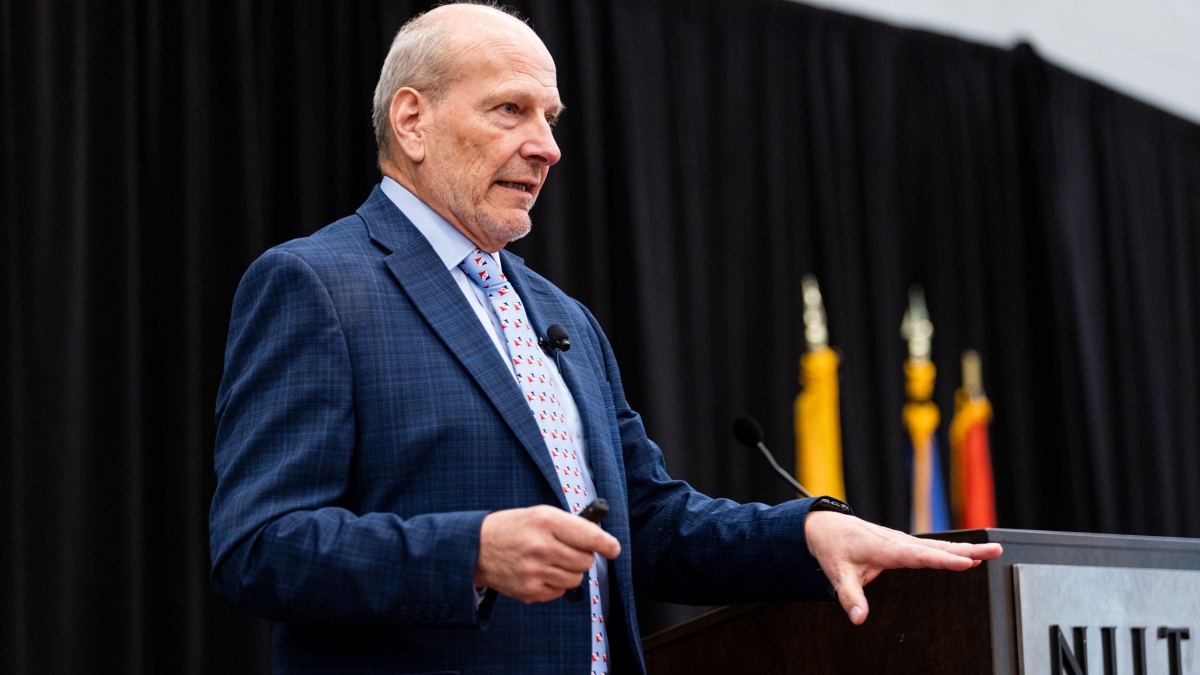
“We really have to do the hardest thing we’ve ever done, which is to rapidly decarbonize our economies and to make space for biodiversity in the modern world,” he added. “The good news is we don’t have to invent anything. The technology already exists. It’s the will to do it that we need.”
He pointed to the Edelman Fossil Park & Museum of Rowan University as an example of sustainability through geothermal energy and native species restoration at a site preserving one of the clearest records of the asteroid-driven extinction that reshaped life on Earth.
“Wildlife there knows — the birds have returned,” he said of the site’s “Cretaceous Garden,” which blends modern ecology with plants tracing back to the age of dinosaurs.
Lacovara also discussed his latest work with Colossal Biosciences, a CRISPR-based de-extinction company using targeted gene editing for biodiversity conservation.
The Dallas-based company, he said, has focused on endangered animals such as the northern quoll, a small Australian marsupial threatened by invasive cane toads, where a single gene modification has increased the species’ toxin resistance to help prevent its collapse. He also noted the critically endangered red wolf in North Carolina, whose population has fallen to as few as 20 animals, where scientists are studying wolves that have interbred with coyotes to help restore lost genetic diversity.
“If this company saves one species from extinction, it’s worth it,” he said. “There is no planet B. This is all we’re ever going to have. It’s time for us to be better ancestors.”
The ceremony next spotlighted alumni, faculty, staff and students.
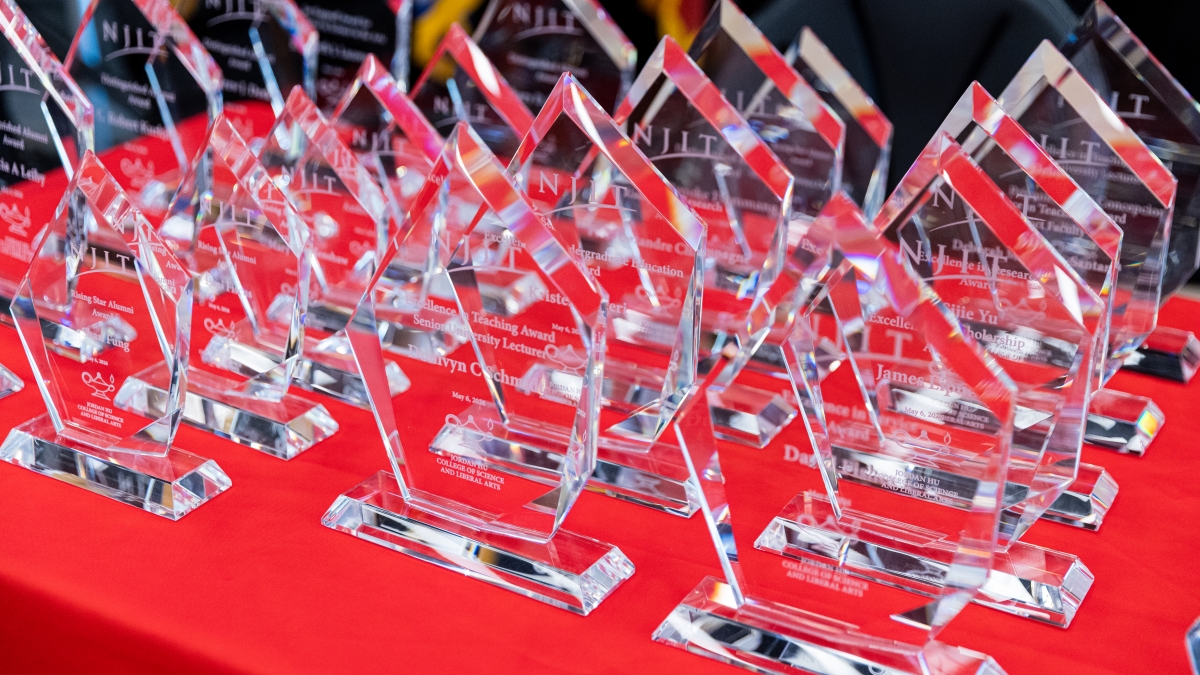
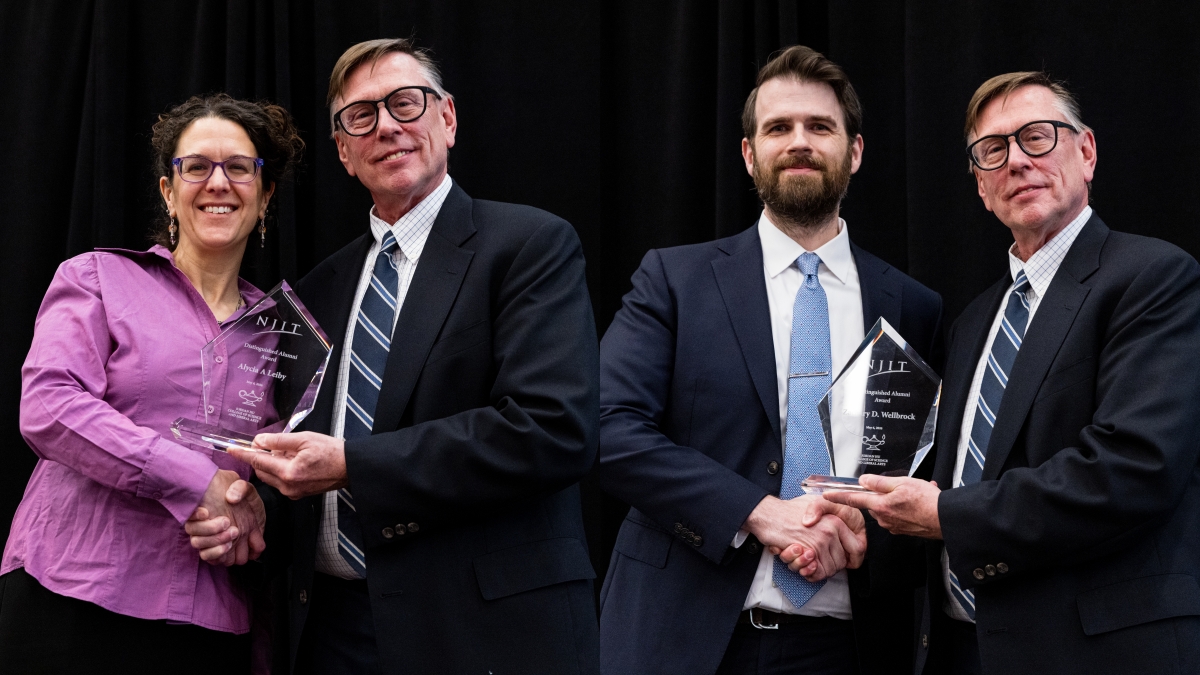
Belfield announced Distinguished Alumni Award recipients such as Robert Kurkjian, recognized for work in environmental remediation and public health, who credited NJIT with shaping his career.
“NJIT was a catalyst that provided me with the education and the opportunity to advance my career,” he said. “I feel the responsibility to pay it forward.”
Fellow Distinguished Alumni honoree Dr. Alycia Leiby, a pediatric gastroenterologist specializing in medically complex children, said her interdisciplinary studies prepared her for medical training.
“My undergraduate time prepared me for the rigors of medical school,” she said. “Science, technology and society taught me how to think critically and strengthened my writing skills.”
Attorney Zach Wellbrock, another Distinguished Alumni Award recipient, highlighted both professional and personal ties to NJIT.
“HCSLA truly touched every part of my life,” he said, noting he met his wife on his first day of classes.
Faculty and staff awards recognized excellence in research and teaching, including Brooke Flammang for her research into fish biomechanics and Pierre Alexandre Champagne as a rising star in organic chemistry.
Students’ achievements took focus to end the afternoon.
Department of Physics Chair Andrew Gerrard announced a new fellowship — the Lanzerotti Fellowship — which was established this year through a gift from Louis J. Lanzerotti and M. Yvonne De Wolf Lanzerotti. The fellowship will support one freshman physics major for three years.
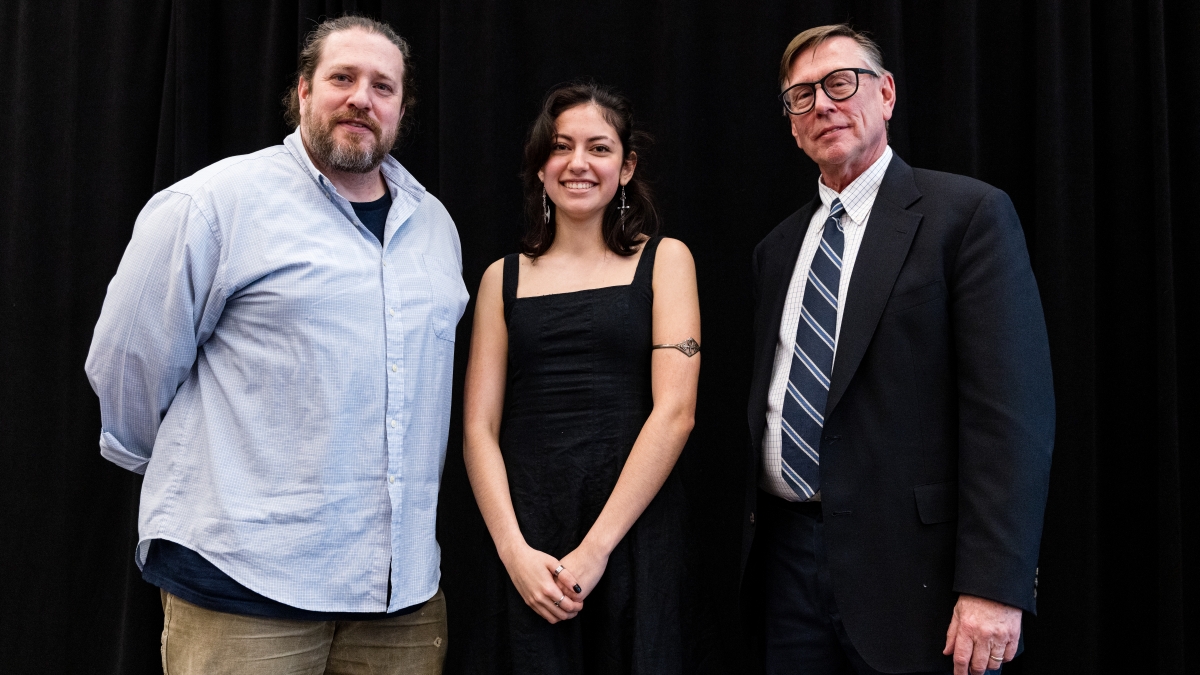
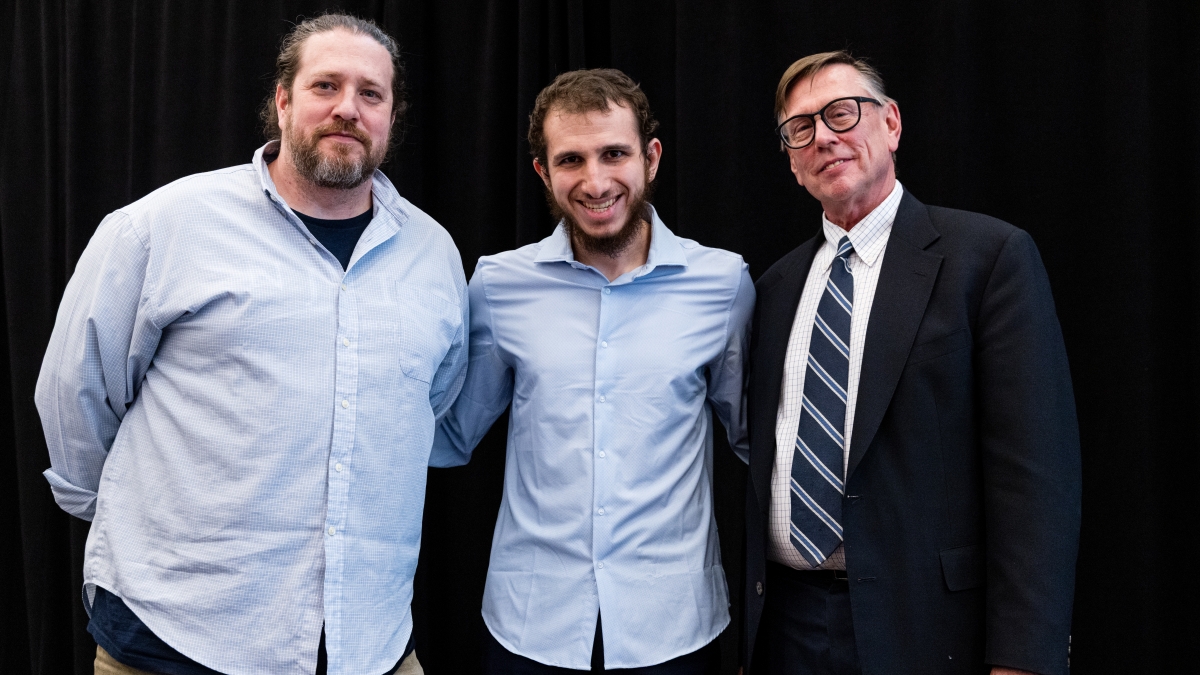
The inaugural fellow honors went to Ren Arcos ’29, while the Lanzerotti Prize in Applied Physics was presented to Yusef Mortaja Mercado ’26.
A full list of 2026 HCSLA Award recipients is available here.
