One of the most pervasive global pollution problems of the 21st century is a group of human-made chemicals called PFAS (per- and polyfluoroalkyl substances). Used since the late 1930s in consumer and industrial products to repel water and resist stains, these compounds earned the nickname "forever chemicals" because they don't naturally break down over time. As a result, PFAS has accumulated for decades in air, water and soil worldwide. About 45% of all tap water in the United States is estimated to contain PFAS, and PFAS has been identified in rivers and watersheds; in the deepest parts of the ocean; and in the Amazon rainforest.
To date, there are nearly 15,000 types of PFAS, and with repeated exposure, PFAS also builds up in body tissues. According to the Centers for Disease Control and Prevention (CDC), most people in the U.S. have PFAS in their blood. And the longer the exposure, the greater the risk. High levels of absorbed PFAS are associated with health problems such as fertility loss, pregnancy complications, thyroid damage, heart trouble, liver disease and cancer — in humans and wildlife.
Tackling this daunting challenge requires technical innovation, legislation and community participation, and a new initiative from New Jersey Institute of Technology (NJIT) — the New Jersey PFAS Partnership Innovation Consortium (NJ PFAS–PIC) — is addressing PFAS through the efforts of experts in policy, business and science. Recently launched at NJIT, NJ PFAS–PIC aims to develop and support multidisciplinary collaborations to attain a future for New Jersey that is PFAS-free.
NJIT's Center for Translational Research (CTR) announced the consortium and outlined its goals on April 24 at a day-long event: the CTR Workshop on Translational Research and Technology Innovations for PFAS Decontamination. Held on the NJIT campus, the workshop was sponsored by the National Science Foundation's Accelerating Research Translation Program at NJIT, and NJIT's chapter of the National Academy of Inventors.
A collaborative ecosystem
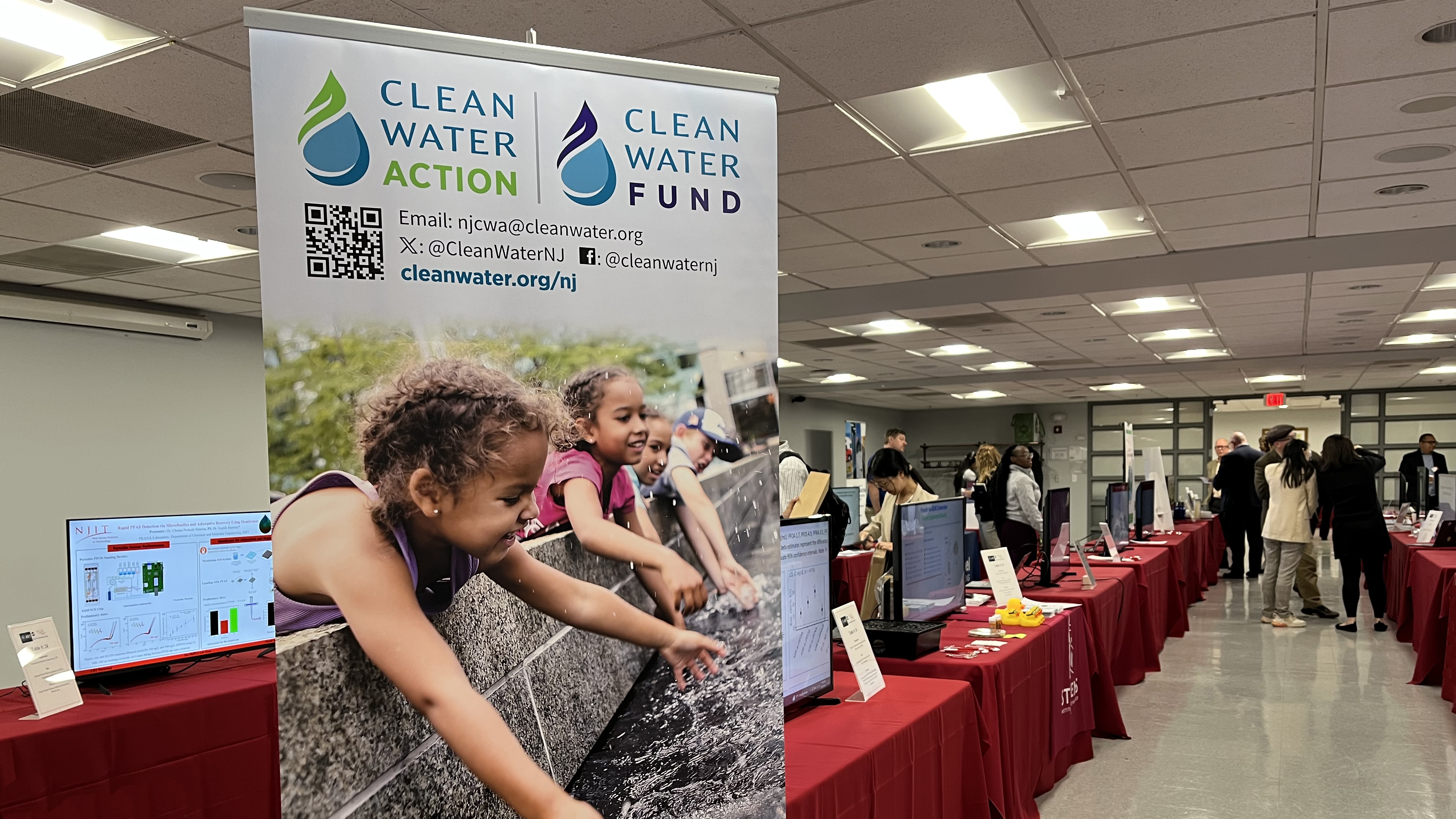
About 300 people attended the workshop, representing nearly 100 companies, government agencies and institutions of learning. In keynote presentations, panel discussions and an interactive showcase, leaders at the forefront of technology, academia, policy, industry, utilities and local communities outlined priorities and possible solutions for cleaning up existing PFAS reservoirs and eliminating it from infrastructure and industrial production.
The event culminated in an official announcement launching NJ PFAS–PIC — a project that has been in development at NJIT for more than two years — and a panel featuring members of the consortium's board of directors. Leadership at NJ PFAS–PIC includes representatives from NJIT, Princeton University, Rutgers University and Stevens Institute; from companies such as Veolia and Langan Engineering; from government-owned utility Ridgewood Water; and from the New Jersey Department of Environmental Protection and the New Jersey Commission of Science, Innovation and Technology.
"The mission of the consortium is to establish a collaborative ecosystem that develops, validates, and scales innovative technologies for PFAS detection, remediation, and material substitution, ensuring economic growth and public health safety for New Jersey," said Richard Calbi Jr. '94, M.S. '00, director of Ridgewood Water and one of the featured speakers at the workshop. Calbi is a member of the board of directors for NJ PFAS–PIC.
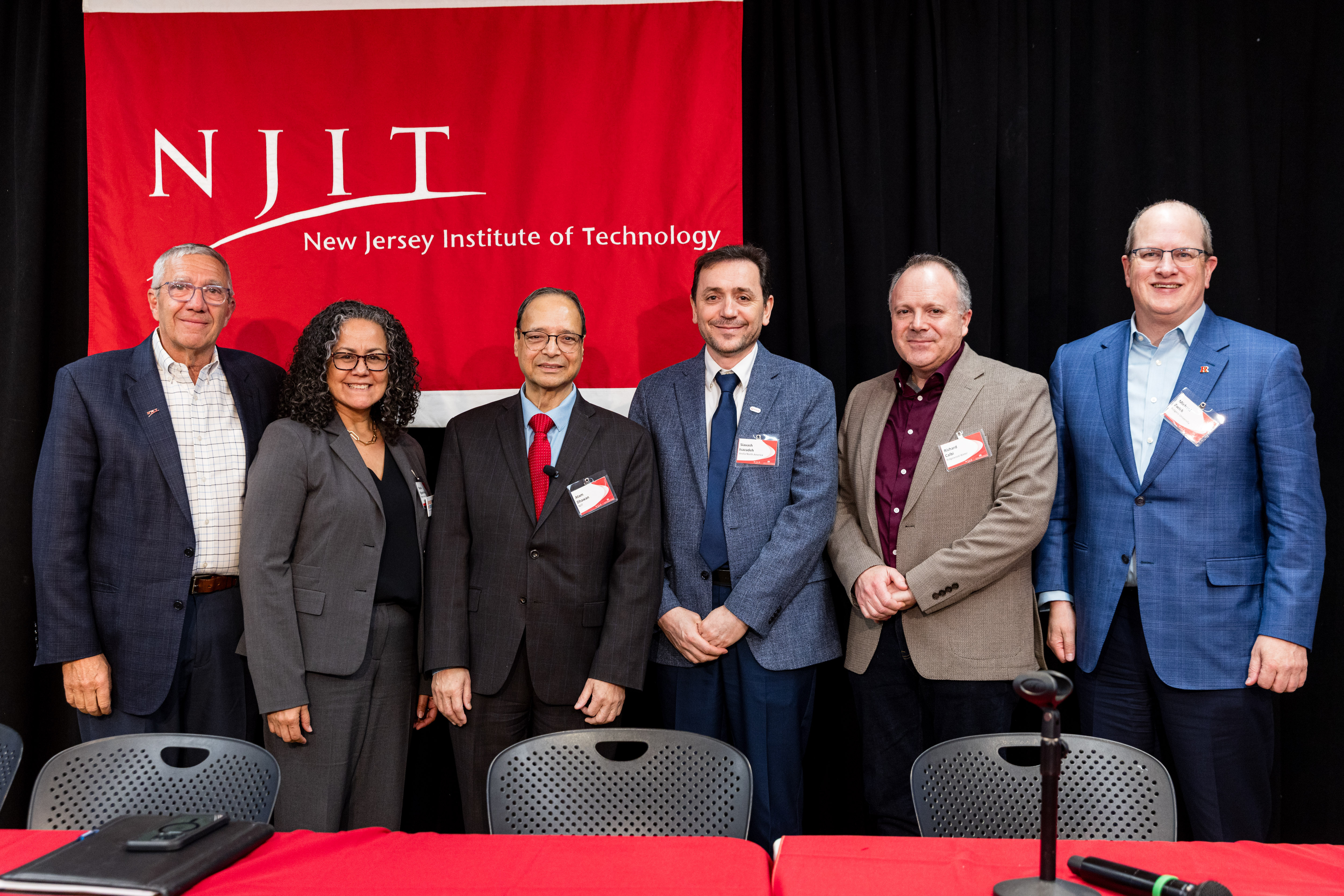 Leaders from the New Jersey PFAS Partnership Innovation Consortium (NJ PFAS–PIC). From left to right: Nick DeNichilo, Paula Figueroa-Vega, Atam Dhawan, Siavash Isazadeh, Richard Calbi Jr., and Michael Zwick.
Atam Dhawan, event co-organizer and co-chair, senior vice provost for research and chief strategic innovation officer at NJIT, laid out three pillars for the consortium. The first is accelerating the development of new solutions for PFAS, ushering them "from ideation to impact" more quickly, said Dhawan, the founder and executive director of NJ PFAS–PIC. The second pillar is quantifying and sharing decades of cross-disciplinary data that have already been gathered about PFAS, using tools such as artificial intelligence to evaluate the data for application to new tactics. The final pillar is connecting innovation to advocacy, to identify and better serve the most pressing needs of communities affected by PFAS and to support development of PFAS-related policies and regulations.
"The only way we can make it happen is by coming together at the same table," Dhawan said.
Community engagement will be another key part of reducing PFAS, as will legislation banning the use of PFAS in consumer products and regulating how PFAS is monitored and removed from water systems and soil. The consortium's success will require ensuring that policy makers understand the urgency of taking action sooner rather than later, said Paula Figueroa-Vega, director of Jersey Water Works Collaborative.
As an NJ PFAS–PIC board member, Figueroa-Vega hopes to build bridges between industry leaders and policy-makers "and ensure that as much information is available in a digestible way to people who are making decisions, creating a platform so that people can share and innovate together at the policy level."
From 'forever chemicals' to 'never chemicals'
While removing PFAS from drinking water is a top priority, keeping the public safe from PFAS in the long term will require more proactive strategies that eliminate these chemicals from industrial production before they enter the environment, said panelist Michael Zwick, senior vice president for research at Rutgers University and member of the NJ PFAS–PIC board of directors.
"If this group could actually change the standards or change the approach for how we investigate new materials and identify problems earlier, we won't be stuck with cleaning this problem up, multiple years after it's caused enormous chaos," Zwick said.
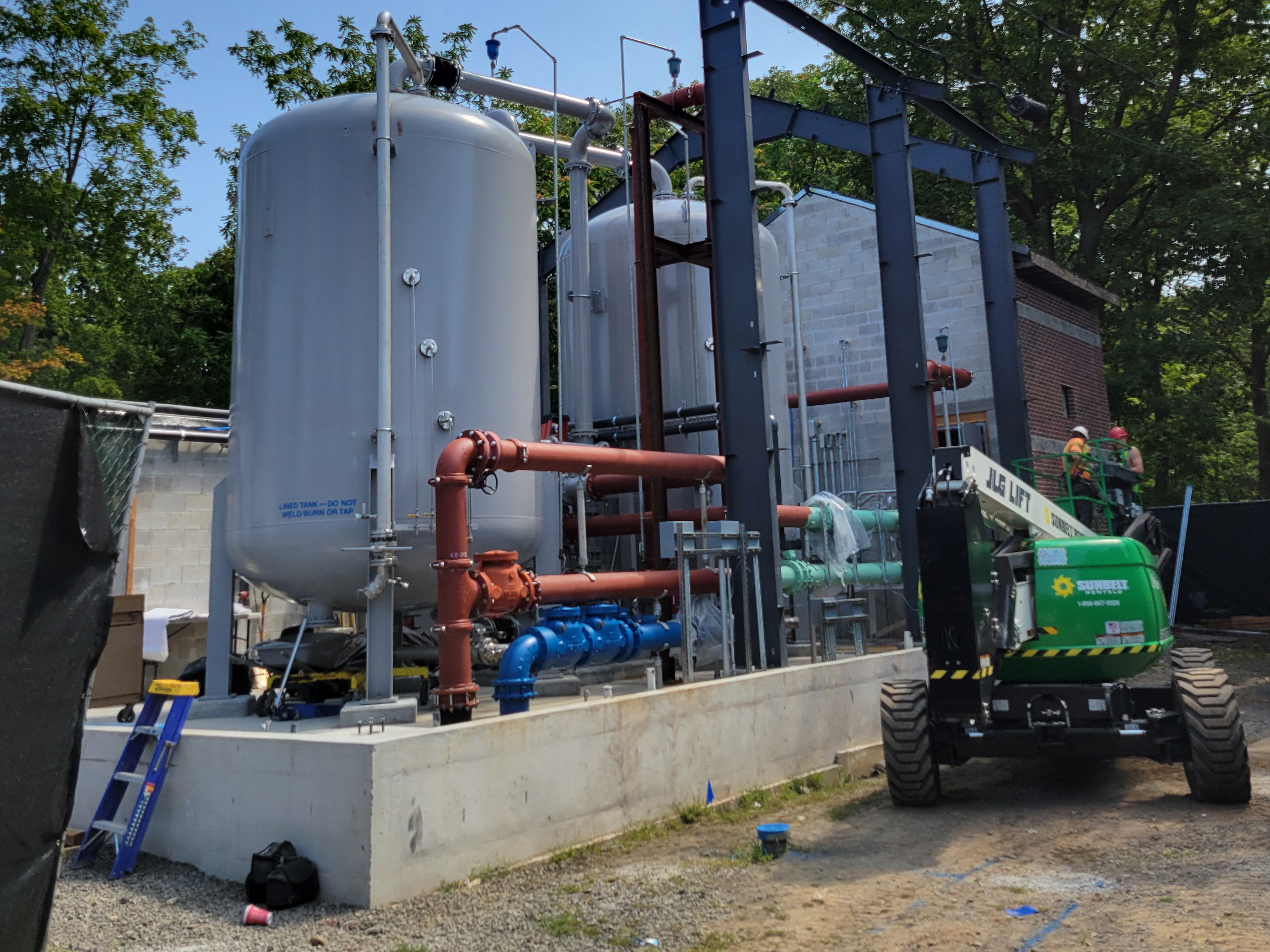 Construction of the Ridgewood Water Ravine PFAS Treatment Facility, August 15, 2025. Photo courtesy of Ridgewood Water
Encouraging private companies and the federal government to invest in research and earlier assessment of materials, safety and potential impact could also offer new opportunities for innovation, he added.
PFAS is exceptionally long-lasting because of a powerful chemical bond between molecules of carbon and fluorine, explained panel member Nick DeNichilo '73, M.S. '78, a board member for NJ PFAS–PIC and co-vice chair of NJIT’s Board of Trustees. And for DeNichilo, that chemical bond was an apt analogy for the strength of the consortium's commitment to eradicating PFAS.
"I look at this group, and this is the bond that we have," DeNichilo told attendees. "This strong bond is what's going to take those 'forever chemicals' and make them 'never chemicals.'"
It takes a village
Throughout the workshop, speakers and panelists took to the stage to share PFAS findings, report on progress in identifying and eliminating PFAS, and propose future plans and opportunities for strategic advocacy. Keynote speeches touched upon challenges faced by utilities in managing PFAS, and the role of agencies such as the New Jersey Department of Environmental Protection (NJ DEP) in setting standards, collecting data and supporting research.
NJIT President Teik Lim described the university's leadership status in developing tools and methods for PFAS detection and remediation; in 2025, NJIT and the New Jersey Innovation Institute (NJII) launched PureTrace Labs, a startup for taking technology developed at NJIT and turning it into commercial products for rapid detection of PFAS. But Lim also emphasized the importance of collaboration across multiple agencies and disciplines.
"It really takes a whole village — maybe the whole world — to solve this PFAS problem," he said.
Katrina Angerone, NJ DEP's chief strategy officer, delivered a keynote that touched on New Jersey's 20-year history addressing PFAS contamination, highlighting recent achievements that included a ban on firefighting foam containing PFAS and the collection of 146,000 gallons of contaminated foam for safe disposal.
Calbi's keynote presented a case study that demonstrated the cost of PFAS cleanup, with Ridgewood Water investing $150 million in PFAS filtration for water systems in Ridgewood (in April 2026, the village announced that six of the 12 planned PFAS treatment facilities were fully operational). Scaling up similar efforts to serve more communities and provide affordable solutions to PFAS will require partnerships and funding from various sectors in government and industry, Calbi said.
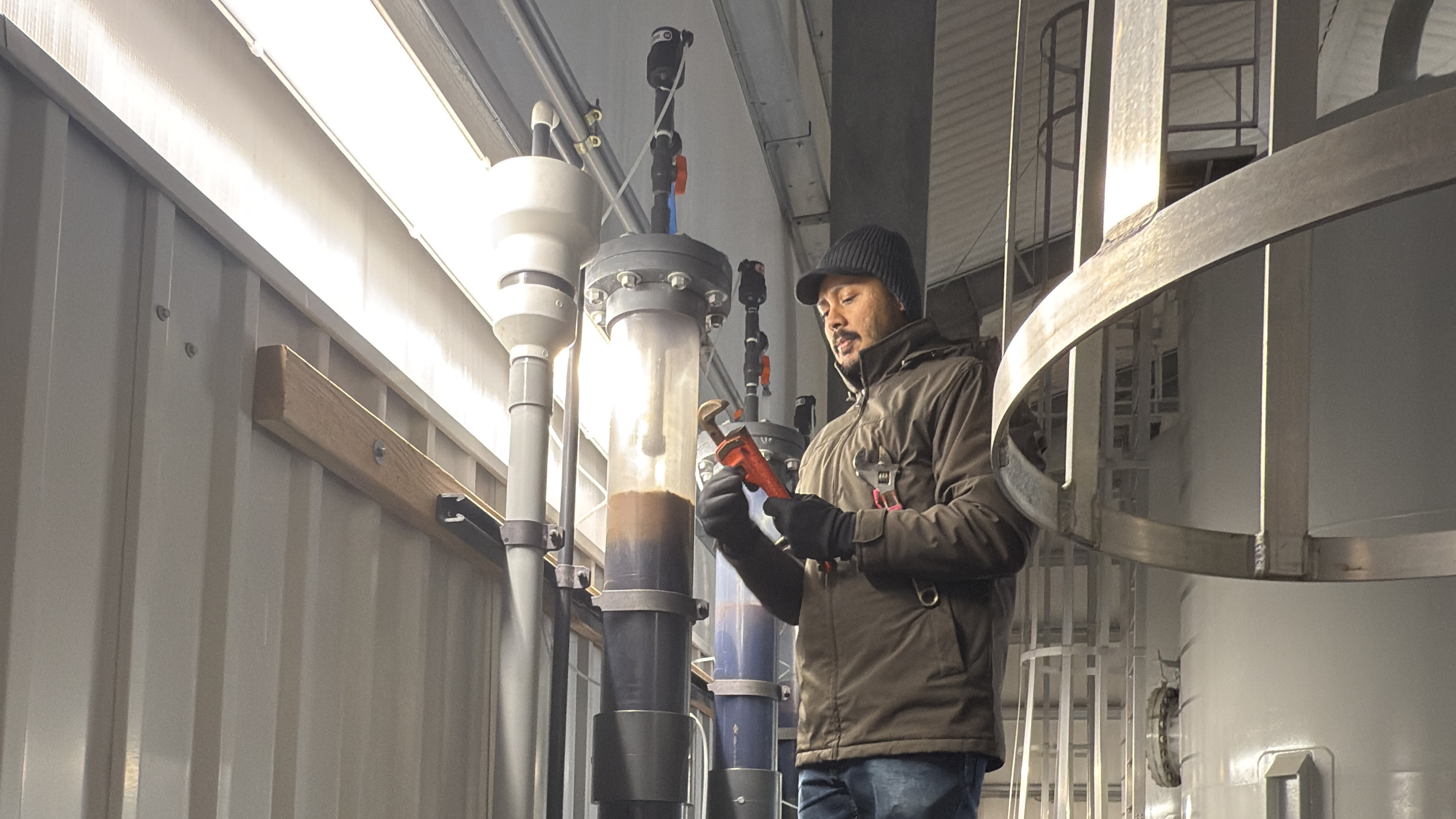 NJIT associate professor Arjun Venkatesan in the field, installing a modified granular activated carbon (GAC) pilot filtration column for testing PFAS treatment performance. Photo courtesy of Emerging Contaminants Research Laboratory at NJIT
Two panels brought together speakers from academia and industry, respectively, to discuss different pathways for translational research — transforming innovative ideas into problem-solving products — for PFAS decontamination technologies. Arjun Venkatesan, an NJIT associate professor in the Department of Civil and Environmental Engineering, spoke about research conducted at NJIT's Emerging Contaminants Research Laboratory (ECRL), where he serves as the director. Their work identifies how quickly and widely contaminants disperse into the environment and how PFAS accumulates in plants and animals; and develops technologies for PFAS removal, such as improved carbon-filtration systems for PFAS capture.
Eradicating PFAS is challenging because the group is so large, and technology that detects and removes one type of PFAS may not work on others, he explained.
"I wake up thinking about PFAS and I go to bed thinking about PFAS," Venkatesan said. "And I also wonder about how much PFAS I get exposed to."
Risk reduction, education, and source reduction
Throughout human history, new technologies have introduced novel challenges to overcome, often involving environmental harm and health risks. Almost 2,000 years ago, the Roman Empire constructed networks of sophisticated plumbing systems that fueled the growth of major cities. But those pipes contained lead, which introduced toxic metals such as antimony into drinking water. In Pompeii, that contamination was so widespread that it may have caused chronic lead poisoning across the city's population.
Lead in drinking water continued to be problematic well into the modern age. However, regulation efforts that began in the U.S. in the 1970s led to dramatic reductions in the harms caused by lead in drinking water across the nation. By 2016, the mean blood level of lead in people ages 1 to 74 plummeted by 93.6%.
With similar attention and political will, resolving the PFAS problem could also be within reach.
In January 2026, N.J. Gov. Phil Murphy signed into law the Protecting Against Forever Chemicals Act, which established new guardrails for PFAS. The law prohibits the intentional addition of PFAS in the production of everyday goods such as food packaging, cookware, cosmetics and carpets.
"Our law touches on three important issues: exposure and risk reduction, education, and source reduction," N.J. Senator Linda Greenstein, who co-sponsored the new legislation, said in a panel session. The law will ensure that harmful PFAS chemicals are removed from everyday consumer products, Greenstein stated. It establishes guidelines for informing the public about the presence and impact of PFAS, and addresses eliminating PFAS from industrial production, to prevent environmental recontamination.
"As we continue to find solutions to removing PFAS from water and soil, we need to ensure that we do not continue to contaminate these resources," she said.
However, there is still much to be done to remove accumulations of PFAS chemicals. And as anti-PFAS legislation and cleanup work can vary greatly between states, the PFAS problem in New Jersey will likely persist despite statewide bans and mitigation efforts, unless stronger regulations and cleanups are supported nationwide, said N.J. Assemblywoman Lisa Swain.
"The water doesn't stop at the border — it flows from state to state," Swain explained. "If we don't have the proper regulation, the proper funding and the political will throughout the country, it's not going to be enough and we're always going to be playing catch-up."
The U.S. Environmental Protection Agency (EPA) introduced the National Primary Drinking Water Regulation in 2024, setting legally enforceable levels for six types of PFAS in drinking water across the country. Public water systems were given until 2029 to comply with the new directive, which includes mitigation, monitoring water systems and disclosing findings to the public (the EPA later extended the deadline to 2031).
Looking beyond the workshop, NJ PFAS–PIC's plans include building and strengthening partnerships in advocacy, technological advancement and data collection, Dhawan says. This work will help to develop policies and oversight for detecting, regulating and eliminating PFAS and related contaminations in the environment and in products, and will support translational research for PFAS alternatives.
"Our vision is a state of New Jersey that's nationally and globally recognized for that work," Calbi told workshop attendees, "to be leaders, to innovate, to manage and serve a model for advocacy — not just for New Jersey, but for the world — through integrated research, technology, translation, community validation and then responsible commercialization of those products, while protecting the environment and being sustainable about the growth of everything that we need to do to solve that problem."
Learn more about NJ PFAS–PIC and NJIT's Center for Translational Research.
