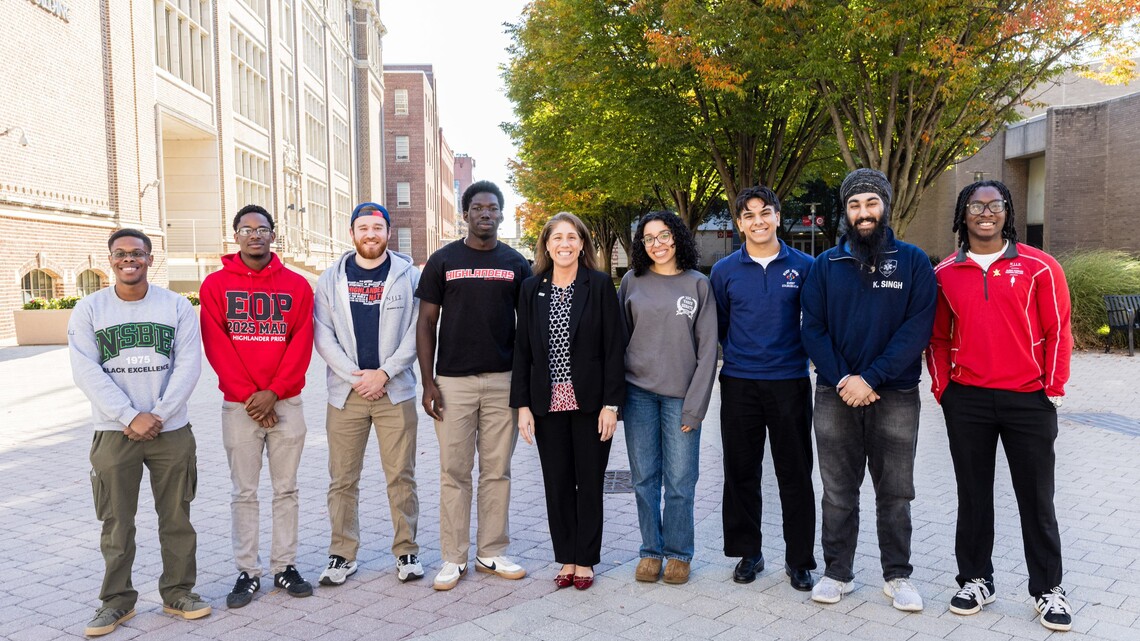
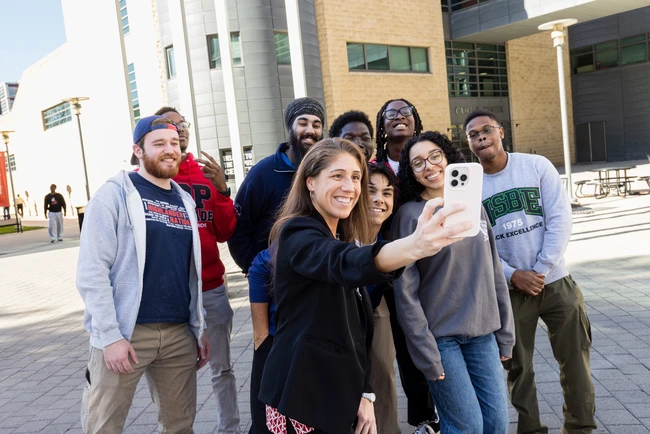
From financial technology and mathematical biology to student government, peer mentoring and the Marine Corps Reserve, NJIT’s student roundtable brought a wide range of experiences to a conversation with New Jersey’s Secretary of Higher Education on Friday, October 23. The discussion turned to a question with statewide reach: What helps students get to college, find support once they arrive and prepare for work after graduation?
The students met with Secretary Chaly as part of her statewide campus tour, which is intended to inform higher education policy and funding decisions in Trenton.
“The students we met at NJIT are preparing for careers in an economy that’s changing faster than ever before,” said Secretary Chaly. That’s exactly why we’re out on campuses listening and holding these roundtables. What students share with us, we bring back to Trenton, so we can improve our statewide policies and continue to help students succeed in college and build their careers right here in New Jersey.”
The roundtable moved through topics such as higher ed access, affordability, well-being and belonging, and workforce preparation. Students were invited to discuss what influenced their decisions to attend college and choose a major, how they and their families navigated college costs and what kinds of support and campus connections helped them succeed. Finally, Chaly sought out insights on how students’ education, internships and other hands-on experiences were preparing them for careers — including the impact of AI on all of it.
The participants represented undergraduate fields spanning business and financial technology; computer science and information technology; mechanical, industrial and electrical engineering; and mathematical biology. Their campus affiliations included the Albert Dorman Honors College, the Educational Opportunity Program, student government, professional societies, tutoring and mentoring, community service, residential life, student research and the U.S. Marine Corps Reserve.
Programs, Experience and Outcomes
The roundtable’s themes connect with NJIT’s work to open pathways to college, deliver long-term educational value and connect students with career opportunities.
Image
NJIT’s Math Success Initiative and Newark Mayor’s Scholar program are among the pathways to higher education for Newark students. One recent graduate, Kaily Peixoto, participated in both, earned a degree in construction engineering technology and joined AECOM as an entry-level civil engineer after completing internships. Her NJIT profile describes her path from college preparation to a career in engineering.
Rankings offer one external measure of educational value and outcomes. The Princeton Review ranked NJIT No. 22 among public colleges in its 2027 Best Value list. In TIME’s 2026–27 ranking, NJIT was No. 1 among New Jersey public universities and No. 38 among public institutions nationally. The rankings use different measures and do not describe individual students’ experiences with college costs.
Industry partnerships offer another way students can apply their education. In a recent collaboration with engineering firm Pennoni, an NJIT student gained experience with field inspections, project documentation and meetings with clients and contractors. The NJIT News story describes how the internship connected coursework to engineering work in the field.
Image
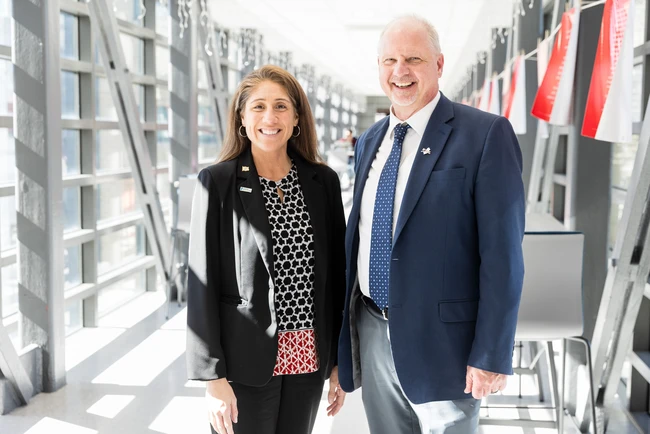
Chaly met with Interim President John A. Pelesko before the student roundtable.
“We are appreciative of Secretary Chaly visiting NJIT and campuses across the state and hearing from students directly, as well as from university leadership,” said Pelesko. “Today was an opportunity to discuss critical topics, like student access and outcomes, as well as the transformative impact AI is having on the educational and research enterprises.”
The agenda called for the session to close with students identifying what they wanted Chaly and the Office of the Secretary of Higher Education to take back to Trenton, followed by an open Q&A and group photo.
