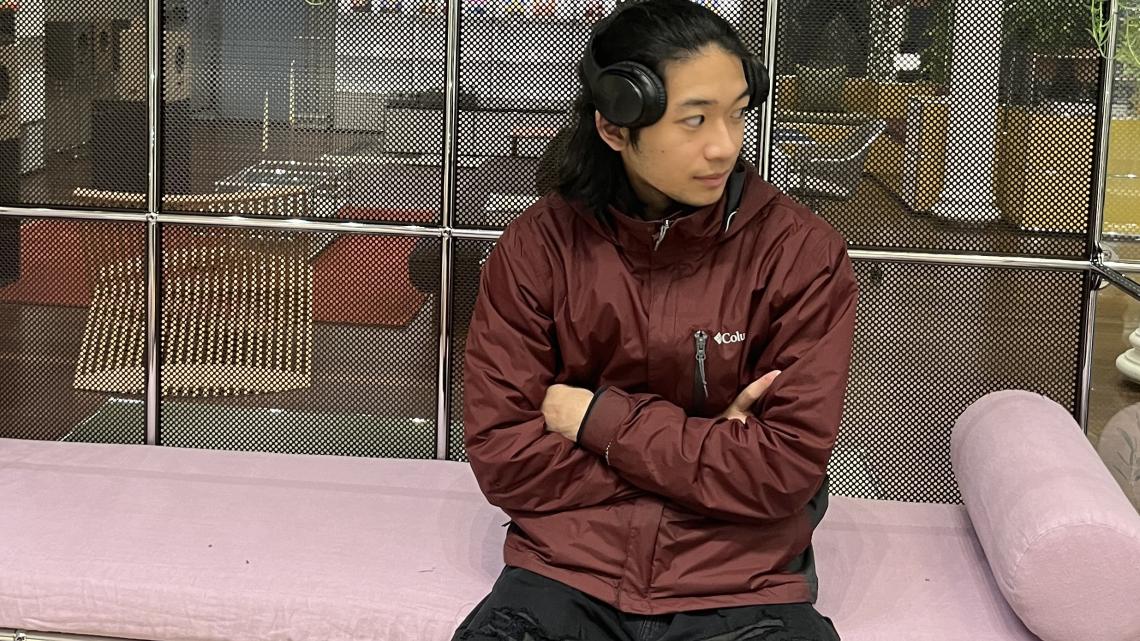
As one of seven industrial designers graduating from NJIT this year, Takeshi Harada ’26 leaves the Hillier College of Architecture and Design (HCAD) with a sense of the field that feels both grounded and forward-looking.
He is thinking about New York, where he hopes to launch his career in the home goods industry. Building on his experience as an industrial design intern with Yamazaki Home, Harada is currently interviewing for entry-level design positions, including an opportunity with Core Home near Bryant Park.
He is thinking about artificial intelligence, not as a replacement for designers, but as a tool that his generation will have to learn how to use carefully. He is thinking about sustainability, not only as a material choice, but as a question of whether the useful lifecycle of a product is long enough to be considered sustainable.
And, most of all, he is thinking about design as something that should be understood.
“Fashion is more individualized and sort of like an art that some people understand and some people don’t understand,” said Harada. “I wanted to answer the question of, ‘How can everyone understand [industrial design]?’ Industrial design is for everyone and not just for a set amount of people. I was really interested in how that worked, and how you can design for everyone.”
Finding design through making
Harada’s path into industrial design started before he had the words for it. Growing up, he was drawn to making things by hand — Legos, cardboard models from Japanese children’s magazines and Gundam kits that required him to assemble complex models piece by piece.
“Ever since I was a little kid, I used to love making stuff,” said Harada. “I didn’t really know what I wanted to do before college. Then one of the last classes that I took in community college was for industrial design. There, I designed a speaker, learned a little bit how to render sketches, and I really fell in love with industrial design in that class.”
That interest eventually brought him to NJIT, where the facilities helped him see how ideas could become physical objects. The Makerspace stood out, as did the HCAD fabrication lab with CNC machines, 3D printers and laser cutters.
“NJIT, the Makerspace, really caught my eye,” he said. “I toured NJIT for industrial design, and on the seventh floor in HCAD they have a very big wood shop, laser cutter and a metal shop as well. That was something that I didn’t see in other schools — a lot of hands-on things. I think that’s why, in the end, I chose NJIT.”
At Hillier College, Harada also found the value of a small program. With only seven students in his graduating industrial design cohort, he said classmates and professors came to know each other closely. That environment helped him move from simply wanting to make interesting objects to understanding how design functions in the real world.
“Through the help of my professors and my classmates, I grew a lot in the four years and understand what design is about,” said Harada. “In community college, I didn’t know what was going on. I just liked making cool things. Some of that changed. Now we’re thinking about mass manufacturing and how a product can go from your head into a store. That process changed everything.”
A quiet design language
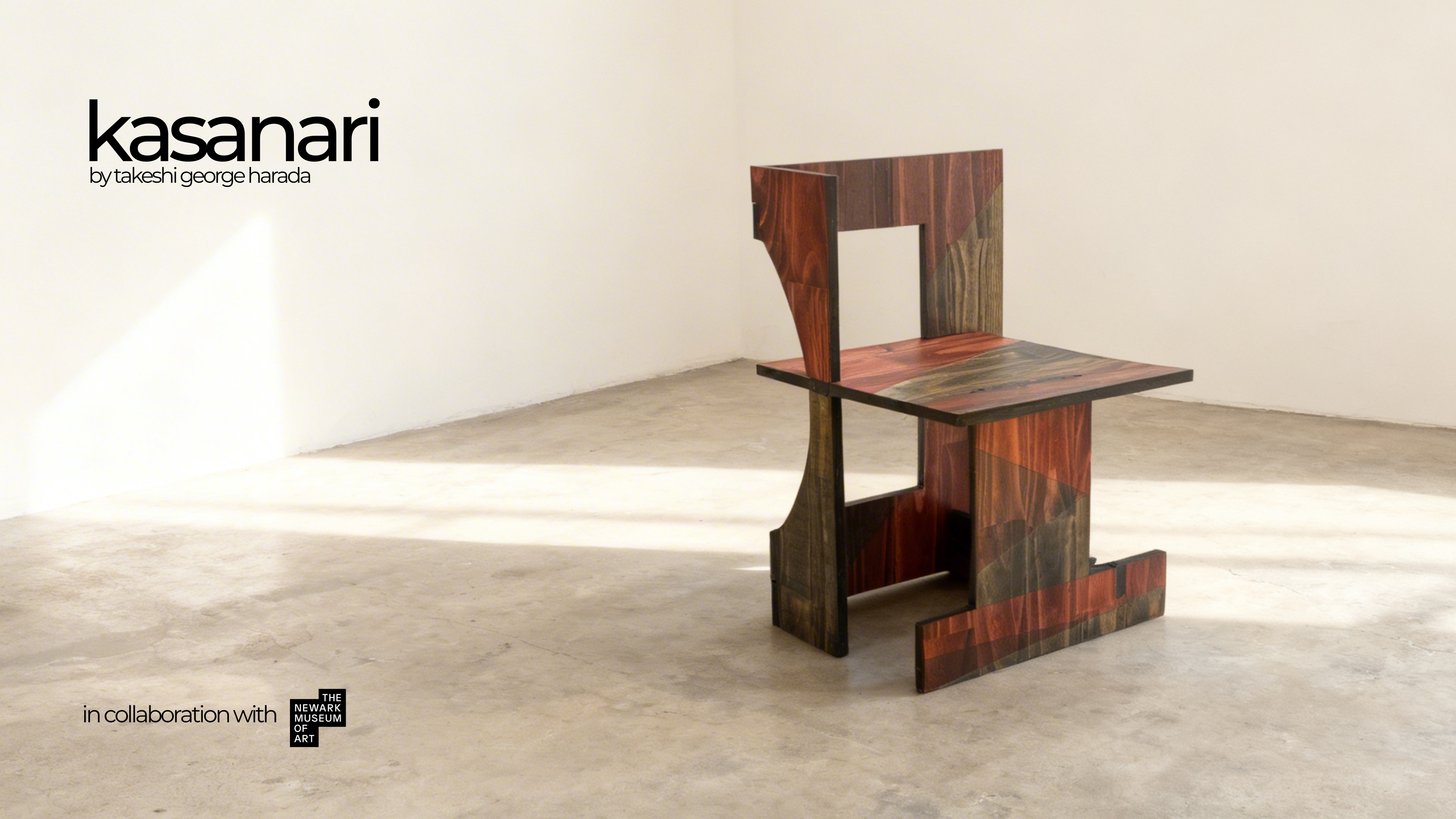
Harada is interested in reducing objects to what they need to be, rather than adding elements simply to make them stand out.
“My work is very minimal, very function-focused, and I try to filter down an object into its most minimal shape,” he said. “It looks nice, of course, and I like how it looks, but to filter it down — that process is very difficult.”
That approach can make his work feel quiet at first glance. But for Harada, quietness is not a lack of identity. It is part of the identity.
“I think my work kind of blends in with the environment, and it’s not really something that stands out, that pops into your eye so much,” he said. “Maybe it doesn’t really stand out that much, but that sort of having no presence also makes it stand out.”
His favorite project at NJIT reflected that thinking. In a class focused on designing for an existing company through a sustainability framework, Harada chose MUJI and created a planter. The assignment pushed him to design not only from his own perspective, but through the lens of a company known for simplicity and restraint.
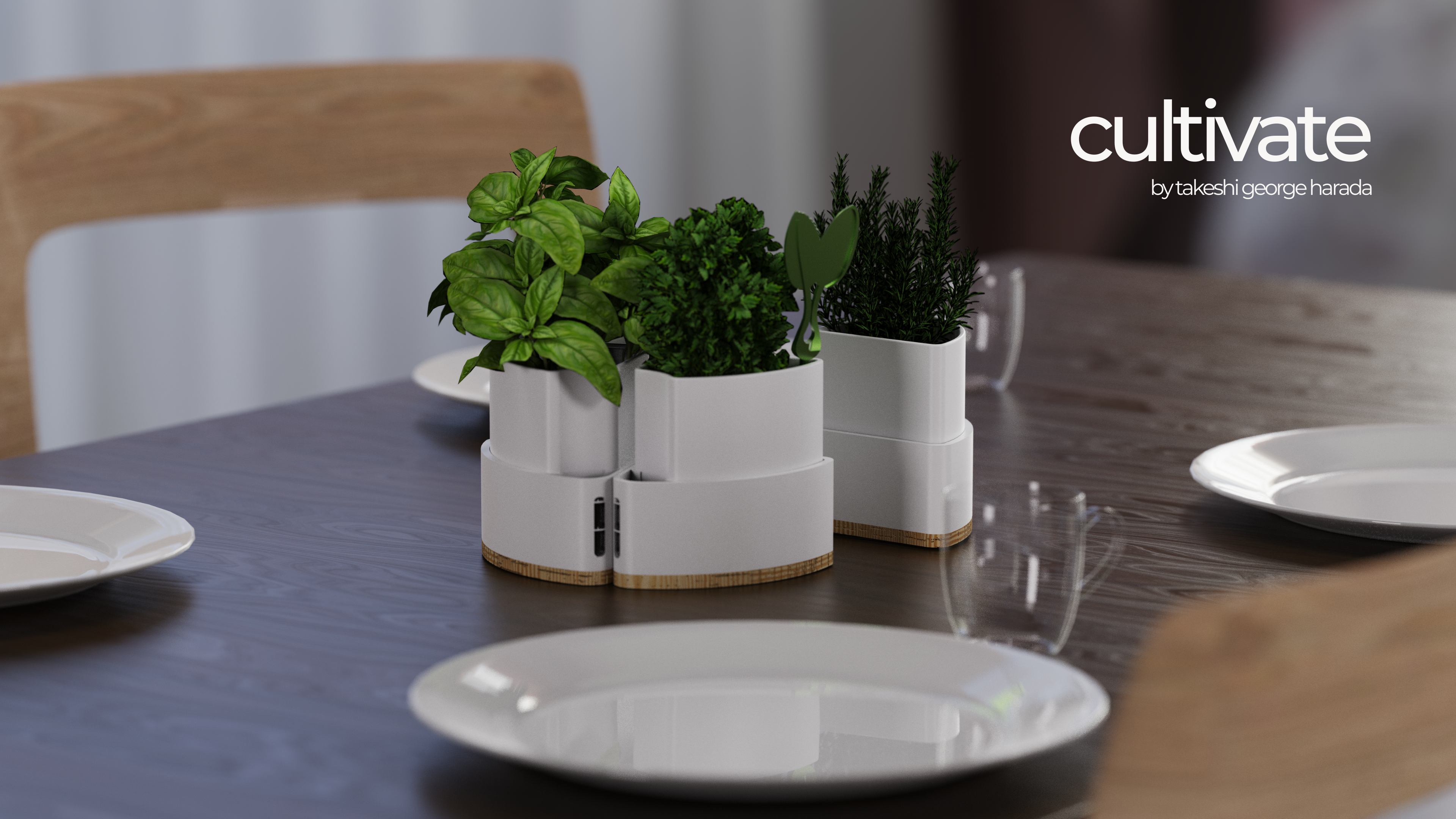
The project also helped him think differently about sustainability. For Harada, the most responsible object is not always the one that can be discarded more cleanly. It may be the one people want to keep using.
“To me, the best way to impact the Earth is to make a product that people use for a long time, as opposed to making a product that you can recycle, because I feel like that still insinuates you have to throw it away,” said Harada. “I don’t really find that to be the answer. I think the longer something can be used, the more lifespan it has, the more sustainable it is.”
Milan, New York and what comes next
During his time at NJIT, Harada planned a trip to Milan Design Week. Harada and a friend decided to buy their own tickets and experience the city during one of the most important weeks on the global design calendar.
The trip became a lesson before they even arrived.
“It was crazy because even at the airport, from JFK to Milan, everyone in that plane was a designer because it was Design Week,” Harada remembered. “I was just talking to random people in the airport about design and where they came from and what their background was. To me, that was really funny, but it was also very interesting and eye-opening. There were a lot of people just like me, going on this plane to Milan. Some of them were going because their company sent them. Some of them were going from their own pockets. It was really fun — even in the airport.”
That sense of proximity to opportunity is also how Harada sees New York. Being near the city, he said, is one of the major advantages of studying and starting a design career in New Jersey.
“Being in the Tri-state area, having New York right there is honestly a blessing,” he said. “The opportunities and the connections that you make in the city are endless. There are so many people there.”
As for the Takeshi Harada touch, I think simplistic beauty would probably be the best way to describe it.
He is also entering the field at a moment when designers are being asked to think about artificial intelligence and its place in the creative process. Harada sees AI as useful, but limited. It can accelerate parts of the work, but he does not believe it can replace the human ability to understand problems and create meaningful solutions.
For Harada, the answer is not to reject the technology. It is to understand it.
“AI is good for making work faster, especially in the design world, but AI is not very good at generating ideas,” said Harada. “I feel like industrial design is going to be one of those industries that stays alive through AI, just because AI is not very good at generating ideas and solutions to problems. That’s what we do — we solve problems in industrial design.”
Harada does not claim to have fully defined his design identity yet. He expects that to take years of work, experimentation and professional growth. But he has a direction: to create objects that are simple without being empty, useful without being obvious and beautiful in ways people come to understand through use.
“As for the Takeshi Harada touch, I think simplistic beauty would probably be the best way to describe it,” he said. “You look at something and it’s beautiful, but there are some things with the object that you’re kind of confused about. You don’t know why it’s there until you actually start using the product, and then you understand why it’s there.”
