
By the time Spencer McLane B. Arch ’23 first stepped onto the Amanvari construction site in Baja California Sur, the luxury resort had undergone a decade of design designs prior to his assignment on the Amarvari team. The drawings were elegant. His job was to make them buildable.
McLane joined Aman in March 2025 and immediately became involved in delivering the first group of branded residences at Amanvari, the hospitality company’s first resort in Mexico. Located on Baja’s East Cape near Los Cabos, where desert, sea and estuary meet, the property opened Aug. 1, 2026.
During construction, McLane tracked progress, reviewed the work on-site against the drawings and Aman’s quality standards, completed final inspections and handed the villas over to their owners. He is now managing the design of future residences at the property, with the next scheduled to begin construction in 2027.
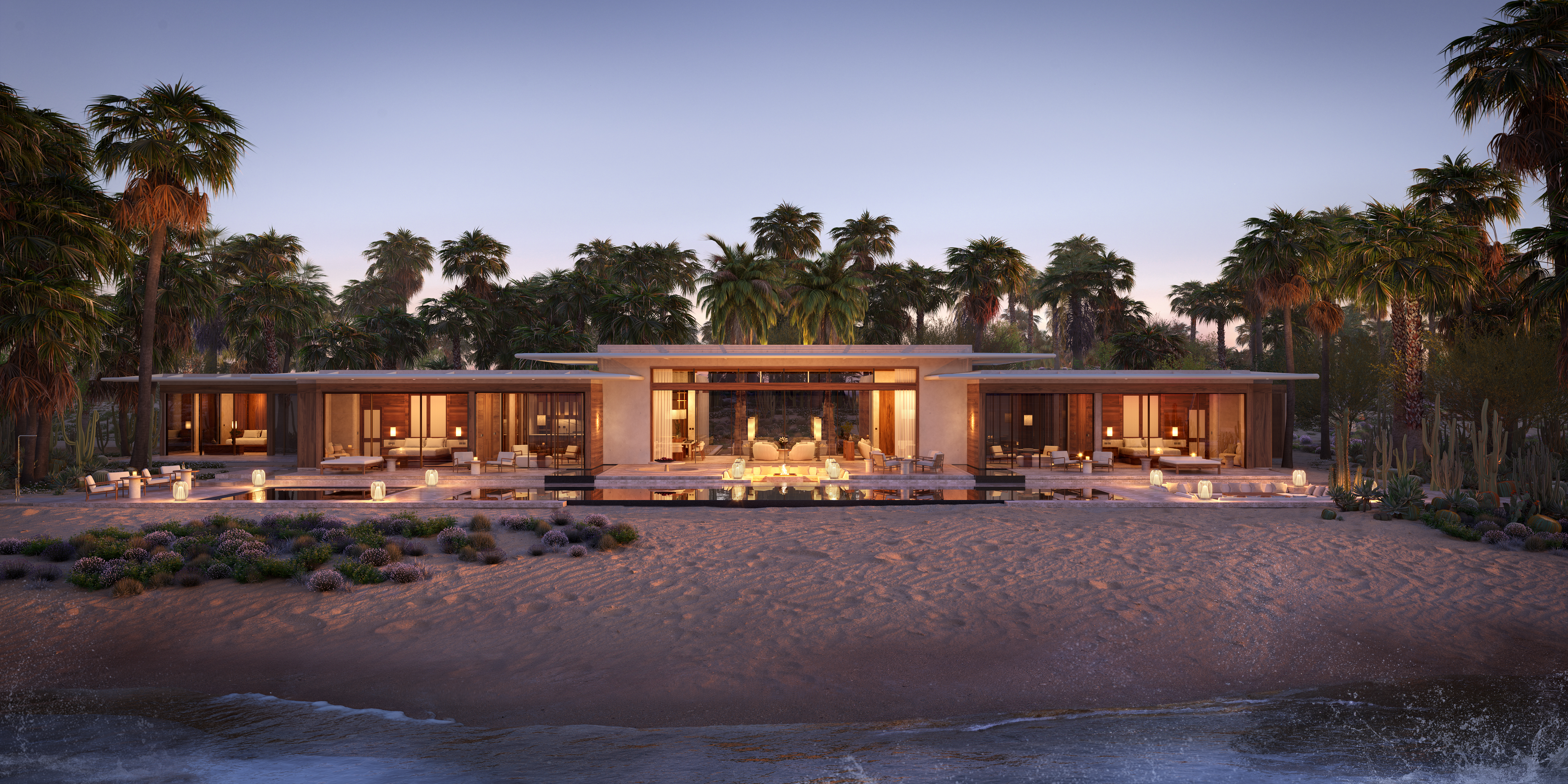
For McLane, an architectural designer now serving as Aman’s design executive for the Americas, the assignment distilled a lesson that has guided his path from NJIT architecture studios to fashion retail and luxury hospitality: A compelling concept matters only if a designer can carry it through the complicated process of making it real.
Bringing blueprints to life
McLane inherited years of decisions made for the Amanvari properties before he entered the profession. To provide direction to contractors and teams in Mexico, he first had to understand the history behind the residences — and then communicate that intent in a language he is still learning.
“I had to improve my communication and learn new ways of communicating,” McLane said. “I spent days on-site at a time taking detailed photos, sketching details and finding precedent in order to support project delivery.”
Those photographs and sketches became a shared visual language. They helped McLane explain how details should come together when words or plans alone were not enough. They also allowed him to respond to conditions that could only be discovered once construction was underway.
“Not everything in architecture is captured in the drawing set,” he said. “A design may be beautiful on plan, but it needs to be translated into a buildable condition.”
That meant protecting the original concept without treating the plans as detached from reality. McLane had to interpret the design within the constraints revealed on-site, solve details with the project team and ensure that the finished residences still delivered the experience envisioned years earlier.
Learning to balance imagination and execution
McLane earned his Bachelor of Architecture from NJIT’s Hillier College of Architecture and Design in 2023. He chose NJIT partly for its proximity to home and New York City, but the program’s practical approach stood out. Faculty members who were also practicing architects connected theoretical ideas to the profession, while the curriculum combined design with industry-standard software, coding, structures and engineering.
During his fourth year, a collaborative studio placed him with students in interior, industrial and digital design, showing him how different disciplines could approach the same problem.
“It helped me understand that architecture is not just one thing,” McLane said.
HCAD professors Enkela Malellari and Julio Garcia Figueroa were especially influential. Malellari, his first architecture studio critic, taught him to balance creative ambition with practicality. Garcia Figueroa introduced him to 3D-printed construction, which McLane later explored during a six-month internship abroad in Copenhagen, and gave him his first professional opportunity as a teaching assistant in an NJIT summer architecture course for high school students.
That opportunity followed three years of struggling to secure an internship. McLane responded by creating independent projects, taking additional courses and strengthening his portfolio. Internships at a New York City design practice and in 3D-printed construction followed. After he returned from abroad, an NJIT alumna Maya Barreto’14 offered him an internship that led to his first full-time position at Tapestry, the parent company of Coach and Kate Spade.
Building a coffee shop without closing the store
As Tapestry’s assistant manager of architecture, McLane helped deliver more than 20 North American stores a year. He learned to translate a brand’s identity and operating requirements into a physical environment alongside architects, engineers and construction partners.
The first North American Coach Coffee Shop presented an unusual test. It opened at Jersey Shore Premium Outlets in Tinton Falls, New Jersey, in December 2024. As design manager, McLane had to realize Coach’s creative direction in a food-and-beverage setting while accounting for equipment, merchandising and safety requirements. The coffee shop also had to be built inside the high-volume Coach store that could not close during the holiday and Black Friday period. And there was a personal irony: McLane does not drink coffee.
With little internal precedent to follow, every element had to be developed from the ground up. The coffee counter, back bar, signage and retail displays all required custom millwork. McLane spent months working with the construction partner and millworker to create and produce those pieces on time while overseeing the architectural build-out.
The project taught him to move between brand identity and operational detail. Decisions made for the Jersey Shore shop helped establish standards later used at Coach coffee shops across the United States and internationally.
“I had to find the balance between respecting that heritage while pushing their brick-and-mortar retail concept forward,” McLane said.
From an iconic fashion house to Aman
That balancing act prepared McLane for Aman. Both companies have clients with strong expectations and personal relationships with the brand. Both require design to create an emotional experience while supporting a complex, revenue-generating operation. At Aman, however, each property must also respond to a singular location.

McLane now manages hotel and resort projects across the Americas and the Caribbean, from master planning and initial concepts through construction and opening. At Amanvari, that meant respecting an established vision while making the decisions needed to turn it into a finished property.
The scale of his work changed from a coffee counter in New Jersey to residential villas in Mexico, but the central question remained the same: How can a designer protect an idea as it encounters equipment, materials, schedules, contractors and the unexpected realities of construction?
“Strong design talent can only go so far if you can’t produce,” McLane said.
Creating opportunities at NJIT and beyond
McLane’s NJIT education extended beyond the studio. He volunteered in the architecture school’s Supply Shop and 3D Print Lab and served as philanthropy chairman for Pi Kappa Phi. During the COVID-19 pandemic, he helped organize Greek life events that followed campus safety protocols while allowing students to raise funds and stay connected, earning him an NJIT Public Safety Challenge Coin.
Now based in Miami, McLane returns when possible for alumni events and architecture showcases. His advice to current students draws from the period when professional opportunities seemed elusive: Explore every facet of the field, remain open to less traditional paths and create momentum when no obvious door is opening.
“Build your own projects, promote yourself, take a course that challenges you and reach out to your professors,” he said. “You never know where it will lead.”
For McLane, it led from Newark to a Coach coffee shop and then to the edge of the Sea of Cortés, where visionary designs conceived years earlier became residences he could finally hand over to their owners.
