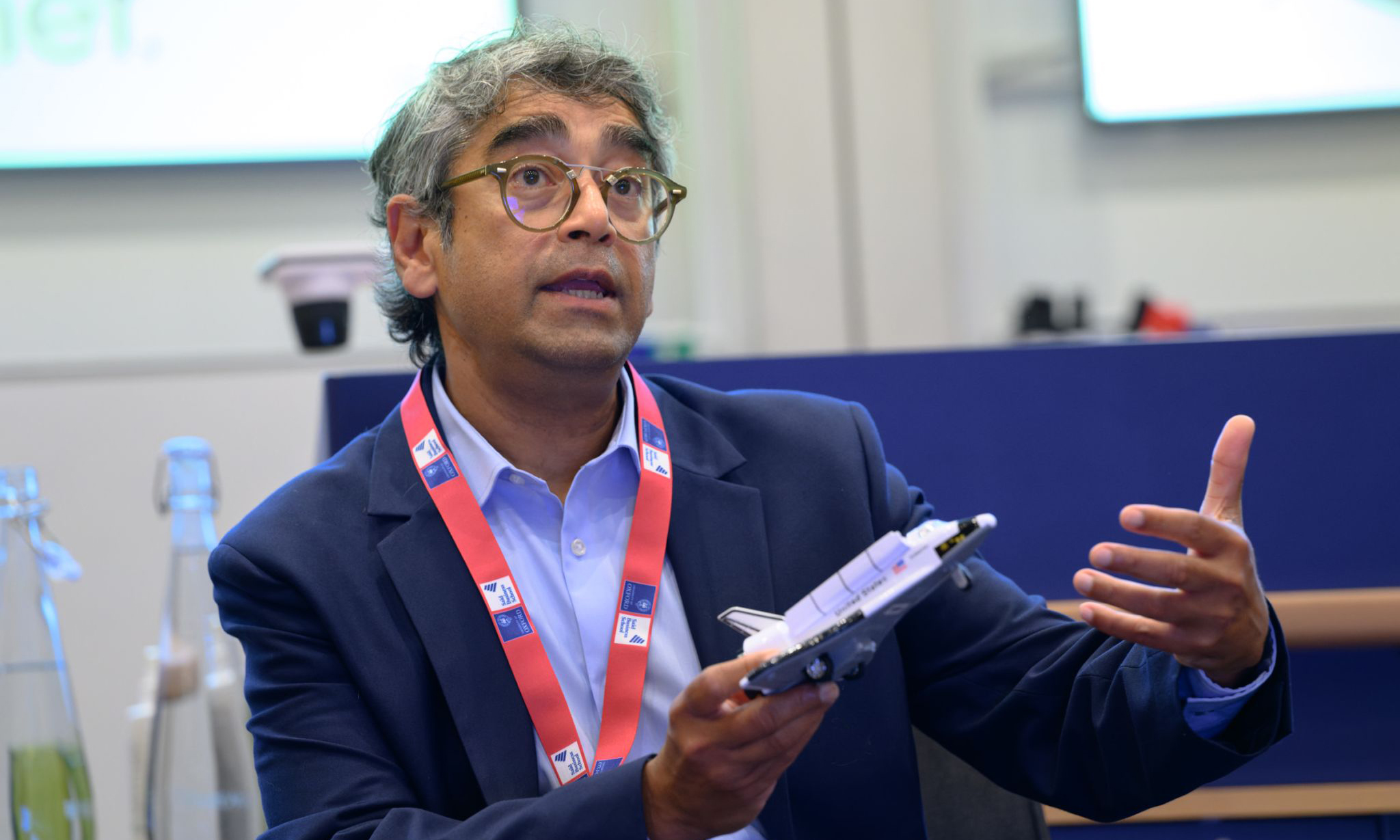
For more than 60 years, NASA has been sending people to space. As these programs evolved over time, so did NASA’s business model. By modifying its technology and strategies as well as its organizational structure, the agency adapted its business model to align with shifts in mission goals for space travel, according to new research from New Jersey Institute of Technology's Raja Roy, an associate professor in the Martin Tuchman School of Management.
In the study, published Oct. 16 in the journal Industrial and Corporate Change, lead author Roy outlines NASA's decades-long trajectory of organizational adaptation and business model innovation, which are key components of management research. He co-authored the study with Saikat Chaudhuri, a professor of management science and engineering at Stanford University in California.
Their findings reveal how NASA adapted structurally when its practices dramatically transformed. For NASA, core components of their adaptation included making the technical parts of a project more modular — able to work independently within complex systems — and mirroring that modularity in their organizational structure. Such changes have the additional benefit of creating entrepreneurial opportunities, which could increase the agency's value, the authors wrote.
From Apollo to Artemis
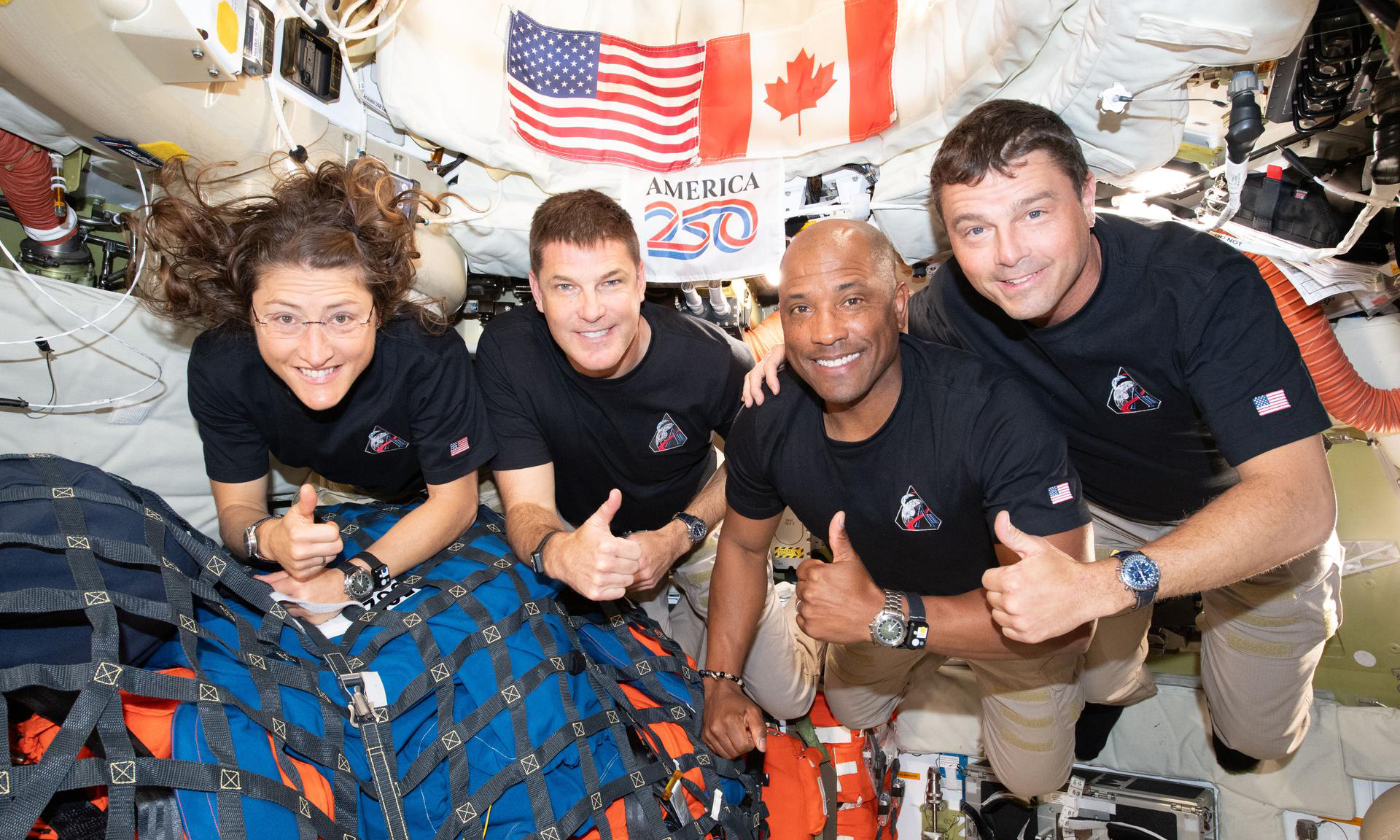
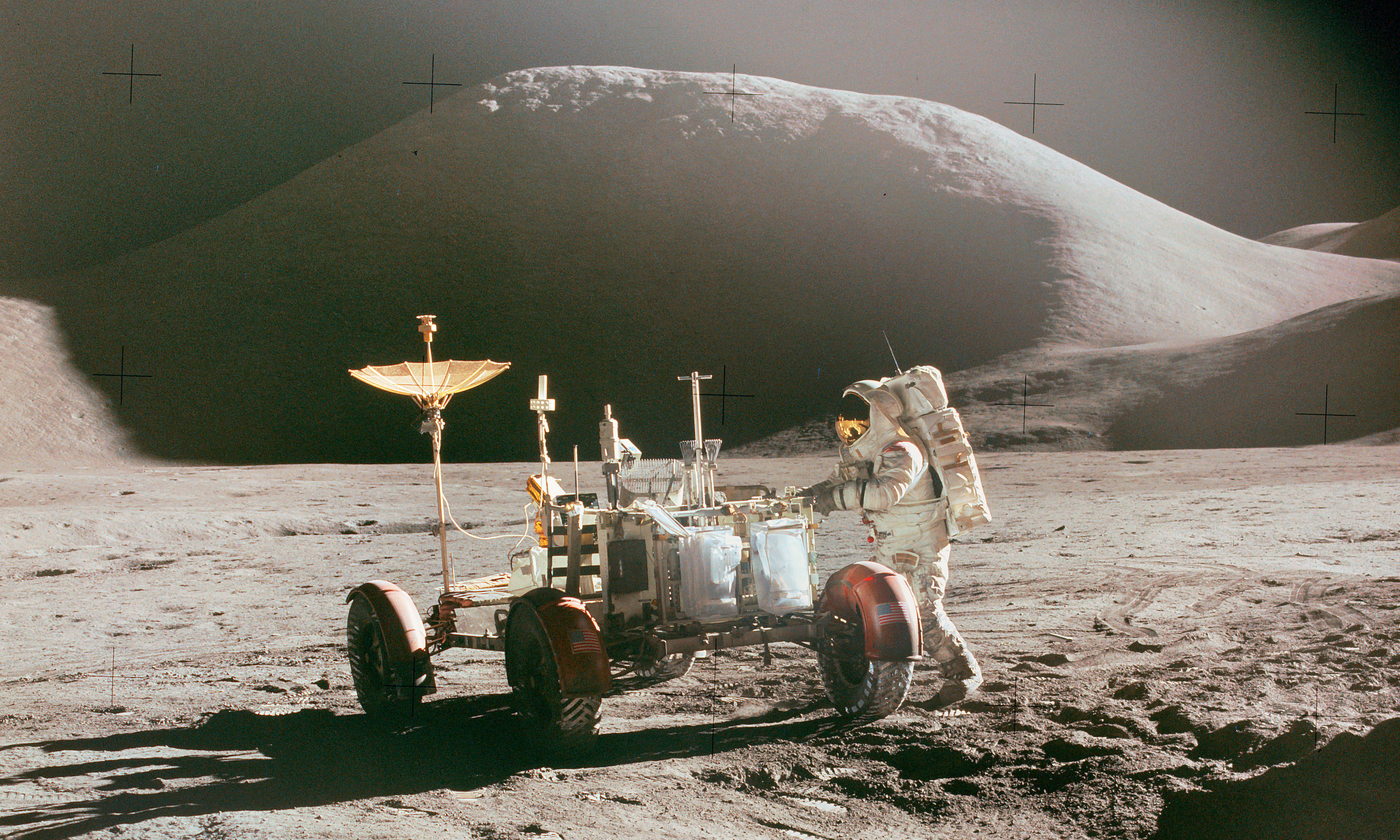
Beginning in the early 1960s, NASA launched America's journey to the moon with the Apollo missions. Artemis, the agency's current crewed space program, recently completed its second stage, sending five astronauts — four Americans and one Canadian — to orbit the moon. A future Artemis mission will return astronauts to the lunar surface.
In the time between the first successful crewed Apollo launch — Apollo VII on Oct. 11, 1968 — and the Artemis II liftoff on April 1, 2026, the agency has seen monumental changes. Some reflect technical advances, such as improved spaceflight and communication technologies, increased computing power and the growth of artificial intelligence. Other changes represent shifts in NASA's infrastructure to support new challenges.
While the details of internal transformation might be invisible to those outside NASA, they are still important for understanding how the space agency operates and how it could manage future change, says Roy.
Change always happens
A business model is a plan of action that defines a company's goals and practices to describe how it creates value. Even scientific agencies such as NASA are tasked with "creating value" in certain ways because they receive federal funding and are expected to produce results.
"Either it creates value for the scientific community, or it creates value for the general public," Roy says. NASA missions gather valuable data about our solar system and beyond, and technologies developed at NASA pave the way for devices that people use every day, such as sensors for cellphone cameras, laptops, cordless power tools and wireless headphones, to name just a few.
Business models would be relatively easy to maintain if internal and external factors remained static. However, "change always happens," and those who work with business models must be ready to adapt accordingly, Roy says. In that respect, "there's not much of a difference between the business model of a federal agency like NASA versus a for-profit organization."
Given that business models inevitably change over time, how do organizations weather those changes? That question motivated Roy to look into how NASA adapted its business model to support spaceflight initiatives spanning more than 75 years.
For the study, Roy and Chaudhuri examined decades of NASA data, finding that NASA adapted its business model by revising building blocks of mission stages and goals, called modules.
During NASA's Apollo era, from 1962 to 1972, the business model had two modules: "launch," for transporting astronauts to space, and "access and re-entry," for reaching the destination — the moon — and bringing the astronauts safely back to Earth.
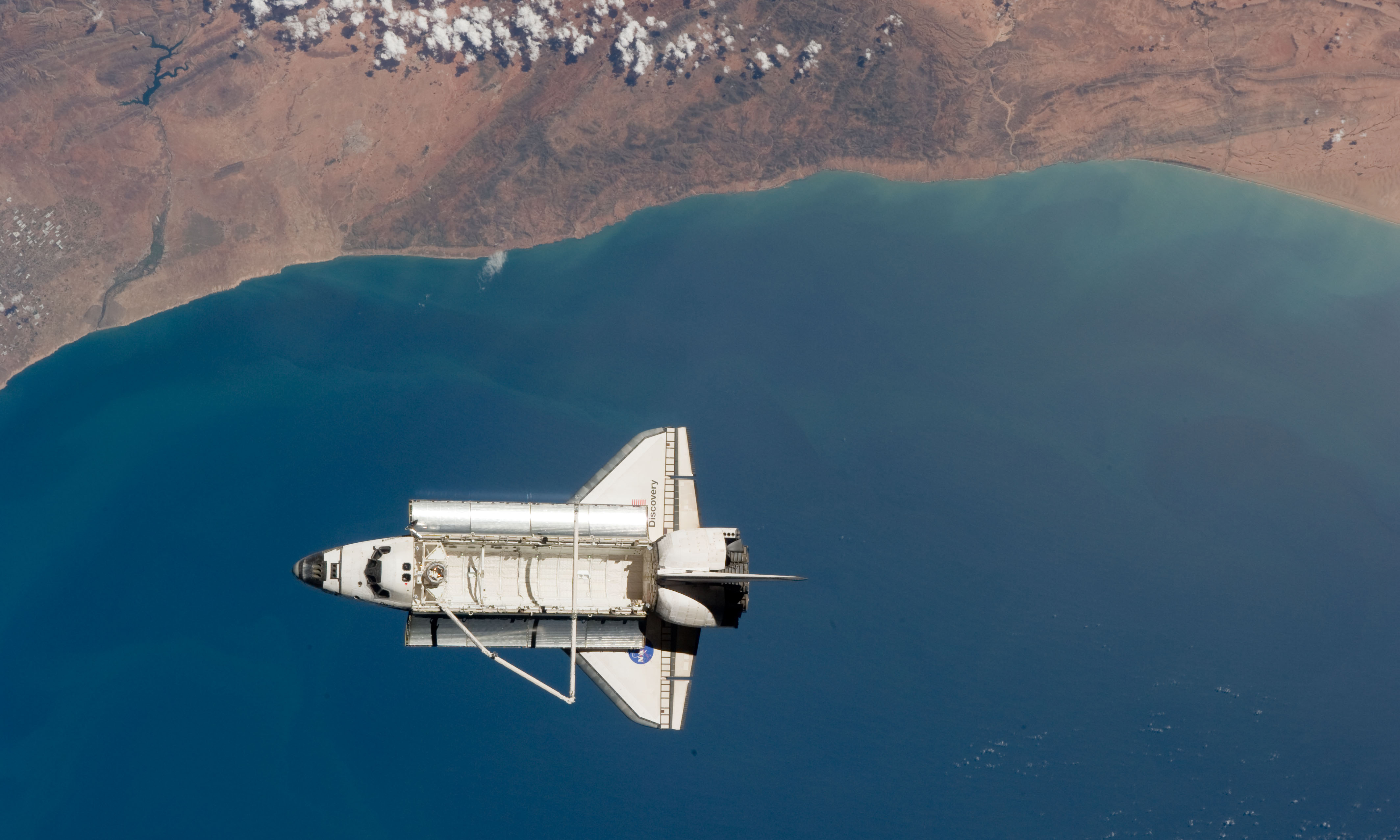
When NASA pivoted to space shuttles, the agency's business plan pivoted, too. NASA's space shuttle program brought people to low-Earth orbit, recovered and repaired satellites such as the Hubble Space Telescope, and transported astronauts and cargo to and from the International Space Station.
Now, benchmarks for success centered on reusability of NASA spacecraft, such as the rocket boosters that propelled the shuttles into space. The modules changed to reflect that.
With the development of the Artemis mission, NASA's business model added a new module — "presence" — addressing the added goal of creating a sustained human presence "not just on the moon, but eventually on Mars," Roy said. This introduced unprecedented technical hurdles that NASA needed to overcome.
In 2027, Artemis III will test the spacecraft's rendezvous and docking capabilities in low Earth orbit, and NASA anticipates that astronauts will return to the lunar surface in 2028. The Artemis program will also guide NASA's preparations for sending humans even farther in space, on the first crewed missions to Mars.
Modules, Mirroring and Continuity
These modules for NASA mission technology were mirrored by corresponding modules in NASA's organizational structure, according to the study. In other words: just as the technical modules for a mission were organized to be somewhat independent of each other, management focus became compartmentalized in similar ways.
During the Apollo missions, NASA's organizational structure was heavily weighted toward oversight of launches. Adding the presence module to Artemis — and the new challenge of sustaining a human presence in space — brought new management divisions to NASA, such as the Exploration Systems Development Mission Directorate.
Roy also noted in the study that as NASA moved from one business model to the next, leadership didn't scrap the earlier model entirely. By "recycling" knowledge from the previous business model and incorporating it into the new one, NASA maintained continuity and preserved a connection to past achievements — a process known as "horizontal transfer."
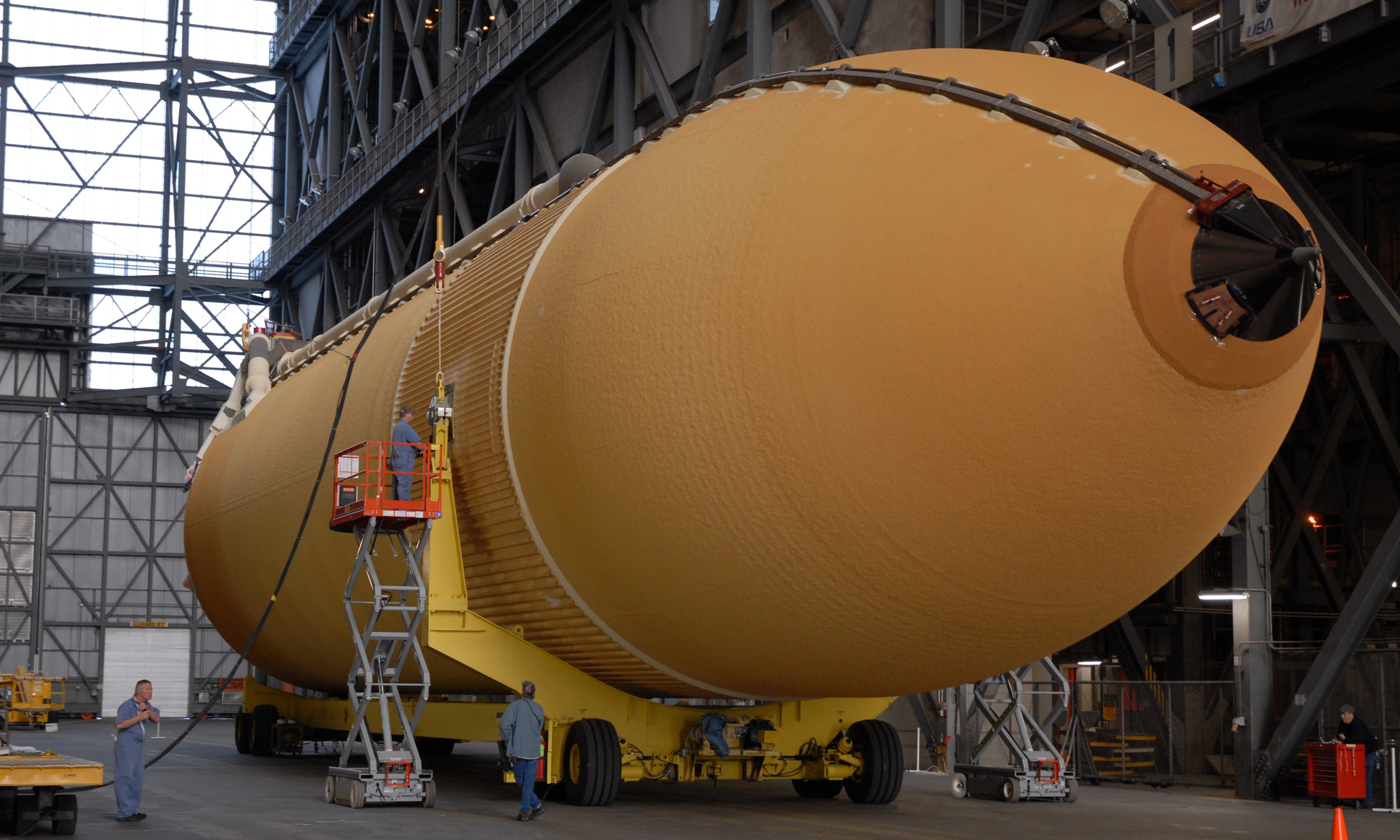
For NASA, that meant taking module elements from a retired mission and applying them to a new one. For example, the fuel tank launch module that launched Apollo missions was adapted for the space shuttles, and then for Artemis spacecraft. Likewise, the shuttles' RS-25 engines found new life as part of the Artemis mission's launch module.
The study's findings hold important lessons — not only for NASA and other organizations and agencies that use business plans, but also for entrepreneurship students at NJIT, as they learn about anticipating and preparing for change, Roy says.
"Even a small startup organization has some kind of an organizational structure — and with a business plan change, that organizational structure also needs to change," he explains. How such structures might change and map together depends on the context, but for entrepreneurship students, the key takeaway is that nothing is static.
"You design a business model; as you face challenges from the external environment, your business model is going to change, which means your organizational structure will also have to change," Roy says. "It's not going to hold on forever."
