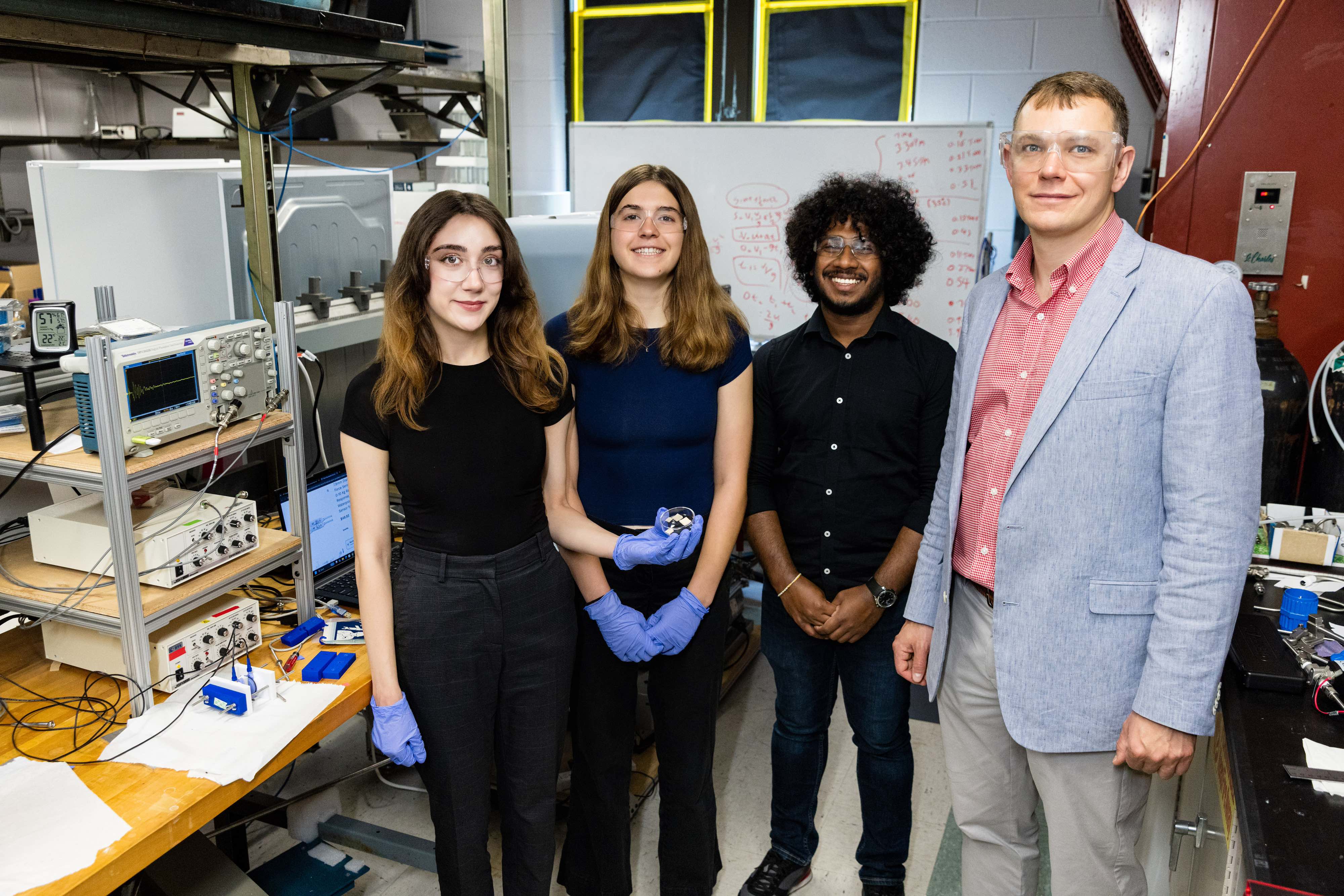
Chemical and materials engineering professor Gennady Gor started out making computer simulations of molecular models to study how liquids stick to porous surfaces; he later started incorporating experiments into his research. That pivot toward experimentation recently earned him a grant from the American Chemical Society Petroleum Research Fund (ACS PRF), for new experiments with synthetic polymers.
With $125,000 from the ACS PRF New Directions grant, Gor has assembled a team of New Jersey Institute of Technology Ph.D. and undergraduate students. Over the next two years, they will design and perform experiments exploring how petroleum-derived polymers swell and shrink; what causes variations in how polymers change; and why change is reversible in some polymers but not in others.
Gor, who leads NJIT's Laboratory for Materials Interfaces, says the grant will fund his lab's first foray into work with elastomers; the name is a portmanteau of "elastic polymers." Elastomers such as silicon, neoprene and rubber are known for their stretchiness and have many applications in products and industry. Importantly for the PRF, many oil and gas applications use elastomers as seals and O-rings, where their elastic properties provide critical hermetic sealing.
The Hysteresis Phenomenon
Gor typically studies porous adsorbent materials, which collect a surface film of molecules, atoms or ions from another substance. By comparison, elastomers are absorbent. Like sponges, they can expand significantly when exposed to fluids. This expansion also alters their elasticity, which is crucial for practical applications. "Although they don't have pores, they can still absorb," Gor says. "We want to use some of the methods we developed in our lab to study these materials — and in particular, the hysteresis phenomenon." Hysteresis explains how a material's history defines its present state; this can affect how it behaves in the future.
In polymers, hysteresis is linked to the physics of elasticity. However, when Gor reviewed scientific papers, he found very few describing fundamental hysteresis in stretchy polymers.
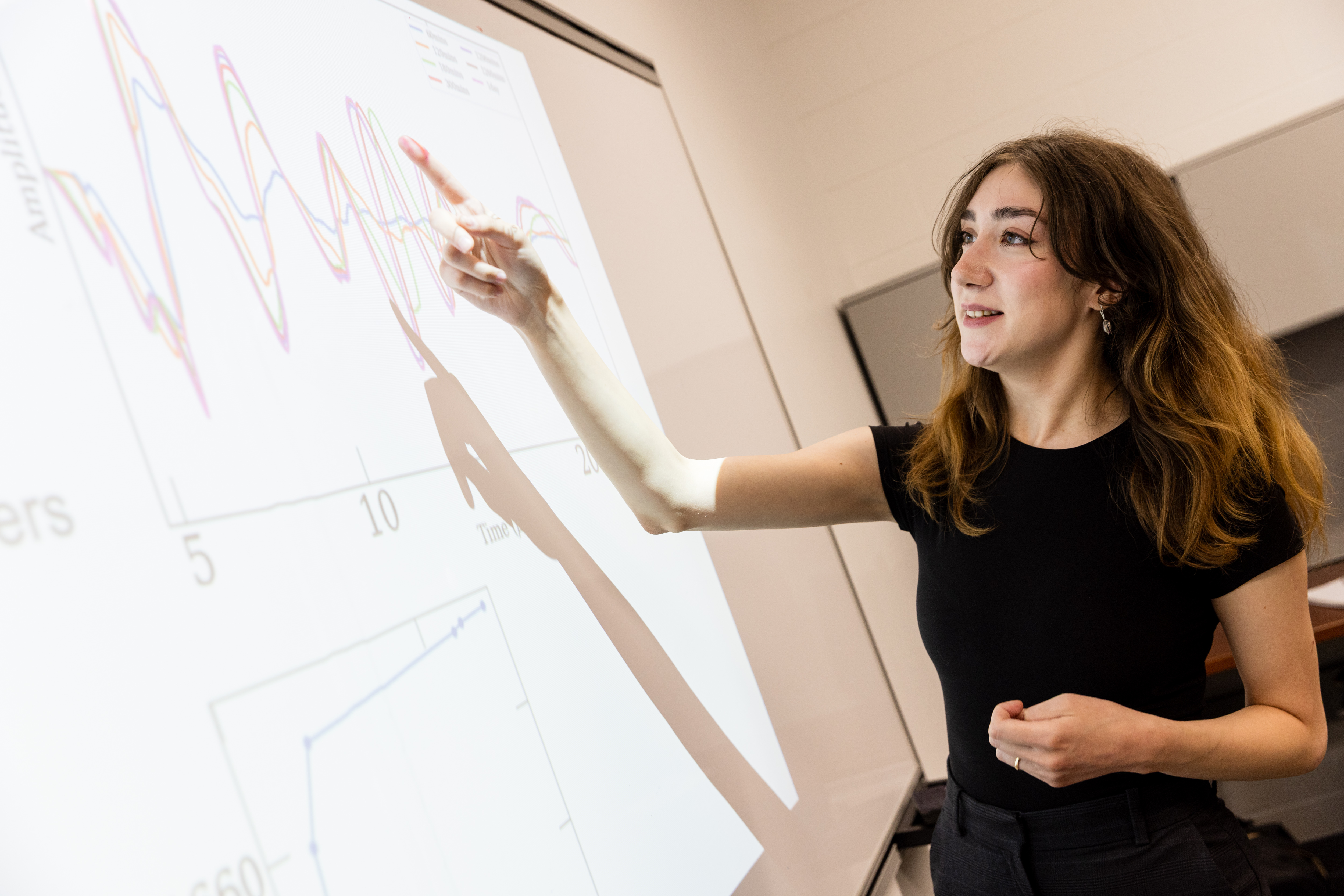
"If hysteresis is related to the elasticity of the material, why are there no studies on path-dependence or history-dependence of elastic properties?" he asked. "I think the challenge was that most people don't have the experimental capability to do that."
The transition shouldn't be much of a stretch. Even before Gor received the ACS PRF grant, two students in his lab were already gathering experimental data about deformation in rubber caused by liquids and vapor. Günel Nabiyeva, a fourth-year Ph.D. student, led the work, supervising undergraduate Elitsa Mileva '29, a chemical engineering major and an Albert Dorman Honors College Scholar.
"I've been spending a lot of time reading papers," says Mileva, "so I'm excited to get into the lab more."
Nabiyeva and Mileva will both contribute to experiments for the grant, along with second-year Ph.D. student Supun Rangana, who specializes in ultrasonic sensors that perform contactless measurements with extreme precision. With this technology, researchers can measure very small changes in polymers and other materials.
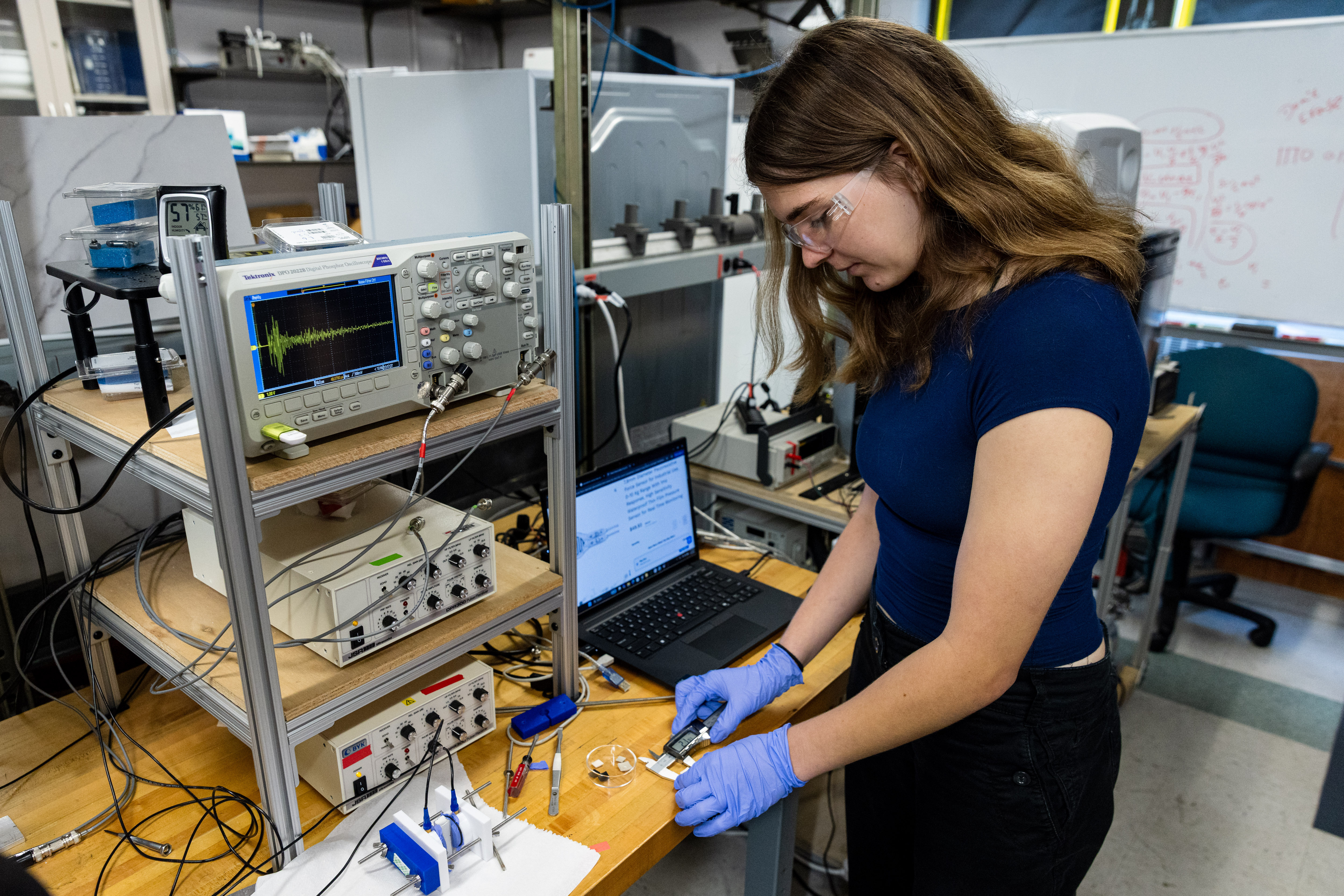
"What excites me the most is, it's a new system," Nabiyeva says. "We have never studied elastomers in our group."
Using ultrasonic instruments, the team will measure elasticity in polymers as they absorb hydrocarbon vapors under controlled environmental conditions. In the grant proposal, Gor suggested that hysteresis is an important component of how polymer structure and mechanical properties are changed by sorption — the process of absorption or adsorption.
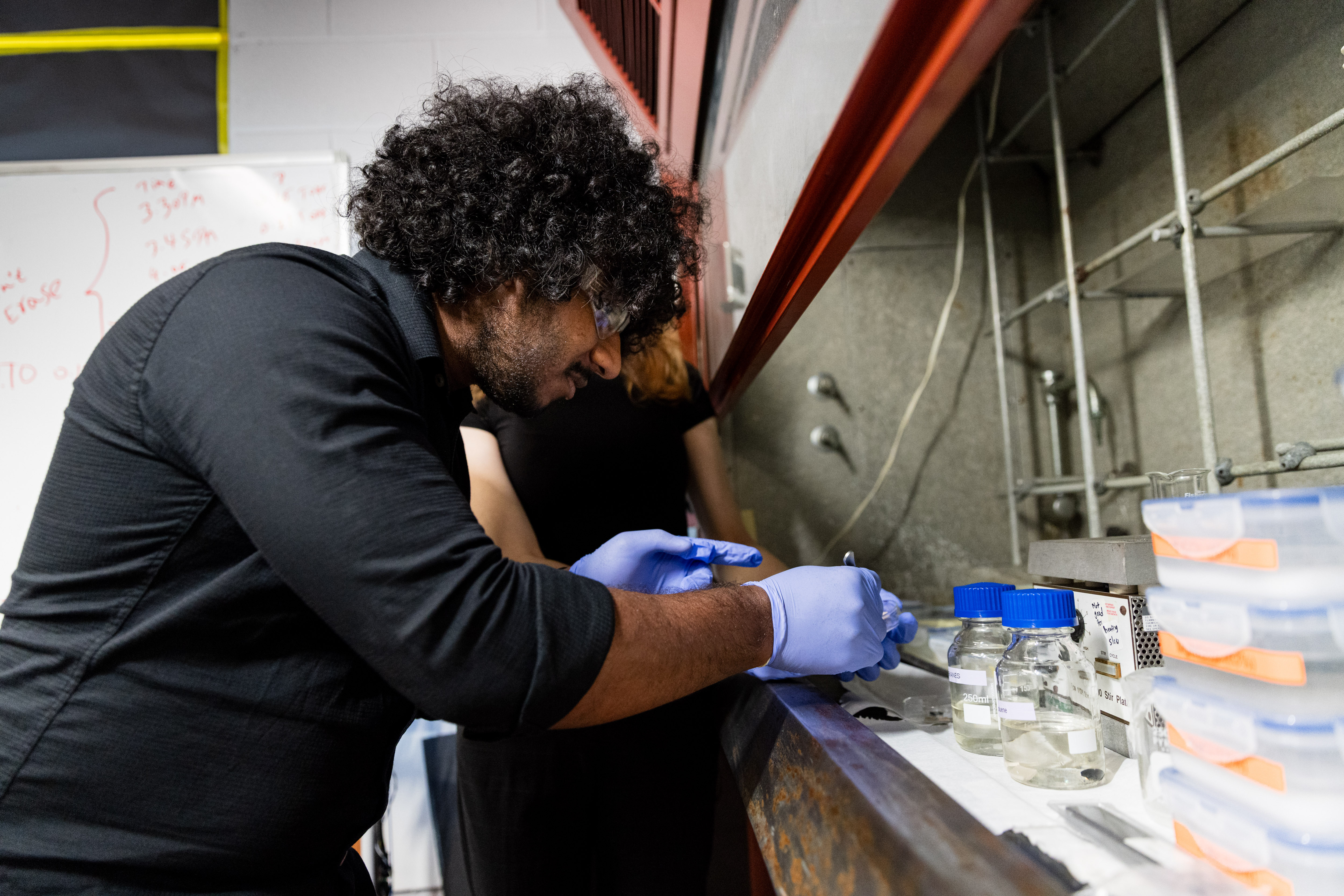
"To test this hypothesis, we will perform a series of sorption–ultrasonic experiments," Gor says. This will enable the team to simultaneously measure the polymer's swelling and elasticity as well as the amount of fluid that it absorbs, to tease out the relationship between the altered polymer and the fluid that changed it. For example, rubber will swell differently when it interacts with different types of hydrocarbons, according to Nabiyeva.
"Our knowledge is always being updated," Rangana adds. "That's one of the things that I am most interested in about this research."
Adding the long-missing puzzle piece of hysteresis to polymer analysis will help experts predict the performance of these materials more accurately, Gor says. Through the group's experiments, he hopes to collect data that could improve reliability in models of polymer performance and ensure that polymers perform more consistently across a range of applications in engineering.
"It's a new direction for me, so it's a new direction for my students as well," Gor says. "That's quite a challenge, but it's fun to have a challenge like that."
