Giovanni Crocco - a Civil Engineering Student Who Discovered Animation
Giovanni Crocco is a third-year digital design student, the Autodesk ambassador, 2026 design showcase honoree, and has earned top recognitions for his work at animation festivals in the tristate area. Like so many other creatively inclined individuals who have come up through the digital design program at the Hillier College School of Art + Design, he is an artist, a storyteller and very technically proficient.
What kinds of skills and personality does it take to be an animator?
Crocco: I believe being an animator requires a balance of both technical skill and artistic expression. A strong foundation in art fundamentals is essential, along with a solid understanding of the software used to bring ideas to life. As long as you have the initial understanding of the software to start creating something, that's fine, learning as you go is the best part of the process. However, I believe being an animator is more than just how much you know about the ‘technical stuff’. Animators need to be passionate, patient and persistent, because creating something meaningful can take days, weeks, or even months before reaching a result they’re proud of. Even if your skills aren't the best, your passion and time put into the project ultimately are on display and I believe that makes or breaks a project. Not only the authenticity of the animation, but if we can relate to the project, or the artist that made it. Animation is a process that demands attention to detail, time, and a constant drive to improve, but it shouldn't be daunting, it’s a fun and highly creative medium of art.
You were recently named ambassador for Autodesk, the software company – what does that entail?
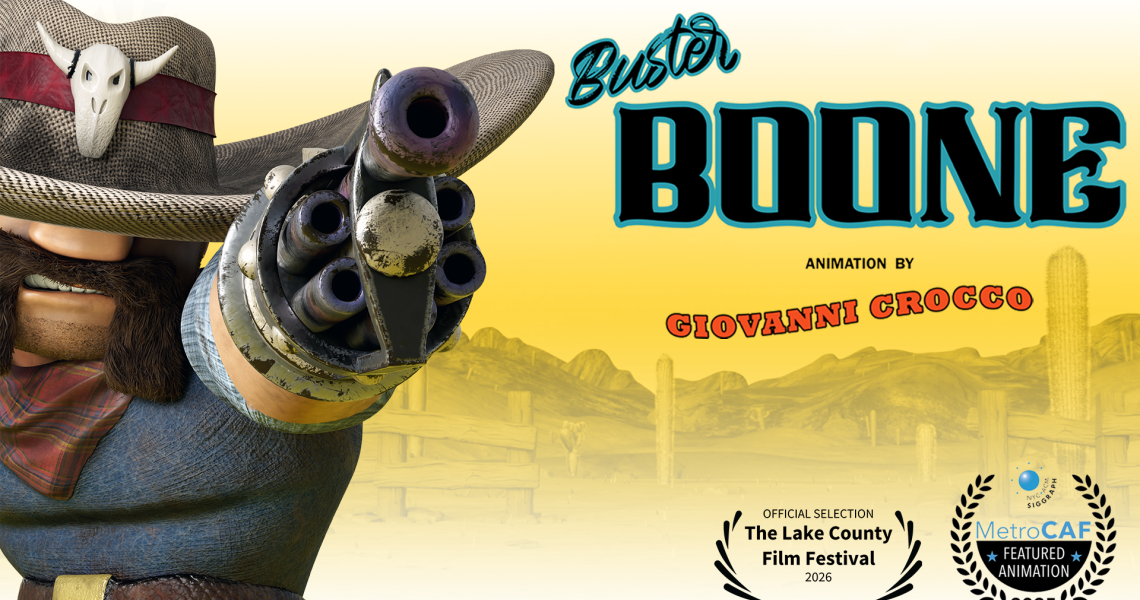
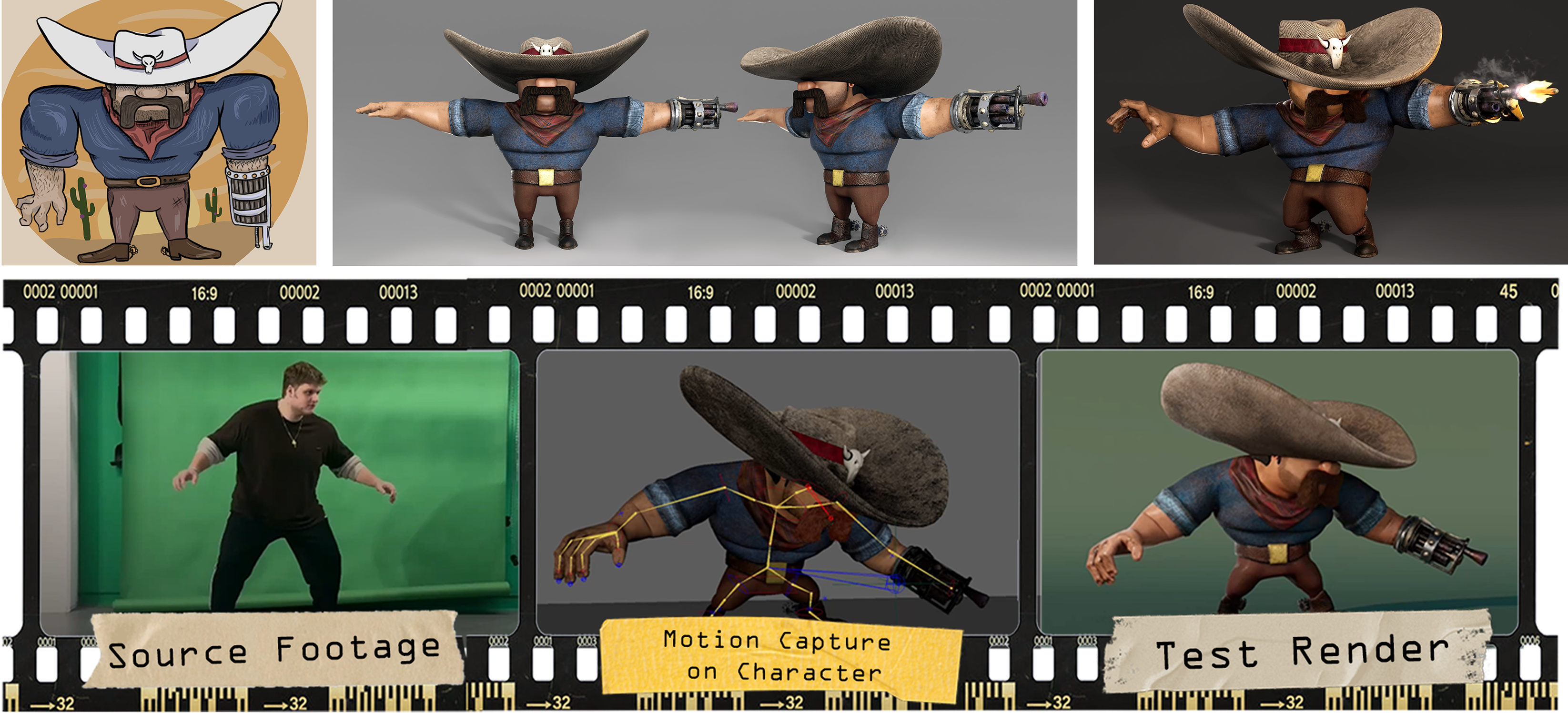
Crocco: As an Autodesk ambassador, my role is focused on empowering students to take leadership on campus by hosting workshops, organizing information sessions, and promoting new and emerging tools from Autodesk. Ultimately, my role is to help our design community grow. Currently, I am in the process of accessing materials to host an Autodesk Flow workshop to help introduce the tool to students who haven't heard of it yet and help strengthen the knowledge of students who have previously used it. Flow Studio enables students to use video to capture motion data, which can be refined in Maya or any animation software. I personally used Autodesk Flow Studio in a few projects, the main one being my animated short “Buster Boone”, so I am excited to host the workshop soon - April 23 is the target date. My other responsibility is to be a source of encouragement and inspiration to help motivate my peers to push their projects to their limits, and to be somebody they can go to if they need help. As an ambassador, I have the opportunity to pass along access to exclusive Autodesk events and office hours that could be great learning and networking opportunities for students. So far, I’ve had the opportunity to invite students to an Autodesk office hours with U.S. speed skating Olympic gold medalist Erin Jackson, which was a very cool experience. I’m hoping there's more to come so I can help spread the word on campus.
With Buster Boone you tapped into a film genre that so many of us are familiar with - did you watch old westerns growing up?
Crocco: Growing up I didn’t watch a lot of old westerns too often, but my grandfather sometimes would have the old 1949 Lone Ranger series on in the background when I visited. I want to say it was more around middle school to early high school that I started gaining interest in the old west. That’s when American history was in the curriculum, around that time I also watched Sergio Leone’s ‘Dollar Trilogy’ starring Clint Eastwood for the first time and did a deep dive on some old John Wayne films as well. There was just something so cool about that time period to me. Everything was interesting, from the settings to the legend of certain outlaws. I drew inspiration for Boone’s poster from the John Wayne film “West of the Divide” because I loved that old color pallet and marketing style so much.
You also created an Elvis character – what was the source for the soundtrack?
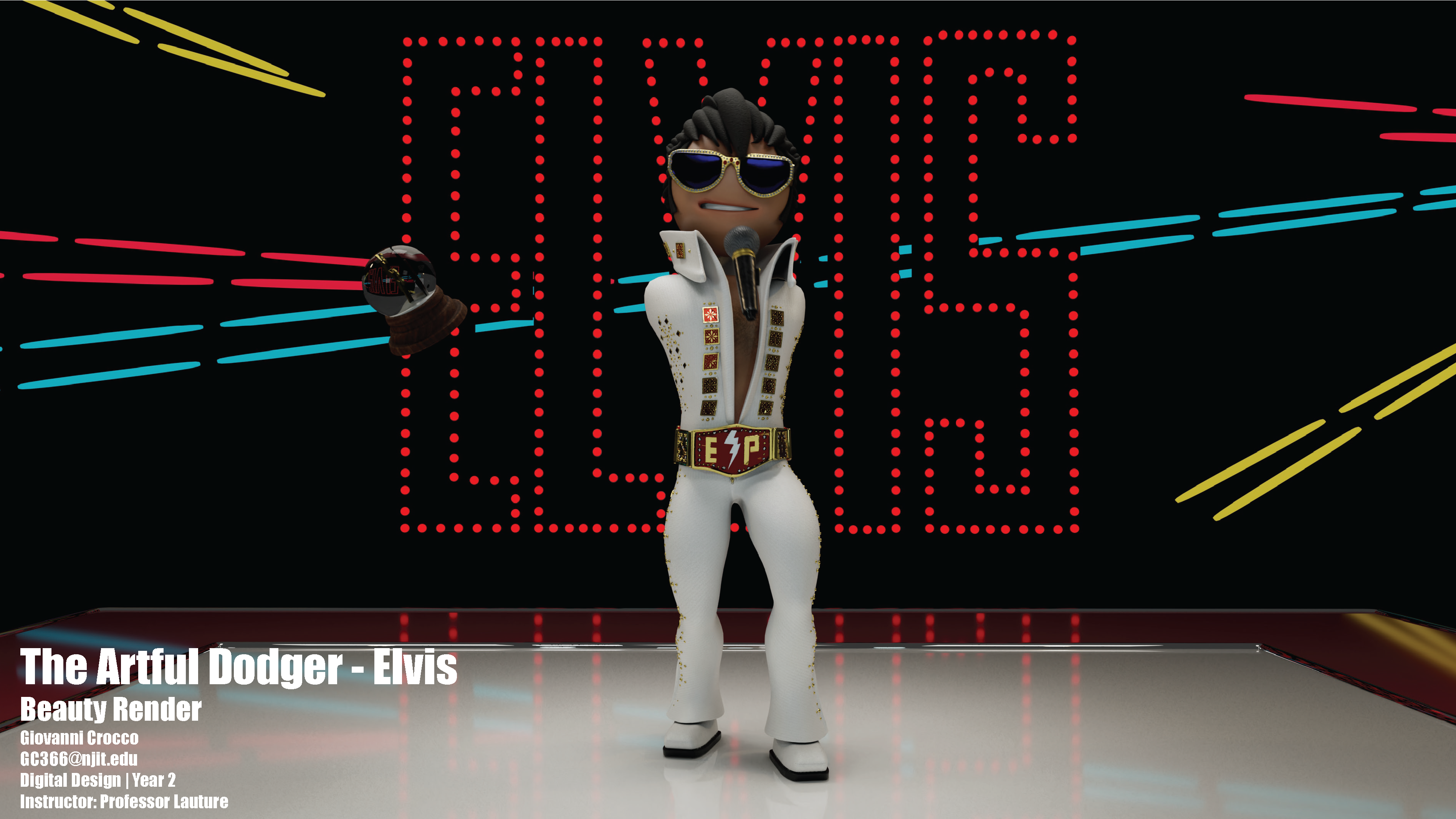
Crocco: The music is a snippet from “An American Trilogy” as performed by Elvis Presley. It is one of my favorite songs, and I knew if I had some sort of Elvis character without a song, the animation would feel wrong. At first, I wanted to attempt to maybe digitally recreate the song, but with the time crunch it wasn't as high of a priority as the animation was, plus I wouldn't have gotten anywhere near the King of Rock n’ roll in terms of music production. Although for my senior capstone project, I do plan on making a song from scratch, just to have every aspect of the project made from scratch. I’m not sure what it will be yet, but as of now that’s one of my goals for that project.
What career do you envision for yourself?
Crocco: The career I envision for myself now is somewhere behind the scenes on a team working in an animation studio. Preferably as an Animator, Modeler or Rigger, as I think those are at the top of my skillset currently. It’s always been a dream of mine to work at Pixar, since that studio along with others made so many animated movies that helped shape my childhood and spark this love for animation early on. It would be awesome if my hard work and dedication to this discipline could take me there some day, although I’m more than happy to just enjoy the journey and keep creating until that day may (hopefully) come.
Anything else you would like to share with your peers, incoming digital design students, or potential employers?
Crocco: One thing I would share with my peers, incoming Digital Design students, and potential employers is the importance of taking chances on things you’re unsure about. Before entering the Digital Design program, I was a Civil Engineering student, and I initially made the switch expecting to focus more on designing user interface (UX) and graphic design. At the time, I had little interest in 3D modeling and only a passive curiosity in animation. However, by committing to those early courses and giving the 3D workflow a real chance, I discovered a passion I didn’t expect. What started as something outside my comfort zone became the foundation of what I now love to do. That experience shaped not only my skill set, but also my mindset. To incoming students, I’d say to stay open and give every part of the process a fair shot. You might find your passion where you least expect it. To my peers, continue pushing beyond what’s required and exploring new tools and workflows. And to potential employers, I bring that same willingness to learn, adapt, and grow into every project I take on. It may sound corny but doing what you genuinely enjoy changes the way you approach your work. I’m constantly motivated to improve my skills, take on new challenges, and keep creating, and that’s something I try to apply in everything I do.