YWCC Student Hopes Her NASA Supported Mission Project Makes It to the Dark Side of the Moon
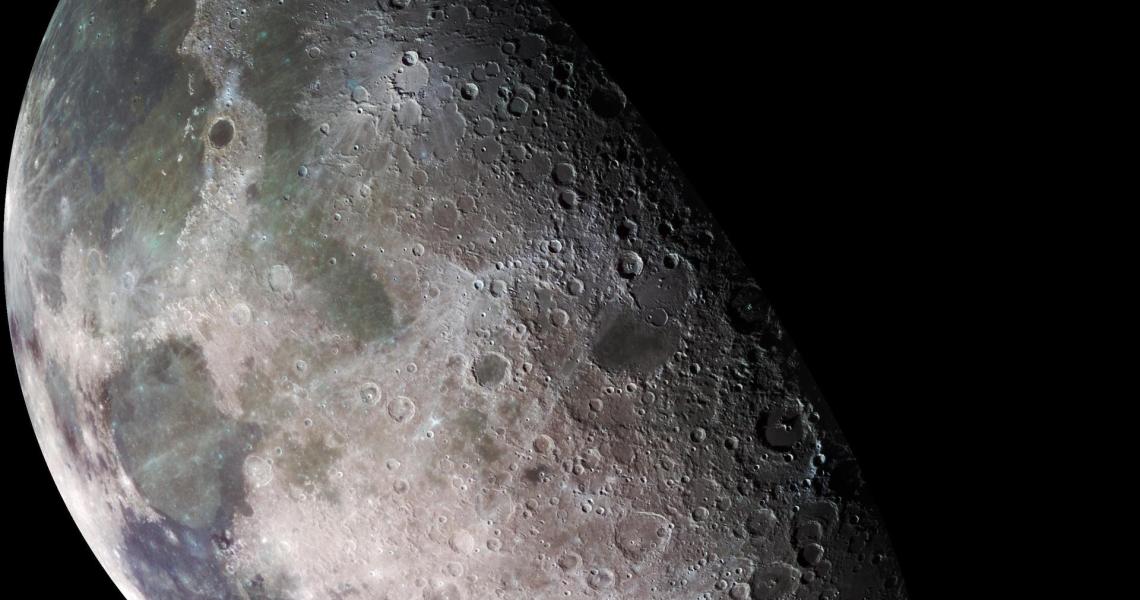
With the launch of the Artemis II mission to the Moon on April 1, a group of students led by project manager Jasmine Geo, a junior computer science major with a minor in applied mathematics and an Honors College scholar, will be busy recreating a lunar mission using a lunar surface vehicle to find water on the darkest regions of the planet for use in future landings.
The project is being done as part of the L’SPACE Mission Concept Academy Spring 2026 cohort, where around 21 student teams from several universities, including Cornell and FSU, among others, are tasked with creating a small robotic mission concept that could potentially land on the lunar surface and contribute to the future goals of the NASA Science Mission Directorate (SMD) and Exploration Systems Development Mission Directorate (ESDMD).
Geo’s team, composed of science, engineering and computing majors, are responsible for developing a system to explore permanently shadowed regions (PSRs) of the lunar surface. This program gives students hands on experience with developing a realistic NASA-style mission surrounding a specified budget of $150 million. Should their project be selected, they could potentially be awarded a grant to bring their concept forward from theory to production.
However, the principal objective is to provide opportunities to develop valuable skills and insights that will better prepare participants to work on similar projects of various sizes in future professional careers.
A Quick Tutorial on Permanently Shadowed Regions
PSRs on the Moon are surface areas, primarily concentrated near the lunar poles, where the extremely small axial tilt of the Moon prevents sunlight from ever reaching the local terrain. These areas are typically located in the floors of deep polar craters, depressions or troughs, and because the Sun never rises high enough on the horizon, they remain in continuous darkness.
PSRs represent a potential resource for in-situ resource utilization, where ice-derived water could be converted into consumables (oxygen, drinking water) and propellant. Through the Artemis missions, NASA plans to use in-situ resources to replenish both fuel and oxygen, instead of having the expense and uncertainty of continually being dependent on resupplies from Earth.
Geo always had a desire to make an impact by combining computing with environmental science, which inspired her to write and submit a series of five required essays that she conceded were “a reflection of both my passion and commitment” and got her selected, not only to be part of a team, but to lead it.
“I didn't think I’d get it. I’ve had an interest in NASA for a long time. The fact that I get to actually be part of such an important futuristic project with them is still surreal!” she exclaimed.
She views the experience of being a project manager as an incredible professional development experience that has built upon her leadership skills and allowed her to learn about other areas of expertise, such as thermal engineering.
Her primary responsibility is to review large sets of technical documents, including mission design reports, system requirements, and team deliverables, delegate tasks and create timelines for her subteams in the areas of science, engineering and programmatics.
During the project, the team must:
- Devise a transport and entry plan, including defining the mission trajectory, launch and transfer strategy, and safe landing approach for delivering the system to the lunar surface.
- Formulate sustained science operations, deriving specific, measurable objectives for the Science Traceability Matrix, focusing on characterizing the presence, spatial variability, and near-surface behavior of lunar volatiles within a defined operations zone surrounding a selected landing site.
- Design the remainder of the team’s ConOps (Concept of Operations), select the science instrumentation payload, and develop a system capable of functioning within the lunar environment.
The final phase of the assignment, which occurs near the end of April, requires the team to compile essays that detail and validate the mission’s intended trajectory. Weekly meetings are held with L’SPACE supervisors to evaluate progress, assess, benchmarks and determine next steps in alignment with mission and project timelines.
A highlight of the weekly meetings includes guest speakers such as a retired director of NASA’s Mars exploration, NASA Mission Systems Engineer for the James Webb Space Telescope, NASA’s In-Situ Resource Utilization Principal Technologist, and many more.
Geo stated, “I am having a lot of fun. I love learning about space, and being a project manager has been invaluable in understanding how people in different disciplines work together. I’ve also learned how to navigate challenges like communication, scheduling, and adapting when plans change, which has really strengthened my ability to listen to and support my team.
As she pointed out, working as a team requires understanding and reconciling different perspectives and approaches in pursuit of a shared goal: enabling sustained human presence on the Moon.
While many details of the project remain undisclosed, Geo and her team believe they are working on something “worth exploring.” As the final phase of the program approaches, the possibilities remain wide open. Who knows? The sky’s the limit.