Students Put Theory into Practice at NJIT Engineering Showcase
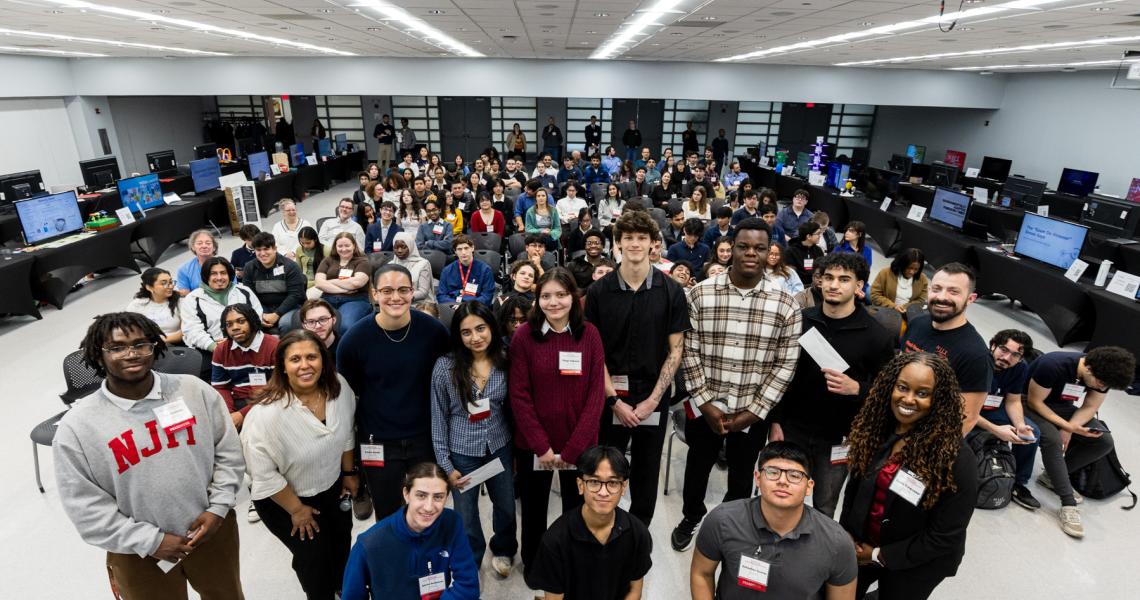
Engineering students at New Jersey Institute of Technology waste no time turning ideas into reality.
From their first semester, NJIT undergraduates are challenged with imagining and designing technologies that explore practical applications for engineering principles. On March 6, students from the Newark College of Engineering (NCE) gathered to share their work at the 2026 First Year Engineering Design Showcase.
At the showcase, 48 teams presented a diverse range of projects. There were puzzle boxes and desk organizers; assistive devices such as sports wheelchairs, exoskeletons and 3D-printed prosthetics; and tech that measured soil moisture, managed stress, monitored oxygen levels or distributed medication.
"We insist on providing first-year students in NCE with design experience right at the beginning," says NCE dean Moshe Kam. "In the process, they learn about the material, about teamwork and about themselves. They gain experience that will be very valuable when they continue — both at NJIT and when they graduate."
Measure twice, cut once
Instructors from engineering design courses nominate students to participate in the showcase, based on projects developed in their classes. Originally planned for February 27 during National Engineers' Week (February 22–28), this year's showcase was rescheduled after a blizzard blanketed New Jersey with record snowfall. Despite the delay, student enthusiasm at the event was high, with teams presenting their designs to judges, family, friends and curious spectators from the NJIT community.
Levi Koeppel, an industrial engineering technology major, demonstrated his team's use of magnets in an interactive "floating" model of the solar system.
"The most important thing was making something that is fun and tactile and a little bit educational," Koeppel says. "It gets people asking questions like, how is friction working here? Magnets — how do they work?"
Another team, inspired by the challenge of caring for dogs while juggling school and work, built and programmed an automated dispenser for pet food. In doing so, they learned the importance of careful planning during fabrication.
"You know the saying, 'measure twice, cut once'? I really took that to heart with this project," said team member Hiromi Pena, a biomedical engineering major. "If anything, I'd measure three times and then measure a fourth time, just to be sure, and then cut, because measurements really make or break it," Pena said. "That way, when you finally get to the crafting and the building and the assembly, it goes a lot smoother."
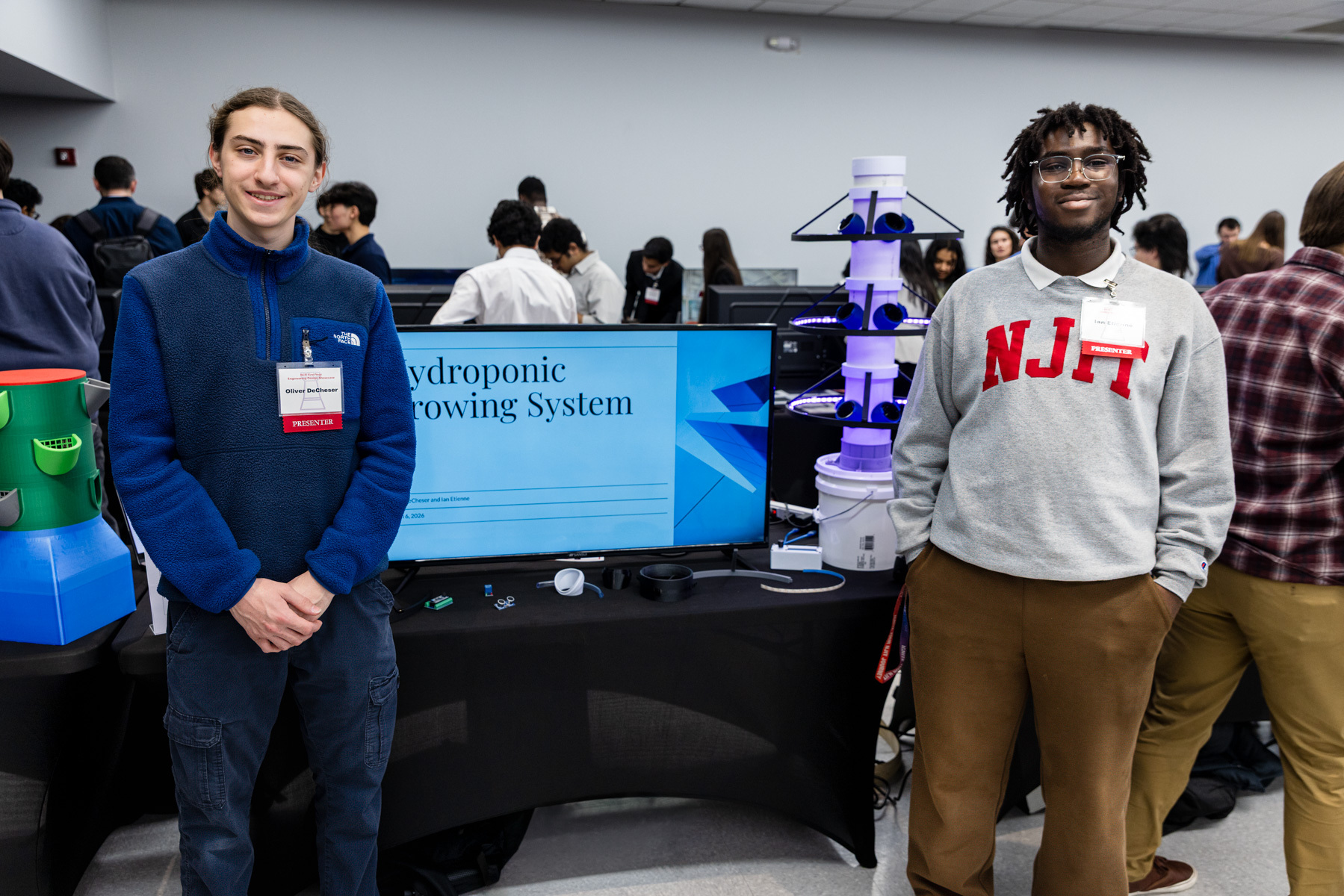
Oliver DeCheser and Ian Etienne won first place for their hydroponic garden system.
Judges selected three winners, and first place went to mechanical engineering majors Oliver DeCheser and Ian Etienne for their "Hydroponic Tower."
"The whole premise of hydroponic growing systems is that they're compact and they're easy to use. We designed the system so it could fit in an apartment," says DeCheser. "It's fully standalone, it doesn't need sunlight and it's cheap and accessible — under $100, if you're savvy."
Etienne found inspiration for the project in his father's love of gardening. "The thought of being part of a team that developed something that could benefit him really gave me that push during our innovation process," he says. "My biggest challenge was balancing time management and the design process itself."
Being able to apply engineering design fundamentals that they had just learned was a key learning experience, DeCheser adds.
"We were able to use those skills right away, and that was really gratifying."
Second place went to the project "Gesture Monitoring Device" for music platforms. The creators of "GDS Business Tracker" took home the third-place award, and an Audience Choice award went to the student team behind "Walk-N-Grab."
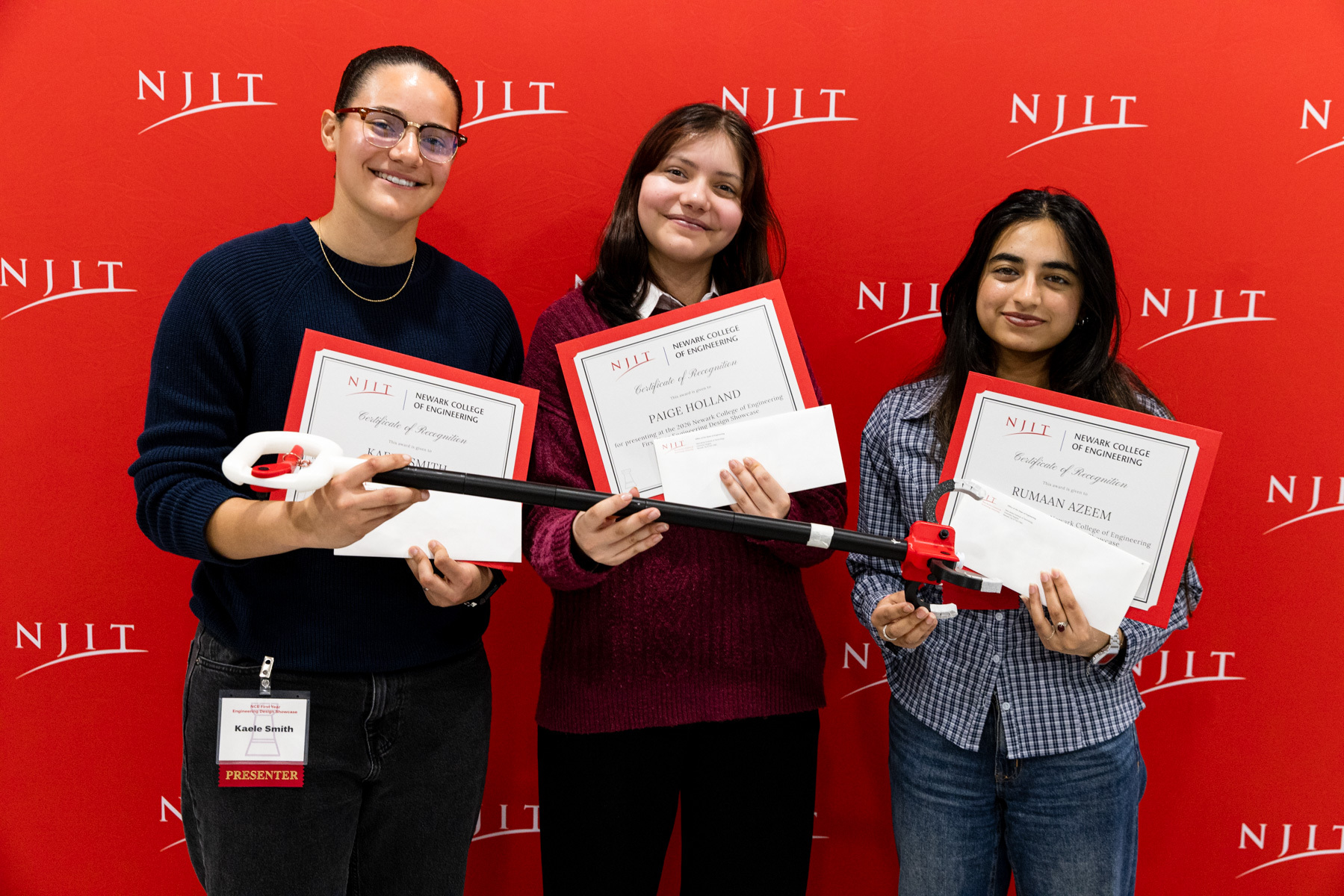
Rumaan Azeem, Paige Holland and Kaele Smith, took home the Audience Choice Award for their "Walk-N-Grab" project.
For showcase judge Bryan Wild '18, who received his B.S. from NJIT in civil engineering and is now a project engineer at Langan Engineering and Environmental Services, judging the competition is a way of giving back to NJIT's engineering community, he says. As Wild reviewed students' designs and spoke with presenters, he was impressed by the inventiveness that they brought to their designs.
"Creativity is how innovative ideas come together," he says.
According to Kam, the showcase has several goals. It gives undergraduates crucial experience in research and design during their earliest semesters at NJIT, and exhibits their work to a wider community beyond classmates and instructors. Participants also learn from their successes and failures, building resilience and experience.
"At the end of this process, whether or not the particular device works or makes sense, students are already well ahead of where they were before they started it," says Kam.
By presenting to judges and their peers, students hone their communication abilities, an often-overlooked tool for early-career engineers, Wild adds.
"People forget how important it is to interact and speak publicly," he notes. "The combination of your technical background as well as practicing in the field with public speaking and engaging with people — whether it's your customers or your colleagues— ultimately, that's how you're going to get from your first year in NJIT into the workforce."