Hillier College Celebrates 20 Years of Design Showcase with Honors for Alumni, Friends and Students
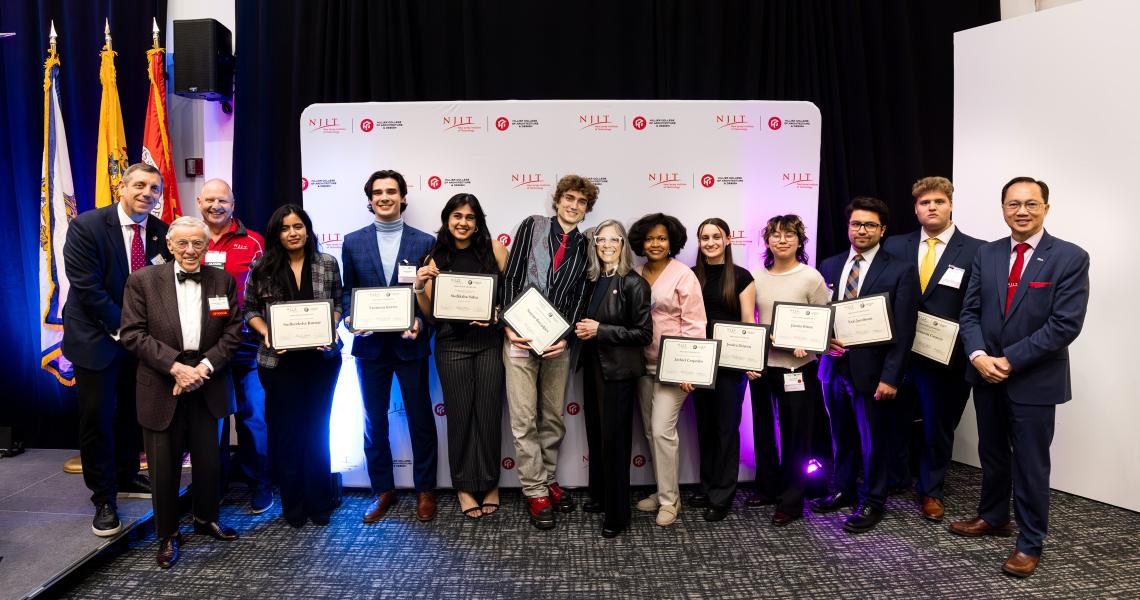
NJIT’s Hillier College of Architecture and Design (HCAD) marked a major milestone, celebrating the 20th anniversary of its Design Showcase — the college’s signature annual event that brings together students, alumni, faculty, benefactors and friends of Hillier College for an evening centered on design excellence, community and support for future generations of architects and designers. Like past editions of the showcase, the event highlighted the breadth of student work produced across the college’s architecture and design disciplines while also underscoring the philanthropic and professional connections that continue to shape HCAD’s growth.
“This evening, on display throughout the gallery, you’ll have the opportunity to see some of the best work from our design studios, on printed boards, in videos and in full scale prototypes,” said dean Gabrielle Esperdy. “So take the time this evening to engage with our amazing students and their work. It will remind you of why we all showed up tonight to support them (by purchasing sponsorships and individual tickets) and why so many of us show up every day at NJIT - because we believe in our students, and we believe in the mission of this university and of the Hillier College of Architecture Design.”
President Teik C. Lim emphasized the broader meaning of the evening and the impact of the community gathered around the college. “Thanks to the generosity of all of you here, we are designing the future by supporting scholarship, enriching student experience and ensuring that the next generation of architects and designers will positively impact the world, just like many of you have done as alumni.”
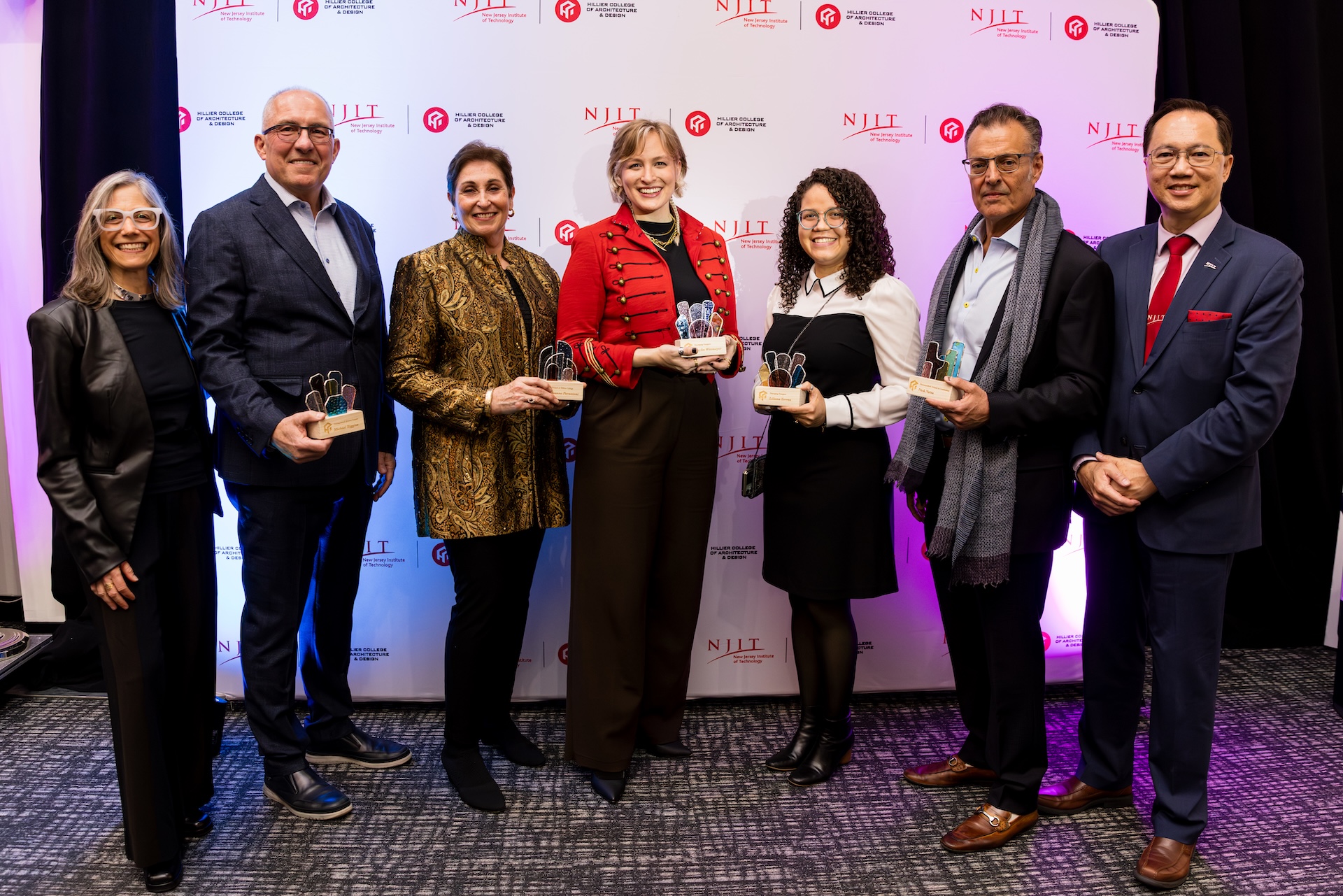
Alumni and friends of Hillier College honorees from left to right, Michael Higgins ’90, Jeanne Perantoni, Kaylin Wittmeyer ’21H, Liliana Torres ’17H ’18 and Nick Netta ’88 with Dean Gabrielle Esperdy and President Teik C. Lim.
The celebration also recognized alumni and supporters whose leadership, service and creative work continue to strengthen the Hillier College community. This year’s honorees were Liliana Torres ’17H ’18 and Kaylin Wittmeyer ’21H, who each received the Emerging Designer Alumni Award; Michael Higgins ’90, who received the Distinguished Alumni Impact Award; Nick Netta ’88, who received the Distinguished Alumni in Leadership Award; and Jeanne Perantoni, who received the Friend of Hillier College Award.
Best in Show
A major component of Design Showcase each year is the student competition, which honors standout work across the college’s disciplines. This year’s winners reflected the range of ideas, methods and stories shaping Hillier College studios today, from projects grounded in memory and material experimentation to those driven by narrative, urban context and spatial invention. As in previous years, the winning work stood out not only for its final execution, but for the clarity of the concept behind it.
Interior Design — Jessica Dineen
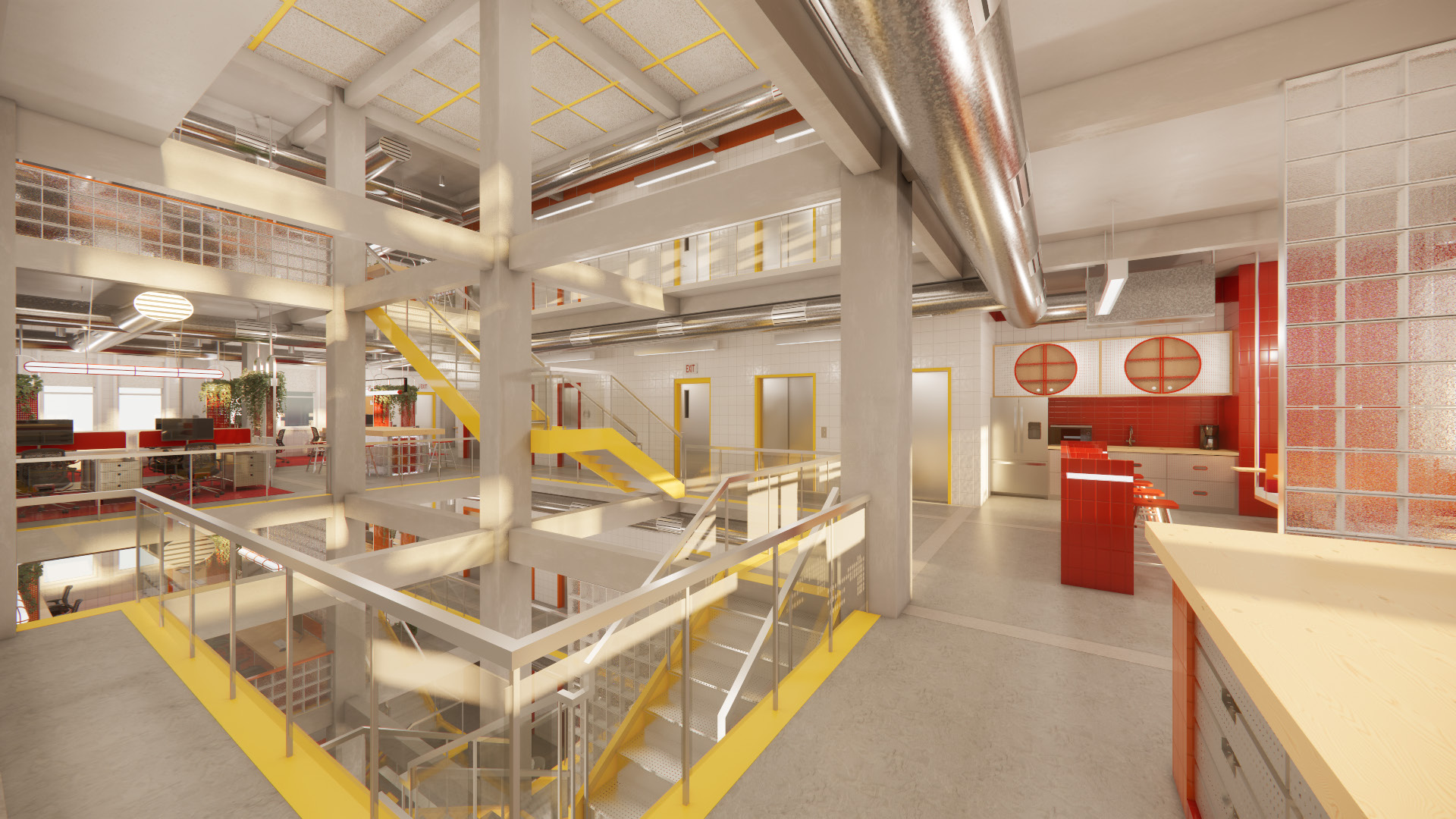
Jessica Dineen earned first place in the Interior Design category for “Platform 72 Studio,” a 14,000-square-foot multidisciplinary design office located in New York City’s Flatiron District. Designed to foster collaboration among interior designers, architects and furniture designers, the project uses a rigorous grid, open spatial geometry and a bold color palette to create a workplace where the disciplines can intersect rather than remain separated. Inspired by the 1972 design of the New York City subway, the office draws on red, orange and yellow tones, along with subway tile, exposed concrete, metal accents, glass block walls and visible HVAC systems, to evoke a clean industrial atmosphere rooted in the city’s visual identity.
Dineen said the project was shaped by a desire to make the space feel unmistakably tied to New York while also responding directly to the constraints of the site. Existing columns and beams became part of the design language, helping generate a series of floating platforms connected through circulation and centered around a dramatic atrium. For Dineen, the concept also carried a personal connection to her upbringing in the Bronx and the experience of riding the subway. “I took the extra time to model and make it just because I wanted it to be exactly — to have the nostalgic feeling that I had from growing up in the Bronx and going on the train, and I wanted to really be rooted in that.”

Industrial Design — Stoyan Boyadjiev
Stoyan Boyadjiev won first place in the Industrial Design category for “Frej,” a seating design created for the Newark Museum of Art’s Zine Fest. The project took shape around paper as both inspiration and metaphor — not just as a material, but as one of humanity’s most enduring tools for expression and creative freedom. From that idea, Boyadjiev developed a chair made of two open-book-like halves whose curves appear to fray outward, creating a form that feels delicate, dynamic and suspended in tension.
That sense of movement was the product of a highly deliberate making process. Thin sheets of bendy ply were layered over calculated molds to form each curve, then joined with dowels and precisely machined steel pipes to create a final object that balances hand craftsmanship with computer-aided fabrication. Boyadjiev said the chair’s strongest qualities came from that close relationship between concept and form. “I really looked at the free-form expression of paper and how we use it to express our creativity. And so I created these two halves that almost look like fraying out of wooden veneers.”
Looking ahead, Boyadjiev said he is excited by work that connects design to his own passions, including a sustainability-focused project tied to Burton Snowboards. “It’s kind of something that’s personal to me, because I love snowboarding as well,” he said.

Digital Design — Giovanni Crocco
In the Digital Design category, first place went to Giovanni Crocco for “Buster Boone,” a project that stood out for its storytelling, atmosphere and character-driven world-building. Rather than treating the assignment as a single figure or visual exercise, Crocco focused on creating a full environment around his character, giving the work a stronger emotional and narrative dimension.
He said that effort to build a complete world in a short studio timeline helped distinguish the project from others. “The thing that I think made this project stand out amongst others was that I put in a lot of time to build a full environment and tell a story,” Crocco said. “Within a short amount of our studio time, I tried my hardest to make an enjoyable and somewhat relatable character and bring that to life on the screen.”
Crocco also said one of the most meaningful parts of the evening was connecting with digital design alumni and hearing about their paths in the industry. Those conversations, he said, offered reassurance about the profession and about entering the field with an NJIT degree behind him.
Undergraduate Architecture — Trotman Kertes
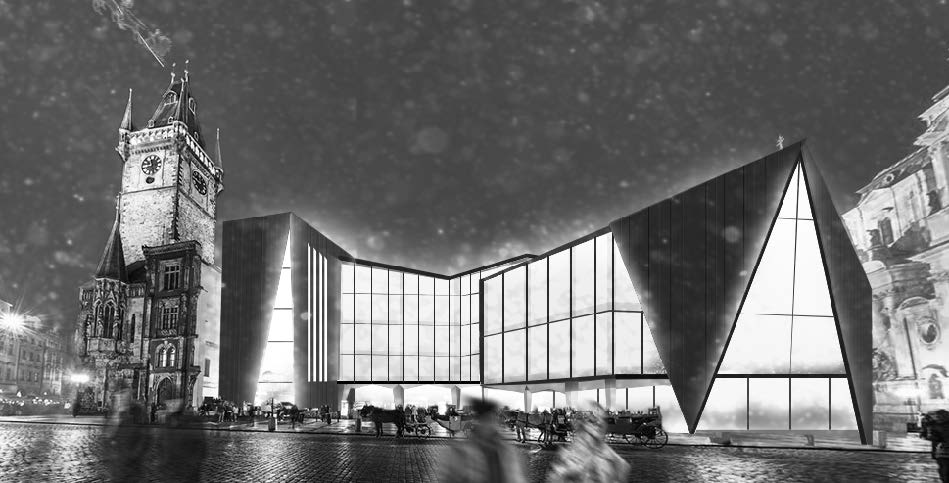
Trotman Kertes earned first place in the undergraduate Architecture category for “The Zig,” a multi-museum gallery space in Prague’s Old Town Square that channels the city’s historic texture into a contemporary architectural proposal. The form grew out of an analysis of the surrounding buildings — their silhouettes, rhythms and rooftop lines — while the project’s massing and circulation reflect Prague’s characteristic pattern of tight, narrow streets opening into irregular public spaces. Its standing seam zinc cladding and abstract arcades further reinforce the dialogue between the proposal and its setting.
Kertes said the project was deeply informed by his study abroad experience, which left him with a fresh memory of the density, unevenness and spatial richness of European cities. In Prague especially, he was struck by the shifts in elevation, the compressed urban fabric and what he described as the beauty of imperfection — qualities he sought to embed in the project. “I just tried to find the little moments, like, as you’re walking through Prague, or like a European city, and try to embed that into my project,” he said.
That sensitivity to place helped define the project’s strength, grounding the design in both observation and lived experience.
Graduate Architecture — Sudheeksha Kumar
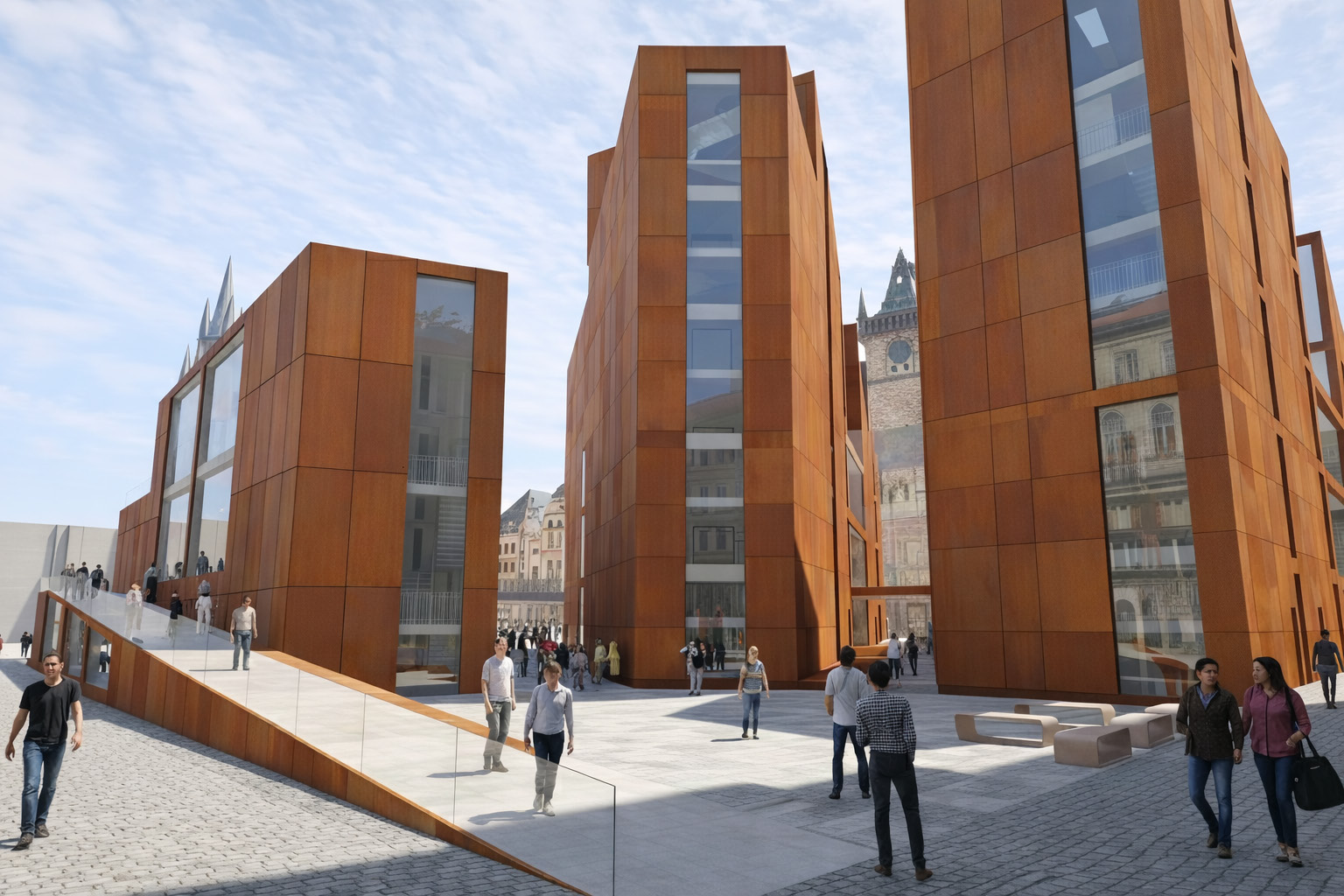
First place in the graduate Architecture category went to Sudheeksha Kumar for “Through the Frame,” a proposal for the Starometske Museum of Decorative Arts in Prague. Conceived as a porous urban ensemble, the project mediates between the historic fabric of Old Town and contemporary cultural life through a composition of five distinct museum volumes tied together by a central atrium. Visual corridors projected from the St. Nicholas Church courtyard frame landmarks across the site, including the plaza, monuments and clock tower, while an integrated ramp and atrium system allows circulation to move through the building both vertically and horizontally.
“I believe what stood out was how my design responds to the site, especially in how people move through it and experience the context; how public and private spaces interact, and how the building frames views and light,” she said. “I was heavily invested in creating a project that feels experiential on multiple levels.”