At NJIT, Undergrad Mentors Support Annual eSTEM Challenge
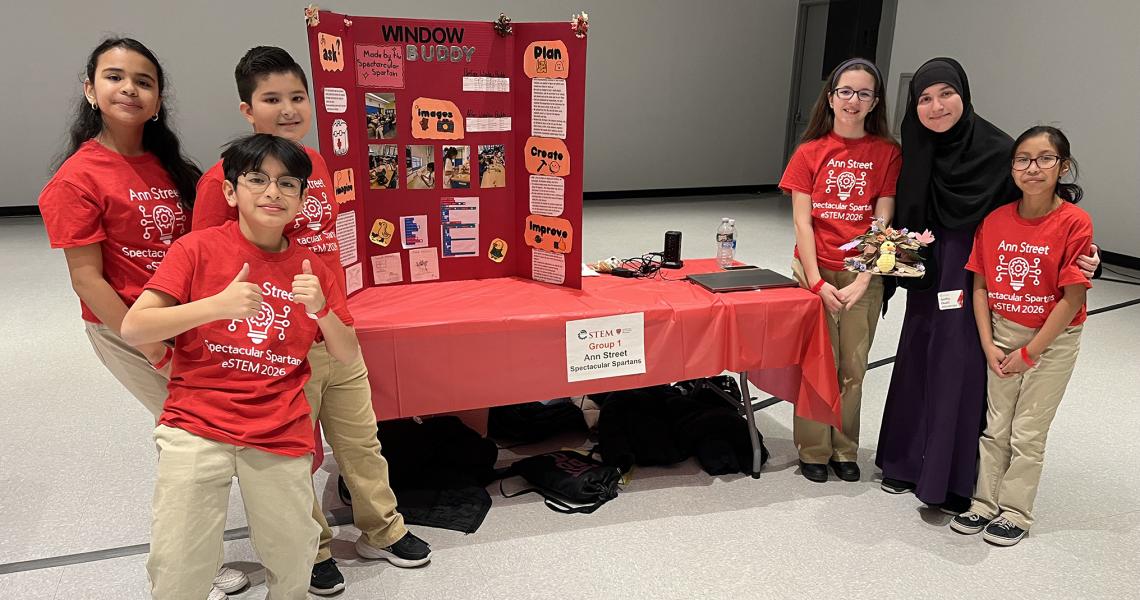
Students come to New Jersey Institute of Technology to learn — but they also have a chance to teach.
A group of NJIT undergraduate and graduate students recently shared their STEM expertise with students in grades 3 to 5 from dozens of New Jersey schools, providing guidance as teams experimented with microcontroller technology to address issues affecting their communities. Their efforts culminated in a day of prototype and poster presentations at NJIT, held March 19 as part of the university's eSTEM Challenge.
Organized by NJIT's Center for Pre-College Programs (CPCP) and now in its sixth year, the challenge promotes collaborative STEM learning and connects NJIT mentors to teams of young students. Over seven weeks, teams and their teacher-coaches brainstormed project ideas and designed, built and tested prototypes. They documented their progress in logbooks and met virtually once a week with NJIT student mentors, who worked with the teams from start to finish to offer guidance and to help resolve challenges in programming and builds.
"I believe that STEM is a field that welcomes everyone," says mentor Saffia Ouali '29, an electrical engineering student at NJIT's Newark College of Engineering and an Albert Dorman Honors College Scholar. For Ouali, who worked with three of the participating teams, becoming a mentor was a chance to practice STEM outreach, connect with local students and support them in their STEM journey.
"My role as an eSTEM mentor is to facilitate the students' learning experience: from brainstorming to testing to communicating results," Ouali says. "I want to help the students question their own ideas and see how they can address limitations or redesign their solutions to make them more effective."
Aquella Warner '27, another NJIT mentor, is pursuing a Master of Science degree in artificial intelligence, and she jumped at the chance to help with eSTEM and support young STEM learners.
"I did not have access to similar opportunities while I was growing up, and I often think about how much further along I’d be if I had someone to offer me guidance and encourage my interests early on," Warner says. "So, when I saw this opportunity, I was excited and knew I had to be a part of it."
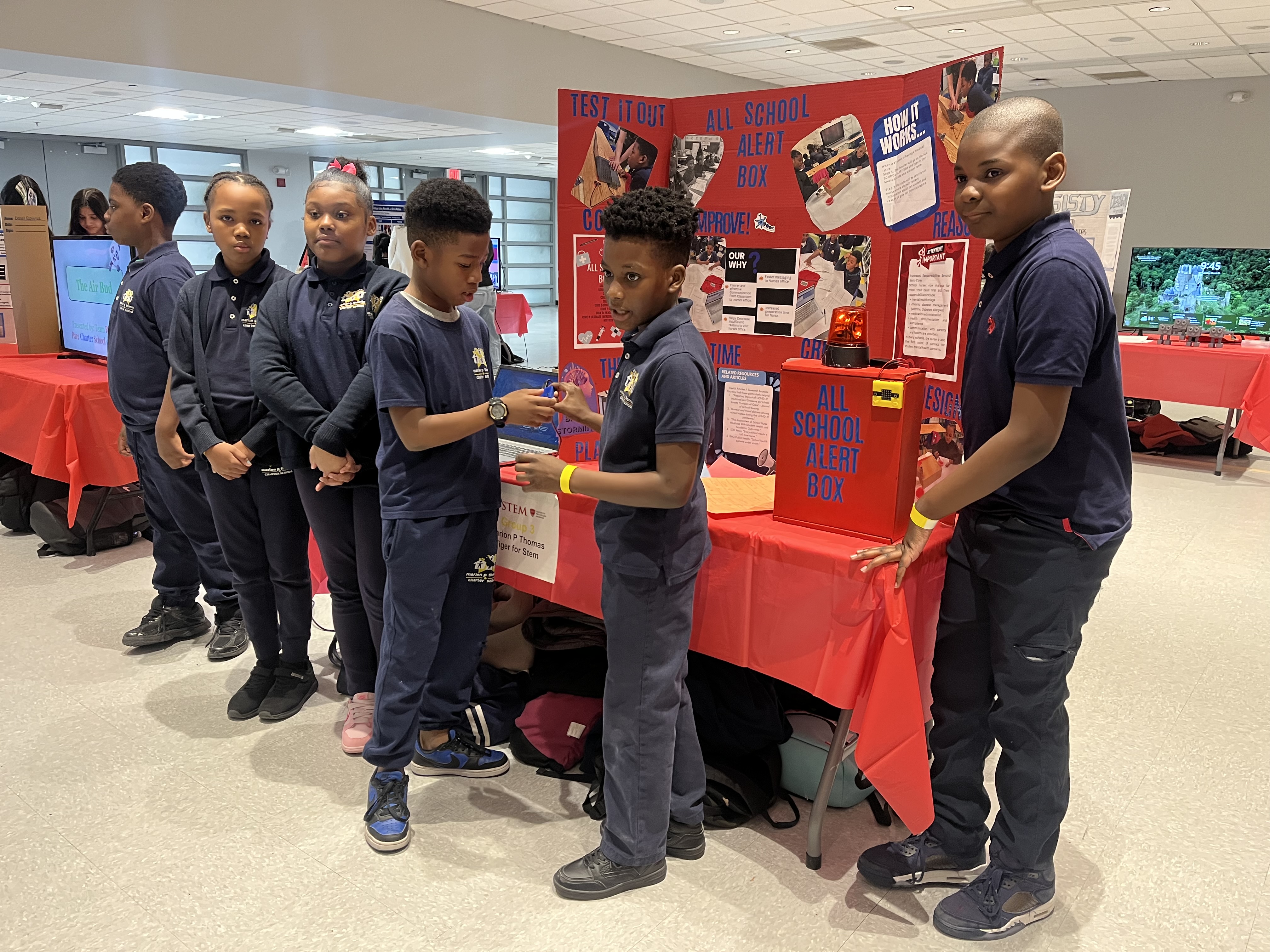
The "All School Alert Box" project, presented by the "Tiger for STEM" team from Marion P. Thomas Charter School in Newark.
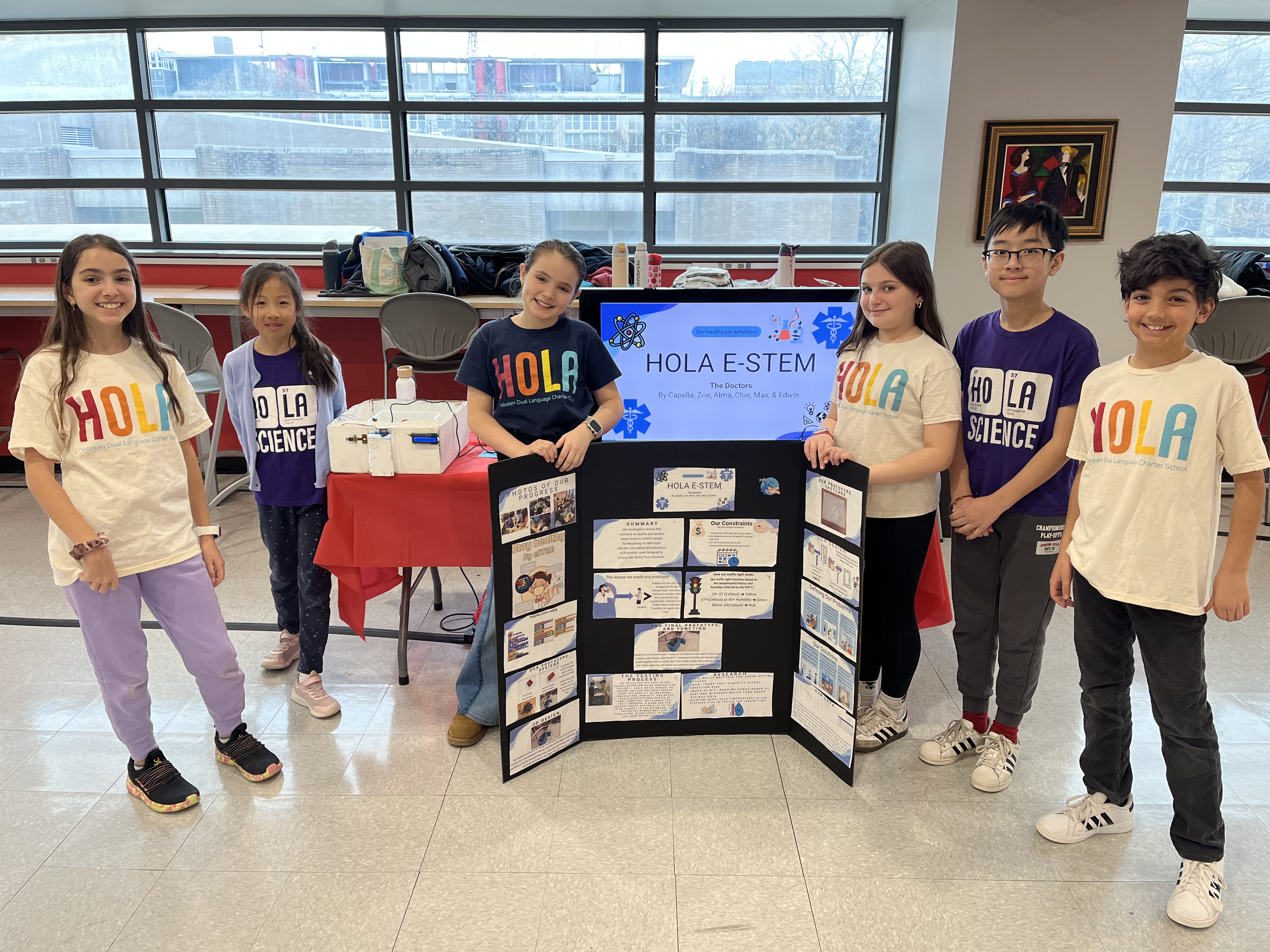
The "eSTEM Doctors" team from Hoboken Dual Language Charter School (HoLa).
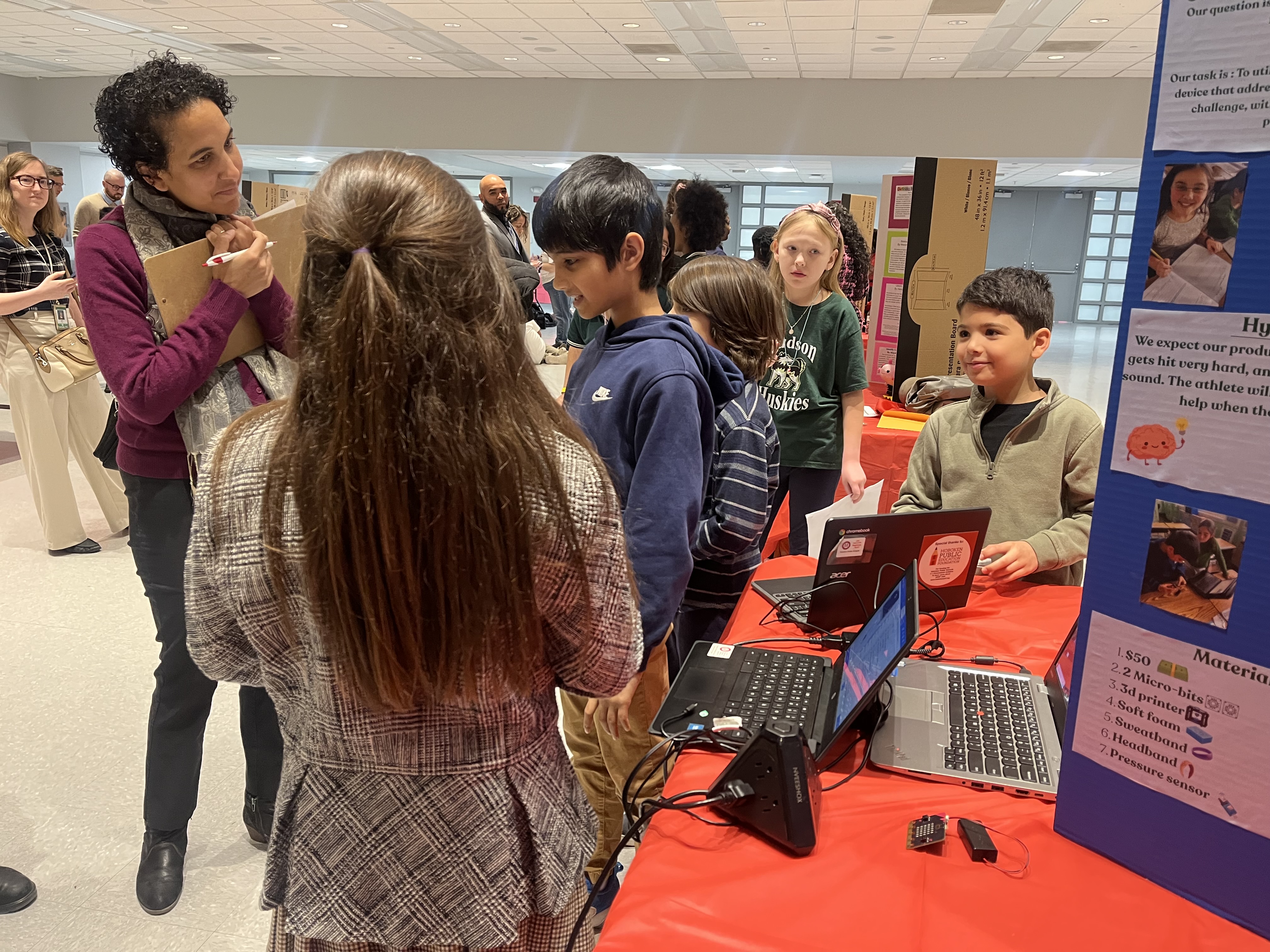
A volunteer judge reviews a presentation on concussion prevention by the "eSTEM Smarties," a team from Joseph F. Brandt Primary School in Hoboken.
This year, 37 teams and 210 students presented projects that addressed a range of real-world challenges. Judges evaluated prototypes to improve hand-washing hygiene; correct posture; prevent concussions; provide solutions for anxiety; evaluate air quality; and help people with autism, to name just a few examples.
"Participating in eSTEM has been incredibly beneficial for my students," said teacher-coach Marwa Khadr, a science instructor at Forest Street Community School in Orange. "As an educator and coach, I’ve really appreciated how the eSTEM Challenge encourages student ownership and innovation. It’s rewarding to see students take initiative, learn from setbacks, and stay motivated throughout the process."
According to Patricia Fartura-Cortés, a teacher-coach at Maria L. Varisco-Rogers Charter School in Newark, the challenge helps students hone their skills in teamwork and problem-solving, as they build something that demonstrates their ingenuity as well as their understanding of STEM.
"Watching students grow in confidence, work collaboratively, and think creatively about real-world challenges is one of the most rewarding aspects of the experience," Fartura-Cortés says.
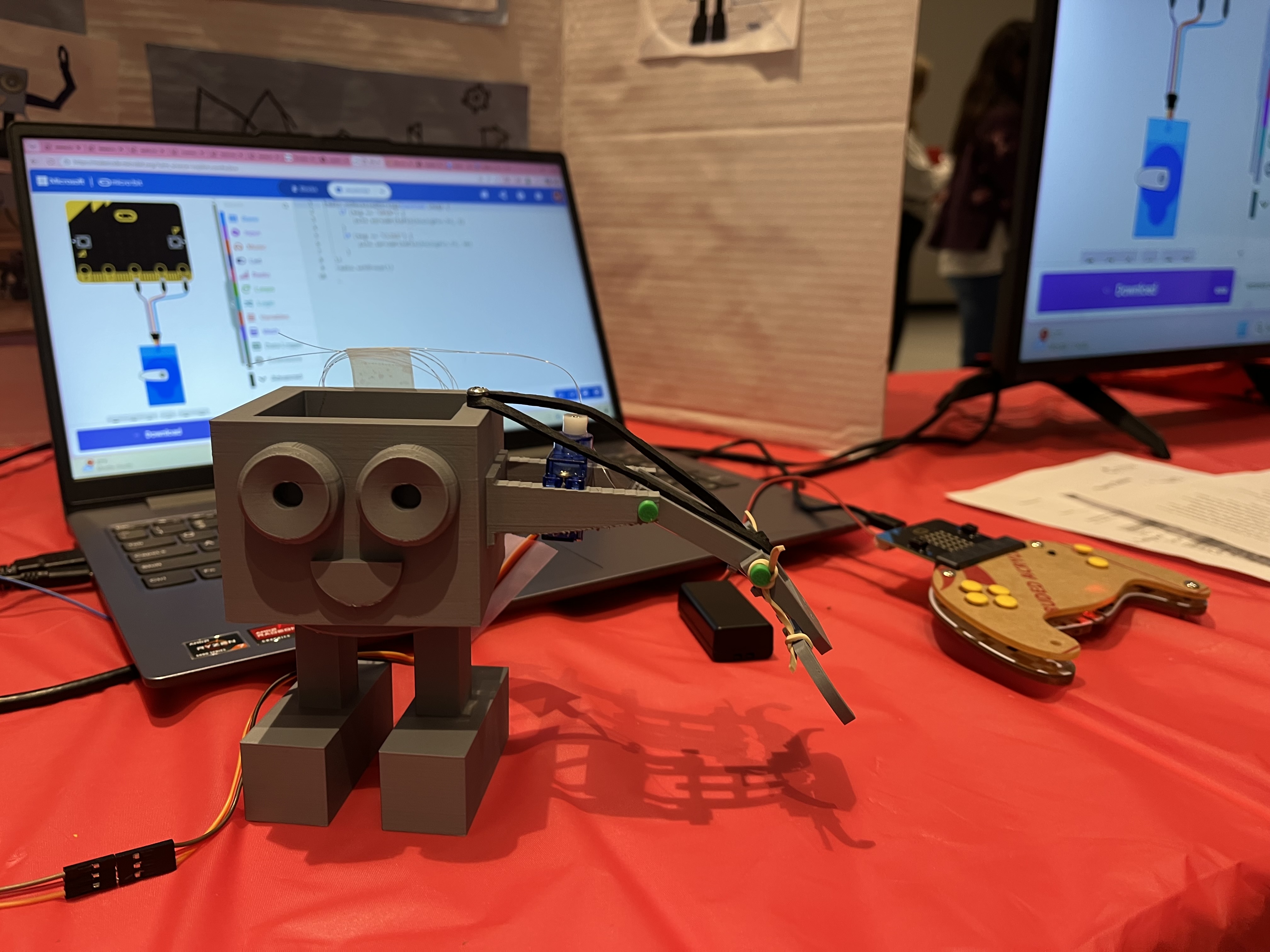
"Assisty Bot," designed by the "eSTEM Innovators" team from Forest Street Community School in Orange, has a jointed arm for picking up small objects.
By participating in the challenge, students gain valuable hands-on experience and acquire insights into the development of engineering projects and the importance of teamwork.
"I learned that a prototype is just the beginning of a whole invention; a prototype is not your finished product," says Courtney, a fifth-grader at Edward T. Bowser Sr. Elementary School in East Orange. Her team came up with the idea for "Micro Air" — a sensor to detect polluted air — after learning about how asthma impacts Black and Hispanic communities.
Zoe, a fifth-grader at Hoboken Dual Language Charter School (HoLa), worked with her team on a timed-release bathroom system that opened the exit door only after users had thoroughly washed their hands.
The hardest thing about building their prototype? "The time crunch," Zoe said.
Awards at the event acknowledged the best logbooks, visual presentations and prototype demonstrations. The top prize — overall winner of the eSTEM Challenge — went to "Team Redhawks" of Pace Charter School of Hamilton for "Air Bud," an asthma alert system. In second place was HoLa's "STEM Elaborating Team." Franklin Elementary School in North Bergen's "Diverse Group of Engineers" team took third place.
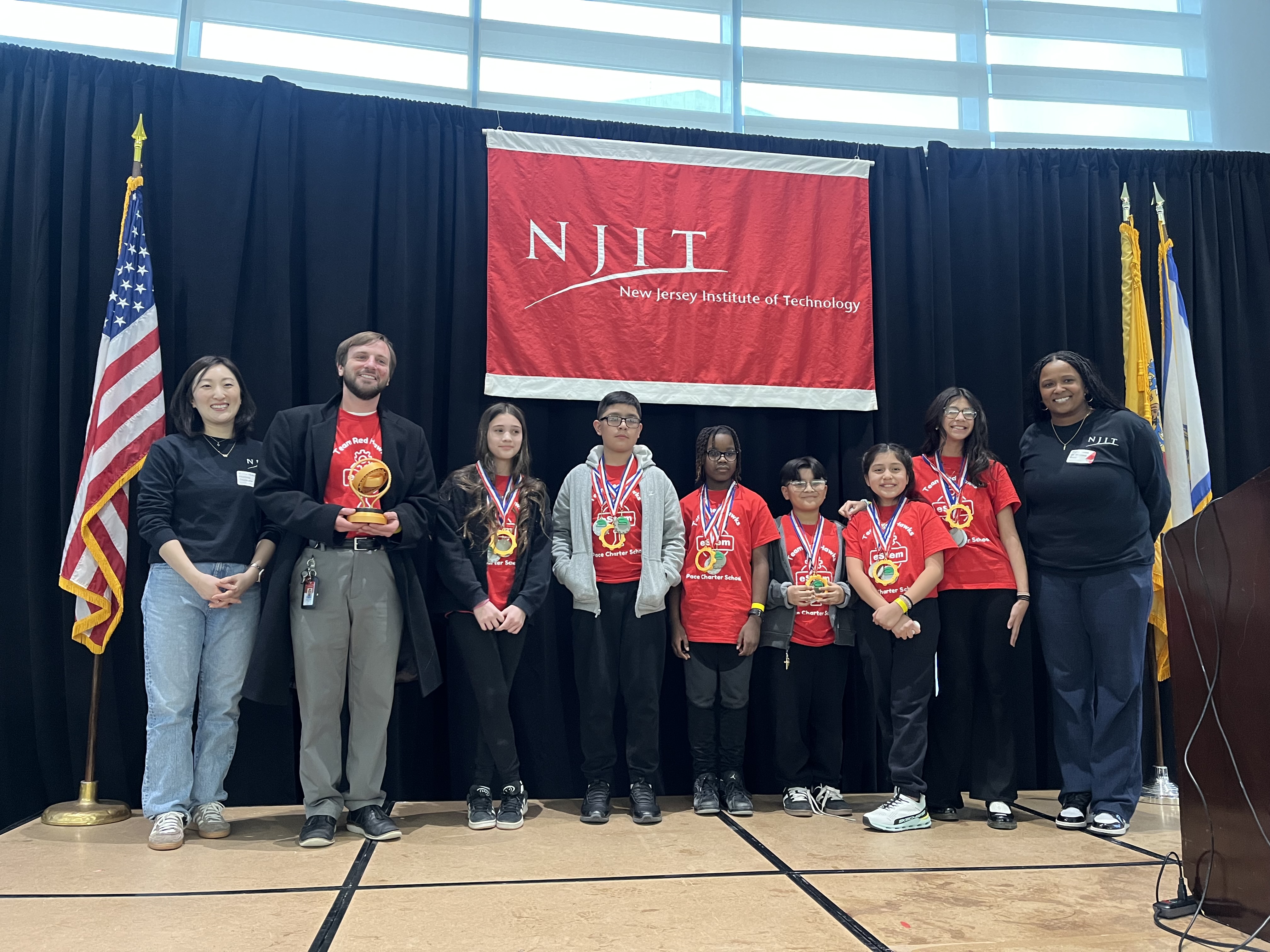
Overall winner of the 2026 eSTEM Challenge was "Team Redhawks" from Pace Charter School of Hamilton.
Students who undertake the eSTEM Challenge see first-hand how STEM disciplines involve practical application as well as conceptual knowledge, says Jacqueline Cusack, CPCP executive director.
"The program was purposefully designed to be something that would help them understand how these problems get solved at bigger levels, where they're more impactful on populations and on their environment," Cusack says.
And for NJIT mentors, the experience is a chance to share their interest in STEM and support the next generation of STEM enthusiasts.
"STEM education is the bridge that allows students to see themselves in future STEM careers," says Ouali. "Supporting STEM learning for young students is critical because we need students to see themselves in our shoes, which is why diversity in STEM education is an essential part of this support. Ongoing outreach is what will help STEM education serve as a strong means of sparking interest and creativity in our youth."
Establishing a link between aspiring engineers and NJIT students already pursuing STEM education and careers is a key part of the eSTEM Challenge — and one that benefits mentors as well as their youthful mentees, Cusack adds.
"Can you imagine how undergrad students feel when they look at their younger selves, and what that experience was like to help them stretch to get to where they are now? It's affirming," she says. "They're giving back."
Learn more about the eSTEM Challenge.