'Living Parks by Parks for People' Wins Branch Brook Park Biodiversity Proposal Challenge
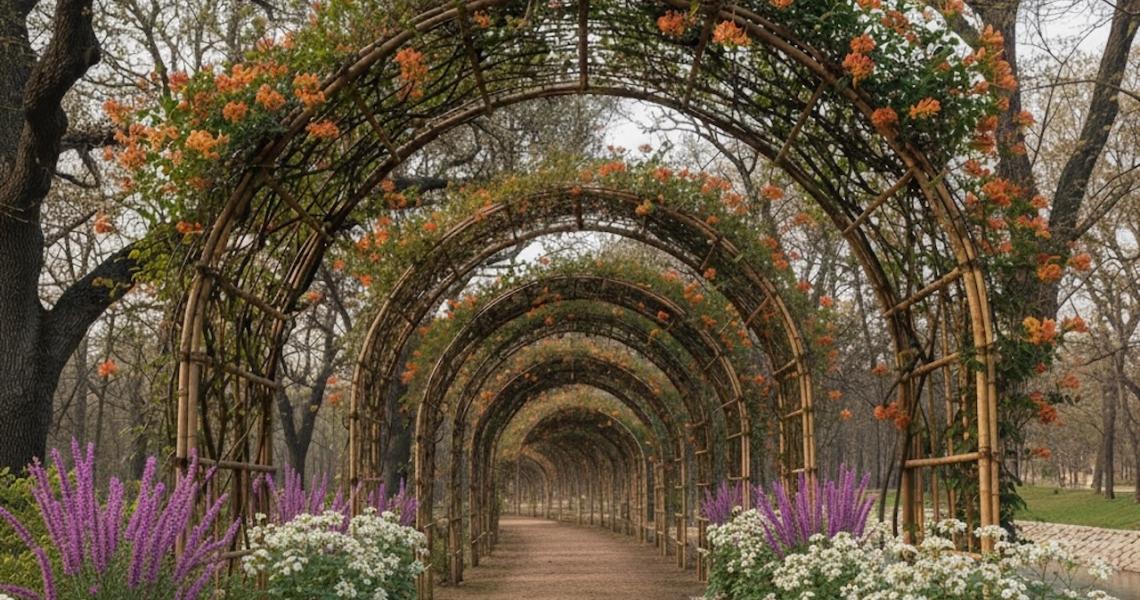
A student proposal focused on restoring biodiversity, strengthening the Second River edge and deepening community engagement at Branch Brook Park was selected as the winning concept in NJIT’s latest Albert Dorman Honors College biodiversity initiative.
The proposal, “Living Parks by Parks for People,” emerged from a presentation session in which six student teams each delivered five-minute proposals shaped by field research, biodiversity data and conversations with park visitors.
The effort reflected more than a design exercise. It was the latest chapter in a growing collaboration between NJIT and Branch Brook Park Alliance, one that connected first-year Honors scholars with Newark’s landscape, environmental history and public space in a direct, community-facing way.
Students were asked not only to study biodiversity in the park, but also to speak with visitors about their experiences and what they hoped to see in the future. That combination of research, design and public engagement helped frame the entire initiative.
Branch Brook Park Alliance joined the biodiversity initiative during the summer 2025, quickly partnering with NJIT and the Urban Ecology Lab to lead the BioBlitz. The data collected became the foundation for student design proposals and biodiversity studies. Notably, this year's seminar added a community layer, with students engaging directly with park visitors for the first time in the program’s history.
“We’re grateful for Branch Brook Park Alliance’s partnership,” said Louis I. Hamilton, dean of the Albert Dorman Honors College. “Students were able to develop plant proposals that honored the park’s historic Olmsted aesthetic, enhanced biodiversity and reflected community engagement.”
The event also underscored the real-world urgency behind the students’ work. Marjorie Perry ’05, president and CEO of MZM Construction & Management Company, challenged students to think about sustainability not as a distant concept, but as an immediate responsibility addressing climate change.
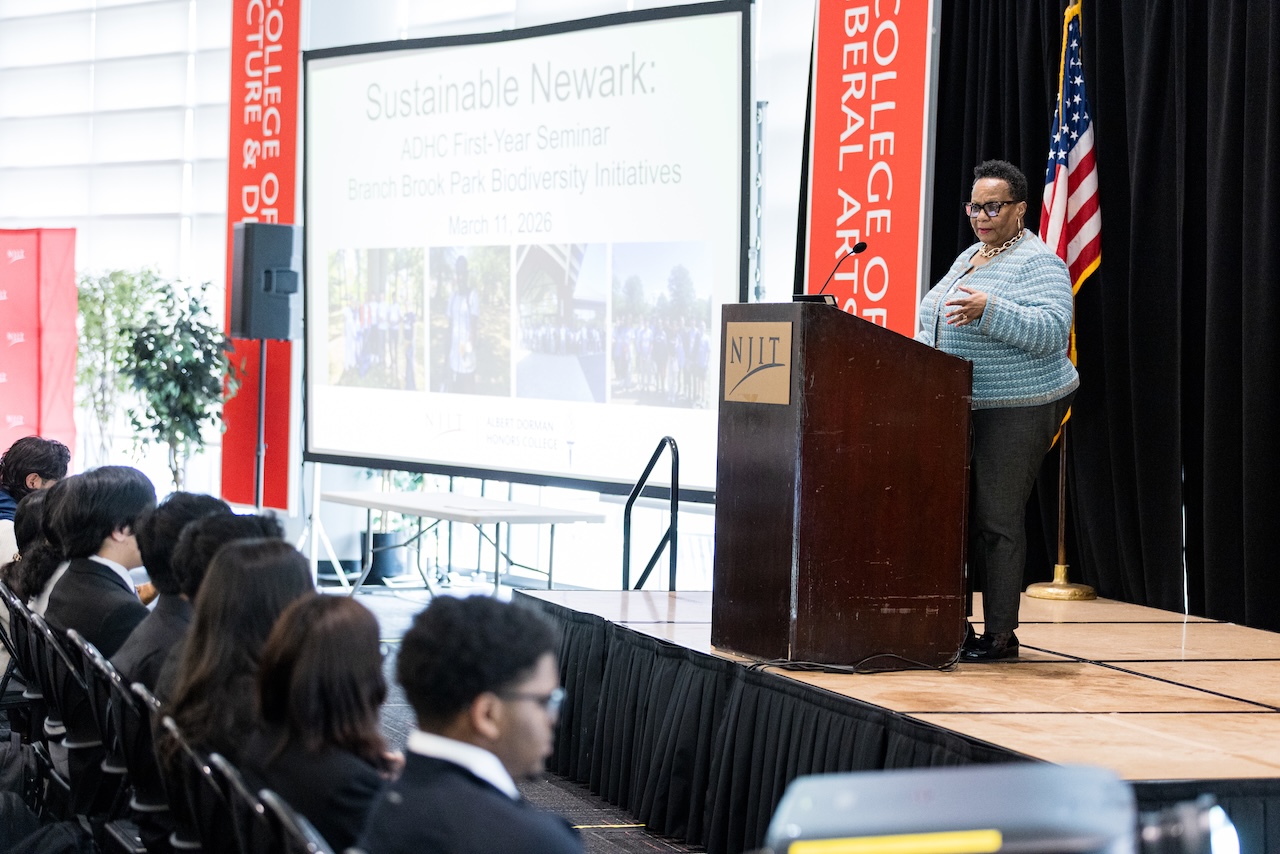
Marjorie Perry ’05 urged Dorman Scholars to see sustainability as an immediate responsibility in addressing climate change.
“We’re going to keep doing the best we can to make it work for everybody, because there will always be someone who looks at a beautiful, sunny day and thinks there are no issues. But your generation will be deeply impacted,” said Perry. “That’s why we’re counting on you to bring your A-game, to help us think outside the box and reach a real next level of sustainability.”
That partnership matters because Branch Brook Park is not just any site. As Branch Brook Park Alliance chairman Thomas Dougherty reminded students, it is the first county park system built in the United States, a historic landscape shaped by Frederick Law Olmsted Sr. and sustained over decades through restoration, stewardship and community investment.
Over the last 26 years, Dougherty said, the alliance and Essex County have invested more than $70 million in the park’s restoration, while also building a volunteer network that now includes more than 4,000 volunteers supporting maintenance, gardens and stewardship work.
“We want to thank each and every one of you for supporting us in this work that we do in environmental stewardship and restoration, and the purpose of me being here today truly is in hopes that you will then become the future stewards of Essex County Branch Brook Park. As we look to move forward and on in our lives, our hope is that you will step forward and continue this park preservation work,” Dougherty told students.
That challenge gave the student presentations a larger purpose. Rather than imagining abstract environmental interventions, each team had to respond to a real place in Newark and to a park with deep historical meaning.
We took a look at the core ideas of what Branch Brook Park stood for.
Living Parks by Parks for People centered on a section of parkland near the Second River that the students identified as having comparatively low biodiversity and ongoing ecological stress.
Their proposal called for stabilizing the river-edge riparian ecosystem, reintroducing native species, removing invasives, improving pollinator and small wildlife habitat, and making the space more inviting for visitors. The students also used site-specific analysis, including sunlight patterns and canopy gaps, to determine where native species would have the best chance to thrive.
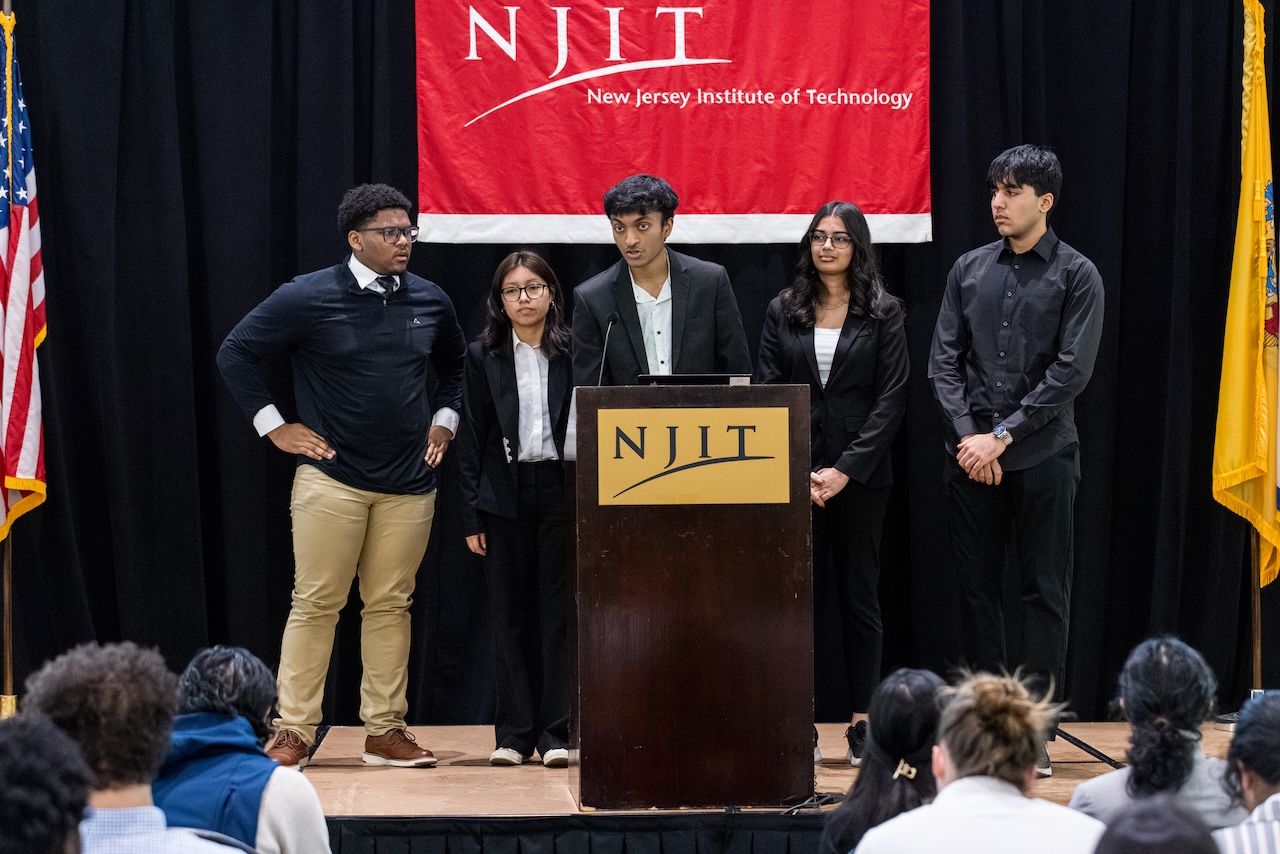
What made the concept especially compelling was the way it blended restoration with design identity.
The team of Dorman scholars proposed an “ascending garden” system to help address soil erosion along the Second River while supporting pollinators, as well as a pollinator arch intended to draw visitors into the landscape and make biodiversity something people could physically experience. The design also drew inspiration from Branch Brook Park’s historic character, including its celebrated cherry blossom trees, to create an intervention that felt natural to the site rather than imposed upon it.
“I think what we wanted to do was find what the community resonated with,” said Aadharsh Sakkaravarthy, an architecture major. “We took a look at the core ideas of what Branch Brook Park stood for, and the immediate thought went to the trees, the flowering trees, the cherry blossoms. We thought, how can we incorporate that identity into this pathway?”
Another student explained why the project felt important not only as coursework, but as a contribution to Newark itself. “We’re not just coming here for education,” said Maanav Dhruv, a biology major. “We’re coming here to help the others around us as well.”
The winning proposal team also included computer science major Dhyaani Shah, civil engineering major Glendy Morocho and electrical engineering major Caleb Duvelson.
“The whole process of our project was very inspiring, especially because we reside right now in Newark,” said Morocho. “As residents here right now, it's very good to learn more about the parks surrounding us, and how we can try to enhance the biodiversity around us.”
That sense of service helped distinguish the initiative as a whole. The students were not simply presenting ideas for a grade; they were being asked to think like stewards, researchers and collaborators.
And in “Living Parks by Parks for People,” the judges found a proposal that tied together biodiversity, historic sensitivity, river restoration and community use in one unified concept.
This year marked the 7th year of the Albert Dorman Honors College biodiversity initiatives. To know more about past winners and how their proposals have been implemented, click here.