NJIT Secures Nearly $20 Million to Modernize Tiernan Hall
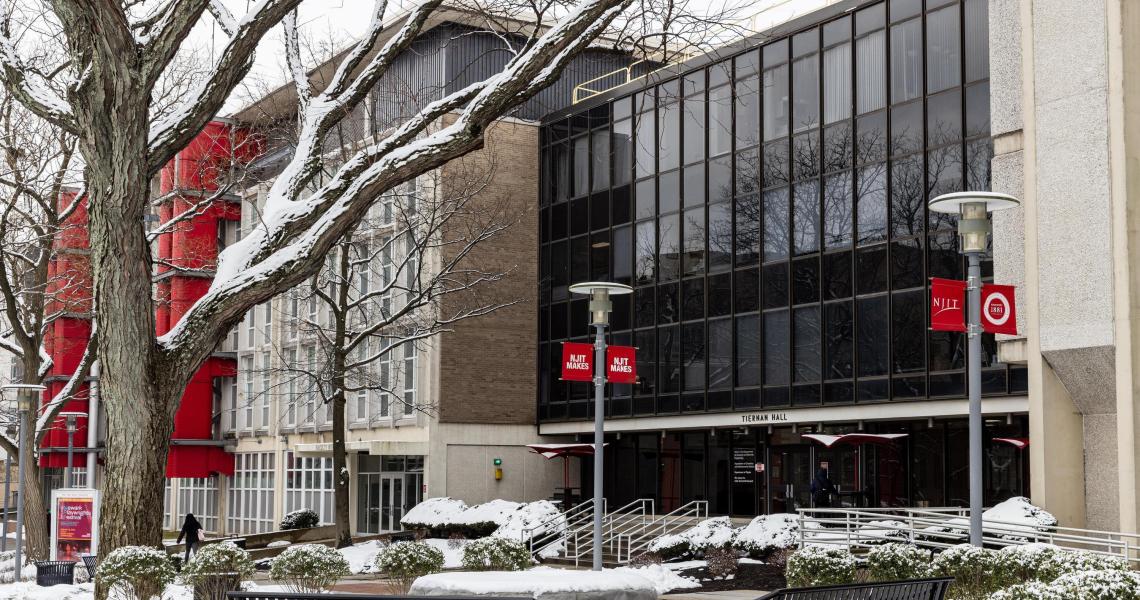
New Jersey Institute of Technology has secured nearly $20 million in state funding to support the comprehensive renewal and improvement of Tiernan Hall, a central academic and research building on campus since its construction in 1972.
The funding — $12,150,000 from the State’s Capital Improvement Fund (CIF) and $7,750,000 from the Higher Education Facilities Trust Fund (HEFT) — will allow NJIT to address critical deferred maintenance and replace building systems that are original to Tiernan’s construction and now past their useful life.
“Securing nearly $20 million represents a transformative investment in NJIT’s core academic infrastructure,” said Andrew Christ, who leads NJIT’s University Operations division. “In partnership with the State of New Jersey, we are committed to providing a safe and appropriate educational and working environment for the Highlander community. This investment reinforces our commitment to proactively protecting our legacy assets while ensuring the safety and quality of our teaching and research facilities — allowing NJIT to produce the STEM-trained workforce our state and nation depend on.”
Modernizing a Core Academic Facility
Tiernan Hall houses the Otto H. York Department of Chemical and Materials Engineering, the Department of Chemistry and Environmental Science, and the Department of Physics. More than 4,000 first- and second-year students attend classes in the building each year, including courses in chemistry, physics, calculus, computing, innovation and entrepreneurship and AI.
Tiernan also supports nearly $32 million in funded research projects — approximately one-fifth of NJIT’s total research activity. Work conducted in the building includes projects involving telehaptics platforms with AI analytics, machine learning applications to detect PFAS in blood and flood resiliency initiatives across New Jersey. These efforts are supported by agencies such as the National Science Foundation, NASA, the U.S. Department of Energy, the National Institutes of Health, the New Jersey Economic Development Authority and the New Jersey Department of Environmental Protection.
The project includes upgrades focused on health, safety and building reliability. Through the CIF award, NJIT will modernize life safety systems to meet current code standards, expand sprinkler coverage, improve emergency lighting and replace major components of the building envelope, including the roof and curtainwall system. The electrical service and distribution system — including transformer, switchgear and panels — will also be replaced.
Funding through HEFT will support upgrades to mission-critical laboratory and instructional systems. Mechanical systems will be modernized to provide reliable and energy-efficient heating, ventilation and air conditioning in classrooms and labs. Laboratory infrastructure, including compressed air, natural gas, vacuum systems and specialty water systems, will be replaced. Emergency power systems, including a backup generator and uninterruptible power supply, will be updated to support both life safety and ongoing research.
NJIT will contribute additional institutional funds for fume hood replacements and retro-commissioning efforts to improve operational efficiency.
Supporting Research, Sustainability and Long-Term Stewardship
The upgrades are designed to improve reliability in classrooms and laboratories while strengthening the infrastructure that supports experiential learning and research. The building houses instructional and research laboratories where students and faculty advance work in disciplines such as intelligent transportation systems, hands-on engineering design, sustainable energy systems, nanomaterials and environmental remediation technologies.
Energy efficiency measures are incorporated throughout the project. Low-flow, variable-volume fume hoods and upgraded mechanical systems will reduce energy consumption. Retro-commissioning and air balancing will optimize building performance. Improvements to the roof and curtainwall system are expected to enhance thermal performance and resilience.
Rather than replace the building entirely, NJIT is preserving and modernizing its infrastructure — avoiding the significant carbon emissions that would come from demolishing the structure and manufacturing large amounts of new steel and concrete.
While NJIT has received official notification of the award, construction will begin once funds are fully available, which the university anticipates later this year.
For more than five decades, Tiernan Hall has served as a hub for science and engineering education at NJIT. The upcoming renewal will allow the building to continue supporting students and researchers for decades to come.