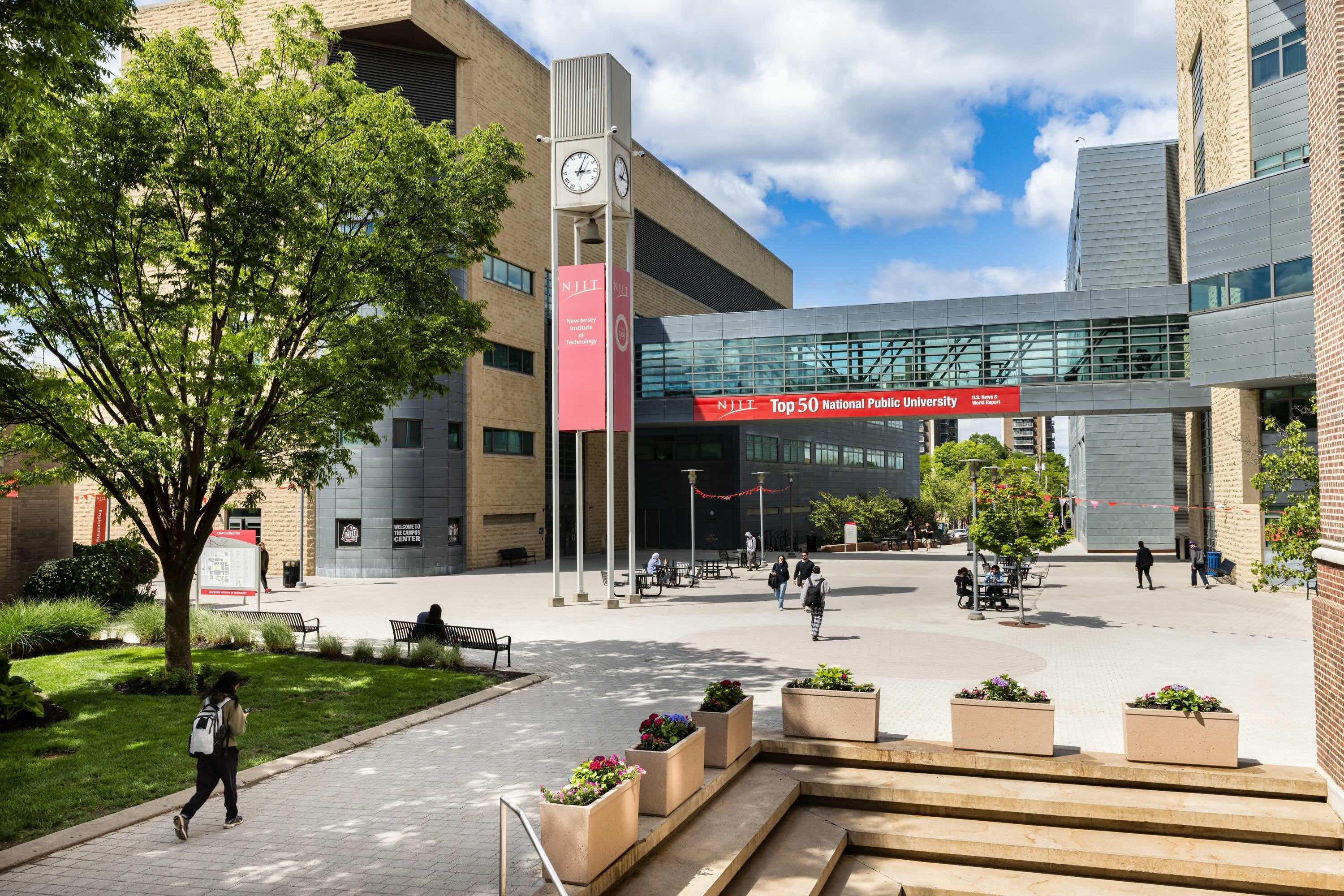
New Jersey Institute of Technology (NJIT) placed No. 10 among public colleges in a national return-on-investment analysis published by Stacker.
The list highlights four-year public institutions that predominantly grant bachelor’s degrees and ranks them by 40-year return on investment, with 10-year return used to break ties. Stacker describes 40-year net present value as the present-day value of earnings over 40 years after enrollment, adjusted for a school’s education cost. Stacker reported a projected 40-year net present value of $1.7 million for NJIT, earning the university placement among a group of nationally prominent public institutions near the top of the list.
The ranking draws on research from the Foundation for Research on Equal Opportunity, which used data from the U.S. Department of Education’s College Scorecard in a broad analysis of the financial returns associated with higher education. Stacker then examined public colleges and limited its list to four-year institutions that predominantly award bachelor’s degrees.
That underlying research also points to especially strong financial returns in fields central to NJIT’s academic portfolio. FREOPP’s analysis of 53,000 degree and certificate programs found that engineering and computer science were among the highest-return fields for bachelor’s degree programs. It estimated a median payoff of $949,000 for engineering programs and $652,000 for computer science programs, while emphasizing that outcomes can vary significantly by both program and institution.
The Stacker placement adds to a series of external rankings recognizing NJIT for value and graduate outcomes. The Wall Street Journal ranks NJIT No. 1 among New Jersey public universities for both alumni salaries and value, placing the university No. 25 nationally for salaries and No. 42 overall for value. The Princeton Review also ranks NJIT No. 27 nationally among its Best Value Public Colleges.
Together, the rankings reflect different methodologies but point to a similar theme: the relationship between the cost of an NJIT education, the career opportunities associated with its technology-focused academic portfolio and the earnings outcomes of its graduates.
