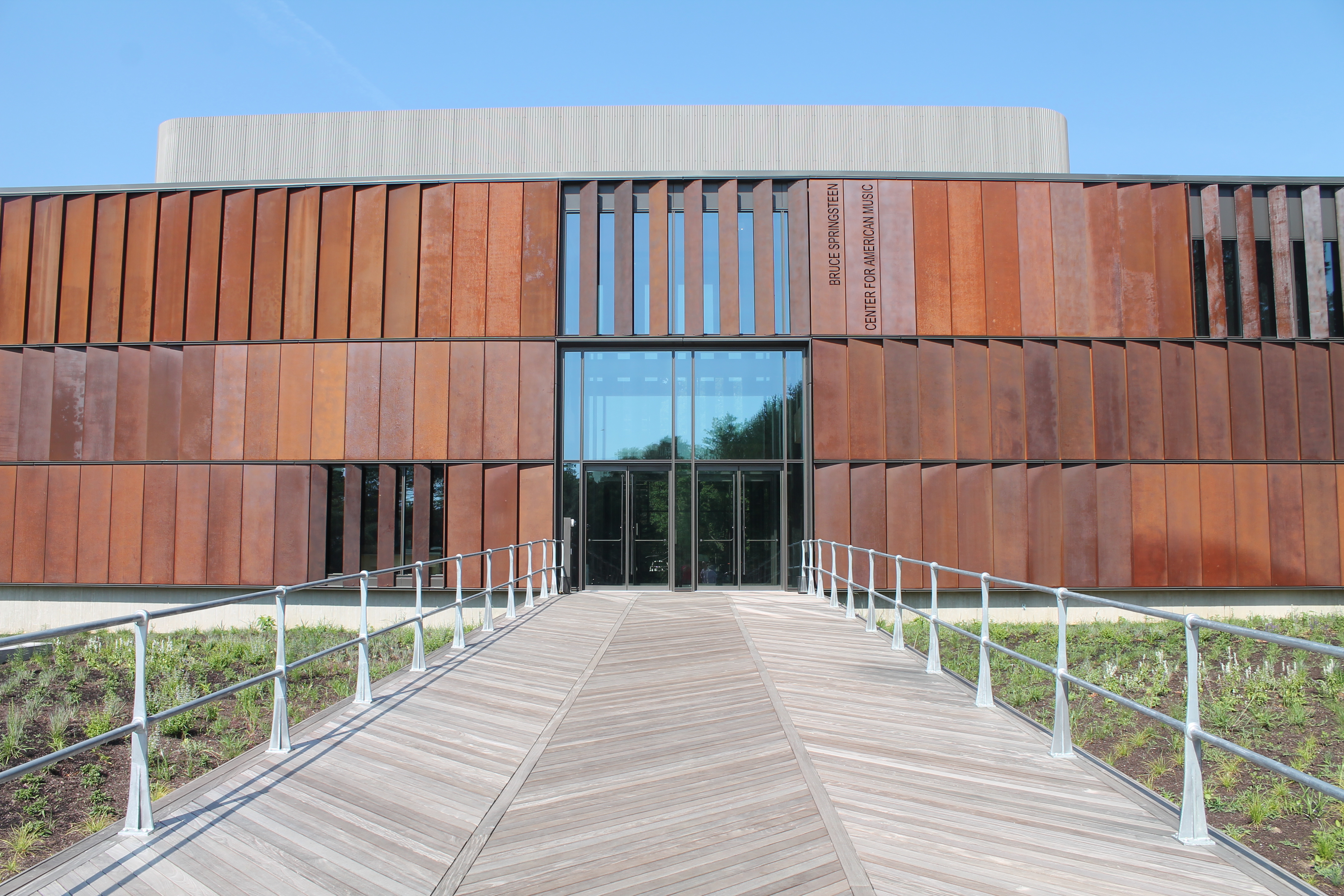
Bruce Springsteen is The Boss, but Juan Torres ‘97, ‘01 was the engineering boss at the recently opened Bruce Springsteen Center for American Music.
Not born in the U.S.A., Torres emigrated from Bogotá, Colombia as a child when his family decided to seek better opportunities. With soccer on his mind, Torres declined scholarships from larger schools to play near family at Middlesex College, where he discovered construction studies. He transferred to New Jersey Institute of Technology for a B.S. in construction engineering technology and later added an M.S. in civil engineering, following the career of his father, also a civil engineer.
Torres is now a senior project engineer at Torcon, based in Red Bank. He interned for the building firm as an NJIT undergraduate, worked there after graduating, left for other opportunities and then returned for a leadership role. He’s helped erect an airport terminal, hospital, pharmaceutical office and major college basketball facility, yet nothing was more unique for him than the rock and roll project, beginning about 18 months ago.
“This is not just another building,” Torres observed. “After this one, what are we gonna do? Because this one is very unique, not just because of Bruce, but from an architectural engineering perspective. I've been close to 30 years in the business and I’ve never seen a building like this.”
The 30,000-sq. ft. building, in Long Branch on the campus of Monmouth University, has the shape of a shipping container and is LEED Gold certified. It boasts a long list of unique features. The frame is timber — “Lincoln Logs at a large scale,” Torres said. Much of the timber is exposed, and visitors are greeted through a boardwalk entrance evoking Springsteen’s shore roots. The building’s exterior is a metal shell, designed to create an aesthetic rust that reminds visitors of blue-collar songs like Factory, My Hometown and The River — the last of which has a construction worker as protagonist.
Inside the building, no two interior rooms are the same size. Almost all infrastructure, such as HVAC pipes, that are often exposed in large buildings is instead hidden away from view. Radiant piping will provide heating and cooling in the winter, and there’s museum-grade humidity control to protect artifacts. There’s also a scholarly research area and a 241-seat theater. Possibly the most unexpected aspect is in the restrooms, where wall tiles show parts of the cover image from Springsteen's first album, Greetings from Asbury Park.
Torres was aware of Springsteen as a celebrity and rock star from New Jersey, but said he was impressed to find a down-to-Earth, regular person behind the mythological status imposed by diehard fans. He said Springsteen was happy to chat with construction workers, pose for photos and sign their memorabilia. “Even if you're not a fan, it just makes you stop and think he's amazing. He’s been in the business for 50-plus years,” Torres noted. There were also visits from members of Springsteen’s E Street Band, Bon Jovi, and country singer Kenny Chesney. Gov. Mikie Sherrill came by, as did reporters from Rolling Stone and The New York Times.
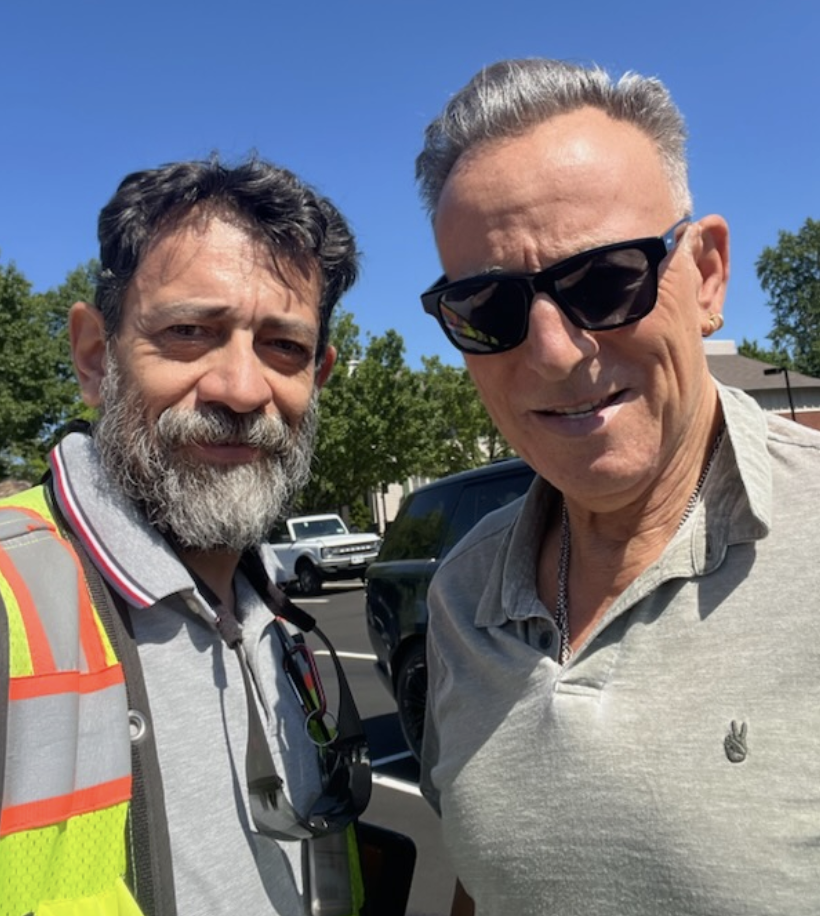
“For us to have an opportunity to build it, that’s a highlight, because now we’ve put up a unique architectural and detailed building. It’s going to be a landmark here for the Jersey shore, Bruce and music fans. …. We understand the service and what buildings do for people, and to me, that's what keeps me coming back.”
Torres said the most important thing he learned in college was the importance of teamwork. Whether in the classroom or on a soccer pitch or construction site, teams are only as strong as their members, who must work toward shared goals even if people have their differences. “No one is above anyone and everybody’s concerns are valid … never undermine teamwork,” he stressed.
The Springsteen Center is open to all, but Highlanders can learn more without leaving the NJIT campus. Humanities lecturer Risa Gorelick teaches HSS-404, Down the Shore, Everything's All Right, and there’s a new course STS-325, Visions of the Promised Land: Bruce Springsteen’s America beginning in fall 2026. The latter is taught by adjunct instructor Dan Loughran, a docent at the Springsteen Center. Both courses are part of a wider new NJIT cluster in New Jersey Studies, led by the Department of Humanities and Social Sciences.
