The first computers Gary Lauterbach encountered were not in a classroom.
As a teenager in Livingston, New Jersey, he spent Wednesday evenings at Bell Laboratories in Whippany with a Boy Scout Explorer post. The Bell Labs employee supervising the group was unusually permissive. Lauterbach and his friends were allowed to wander through the building, poke their heads into laboratories and use some of the computing equipment.
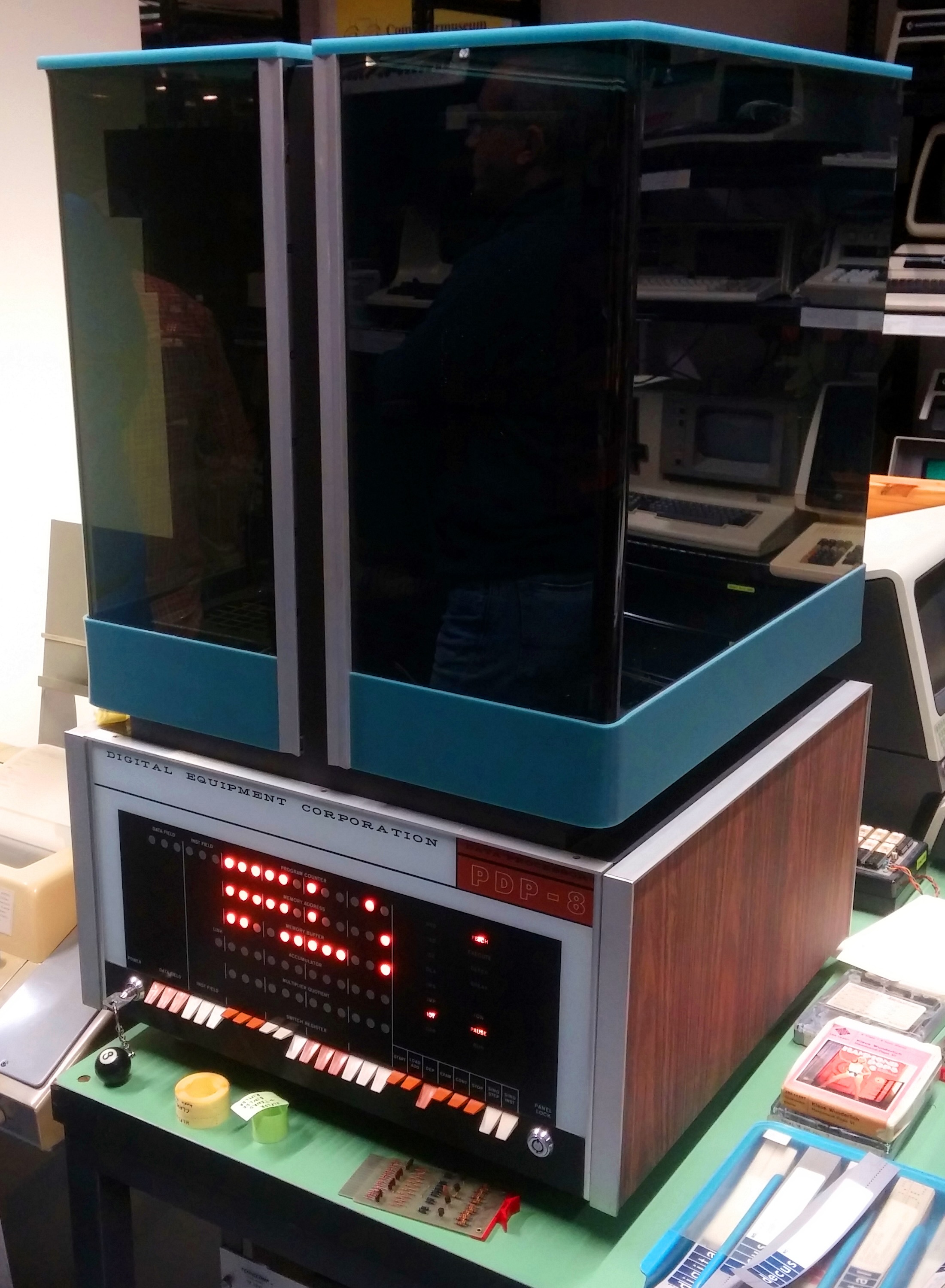
One machine, a PDP-8 minicomputer, particularly interested him. Lauterbach wanted to understand what was happening underneath the commands — how machine language, memory and data paths somehow combined to make the thing work. So he and his friends explored it.
They figured out what they could.
That inclination — to explore first, understand next and keep looking when something remained mysterious — would follow Lauterbach for the rest of his career. Decades later, as a co-founder and chief technology officer of Cerebras Systems, he would help architect one of the more unconventional computers of the artificial-intelligence era.
But long before wafer-scale processors, there was a teenager wandering Bell Labs because someone had given him permission to look around.
I’ve always been a generalist.
The instinct started even earlier. His father was a technician who installed intercom systems, and Lauterbach’s mother later told him that his father would spend evenings talking to him about electronic components. Ham radio — the amateur-radio hobby built around transmitting, receiving and frequently building one’s own equipment — gave him another outlet. He learned to make things, take them apart and understand systems from the inside.
By the time college arrived, Lauterbach knew he wanted to become an electrical engineer. The more immediate question was whether he could afford to become one.
NJIT made the arithmetic work.
Lauterbach lived at home. He carpooled to Newark with two other Livingston High School graduates who were also attending NJIT and occasionally took the bus. There were no residence-hall or meal-plan expenses, and tuition was in budget.
“Affordability was the main issue,” he said, and NJIT was within reach.
His connection to the institution also stretched back another generation. His grandfather had taken night courses at Newark Technical School, before NJIT was just Newark College of Engineering, early in the 20th century. But Lauterbach does not romanticize his own path to Newark. NJIT was close, rigorous and affordable. It offered him a practical route toward the work he had imagined doing since childhood. That was enough.
Theory, Practice and a Door Down the Hall
During his first two years at NJIT, Lauterbach worked at Acrison, a New Jersey manufacturer of dry-solids handling equipment. The arrangement gave him something he would come to value throughout his life: theory in one place, practice in another.
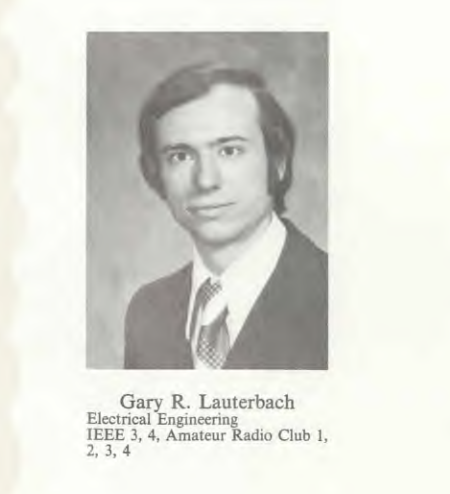
At NJIT, he studied circuit analysis, electromagnetic theory and the principles of electrical engineering. At Acrison, he saw engineering become physical.
There he also found an early mentor, Joseph Hartman, a fellow ham-radio operator who worked with him for several years and helped give Lauterbach his first opportunity to have his name on a patent.
Then, during his junior year, another opportunity appeared in characteristically modest fashion: on a bulletin board in NJIT’s electrical engineering department.
Bell Labs in Murray Hill was looking for someone who could program and help construct an experimental system for researchers studying how people processed technical information. Lauterbach knew what Bell Labs represented. He had already roamed the Whippany facility as a high school student. Murray Hill was the premier research campus.
He applied and was accepted.
Still an undergraduate, Lauterbach was given a remarkably complete problem to solve. Working with psychologists studying the readability of Bell Labs technical manuals, he built a computerized system that presented text to research subjects, asked them questions and recorded their response times and accuracy. He wrote the software. He built a push-button interface. He interfaced a slide projector to the computer.
For an engineering student who liked knowing how the pieces fit together, it was an unusually generous assignment.
And then there was the hallway.
About 50 feet away, Lauterbach recalled, was Bell Labs’ computer science research group. Among the people working there were Ken Thompson and Dennis Ritchie, the creators of Unix, along with computer scientists Alfred Aho and Jeffrey Ullman.
Lauterbach had never taken a course in operating systems. So he began studying one of the most consequential operating systems ever created almost at its source.
He would go down the hall, copy the Unix source code onto magnetic tape, bring it back to his own lab and read it. Eventually he modified the operating system to improve its real-time response. When that experience appeared on his résumé after graduation, he began receiving offers to do operating-systems work despite having no formal background in computer science, software or operating systems.
It is tempting to describe the Bell Labs job as the pivotal event of Lauterbach’s career. He does not.
“I’ve had a surprising number of opportunities that I’ve been able to capitalize on to make my career,” he said. What mattered was what he did with them.
Lauterbach had around-the-clock access to Bell Labs. Sometimes he would return at 8 or 9 at night, take a seat in its world-class technical library and stay until 2 in the morning. He read papers because they interested him. Often, the less conventional the idea, the more interested he became.
He taught himself Lisp, Prolog, SNOBOL and APL — languages that offered alternatives to mainstream ways of organizing computation.
“These alternate views presented a new idea,” he said, “a different way of looking at things.”
Some of those ideas would wait decades before revealing how they could be used.
The Generalist
Lauterbach had entered NJIT to broaden his technical understanding and background in radio-frequency systems. Computers were not the plan.
But the Bell Labs experience pulled him in another direction, and his career eventually moved through operating systems, microprocessors, computer architecture and high-performance computing. At Sun Microsystems, he became chief architect of the UltraSPARC III and UltraSPARC IV processors and participated in a DARPA high-performance computing project. He later co-founded the energy-efficient server company SeaMicro, which was acquired by AMD, and subsequently held senior technical roles there.
The jobs changed. His way of thinking did not.
“I’m still a tinkerer,” Lauterbach said.
He still builds microwave radios and writes his own software. The habit is less pastime than method. Lauterbach believes computer architecture rewards people who can move comfortably across boundaries. A computer is not merely a processor. It is communications, packaging, power, cooling, materials, software and all the compromises among them.
“You have to be a generalist,” he said.
His NJIT education mattered in part because it gave him the theoretical grounding beneath his experimentation. Circuit analysis and electromagnetic theory provided something different from simply knowing how to make a device work: they gave him an intuitive understanding of why it worked and what would happen when one variable changed another.
He considers himself somewhat unusual among computer architects for being deeply grounded in electromagnetic waves.
The distinction became consequential at Cerebras Systems, which Lauterbach co-founded with four colleagues in 2015.
Cerebras pursued an idea that ran against one of the conventions of semiconductor manufacturing: instead of cutting a silicon wafer into many individual chips and then connecting them, the company set out to build a computing system around an enormous processor approaching the scale of the wafer itself.
Doing that required solving difficult problems in fabrication, packaging, power and cooling. Cerebras eventually developed its Wafer-Scale Engine for large artificial-intelligence workloads — by eliminating the speed bottlenecks that occur when data travels between separate chips, Cerebras revives at large scale the original inspiration for integrated circuits in the 1950s: keeping the whole system on a single piece of silicon. In May 2026 the company began trading publicly on Nasdaq under the ticker CBRS.
Ask Lauterbach what part of the work makes him proudest, however, and he does not point to one invention.
He points to the architecture to make this all work.
“What I’m proud of is the synthesis of the components,” he said. There’s the generalist, again.
The Cerebras architecture drew on roughly a dozen techniques that had to work together to enable extremely fine-grained, massively parallel computation. One of them had been sitting quietly in Lauterbach’s mental inventory since those years of reading beyond what anyone had asked him to read.
It was the Actor Model of computation, associated with MIT computer scientist Carl Hewitt. Hardly a mainstream topic among computer architects, Lauterbach said most had never encountered it. He had, and that different way of thinking stuck with him.
At Cerebras, elements of the model offered a way to move very small pieces of data through the architecture while avoiding some of the synchronization overhead that can accompany parallel computing. Lauterbach said that, to his knowledge, Cerebras represented only the second instance of the Actor Model being constructed in hardware.
The point is less that he discovered a forgotten idea than that he remembered it when it mattered and how it could be applied.
“I can’t say I invented any of them,” Lauterbach said of the techniques incorporated into the Cerebras architecture. “I didn’t.”
He had simply spent a lifetime accumulating different ways of seeing a problem — and knew enough about each to recognize when they belonged together.
I feel a responsibility to provide that opportunity to other young people.
When Lauterbach returned recently to NJIT after decades away, there was little he recognized.
The campus was larger. Buildings had appeared where his memory supplied something else. The transformation, he said, was “a bit breathtaking.”
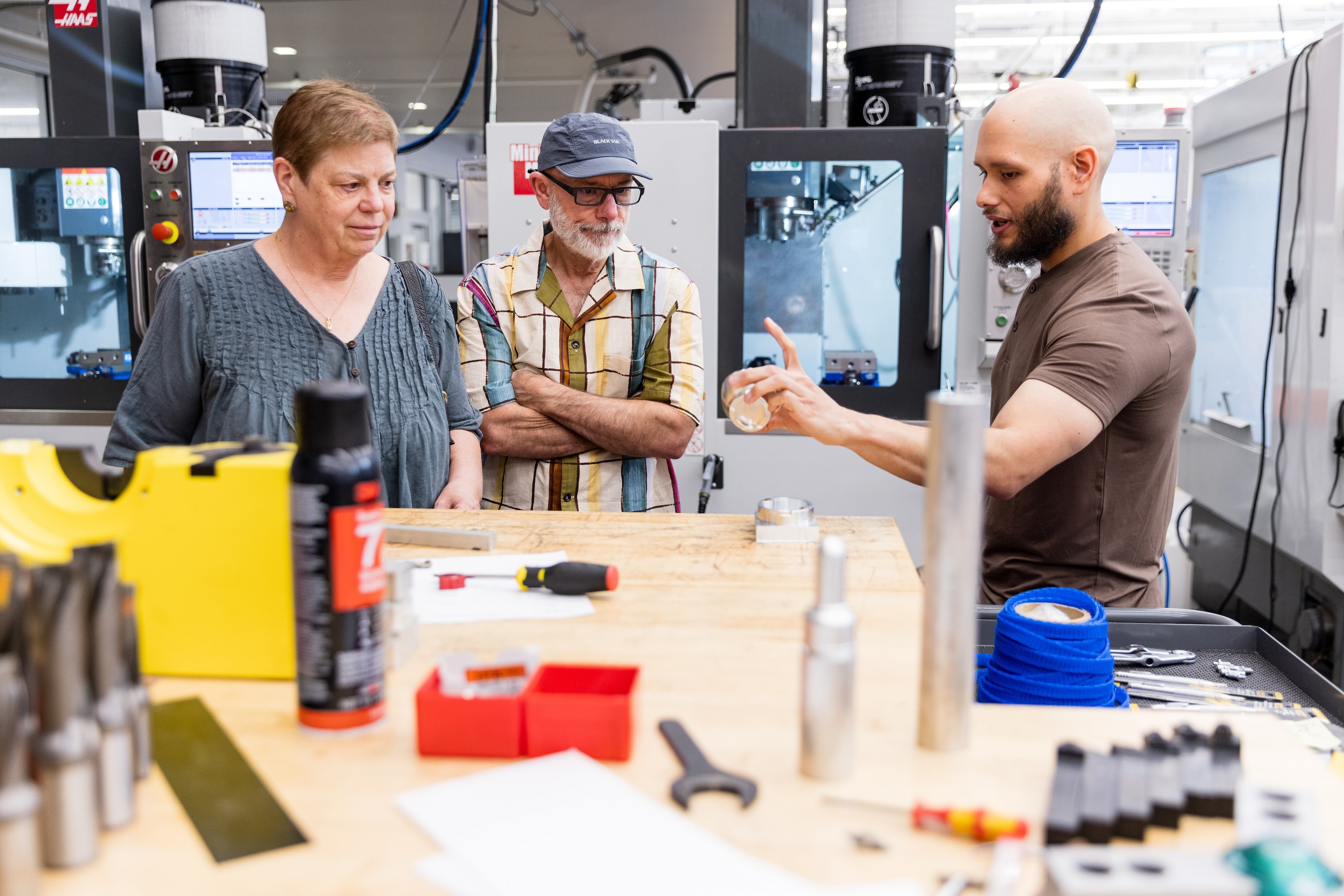
Then he toured the NJIT Makerspace.
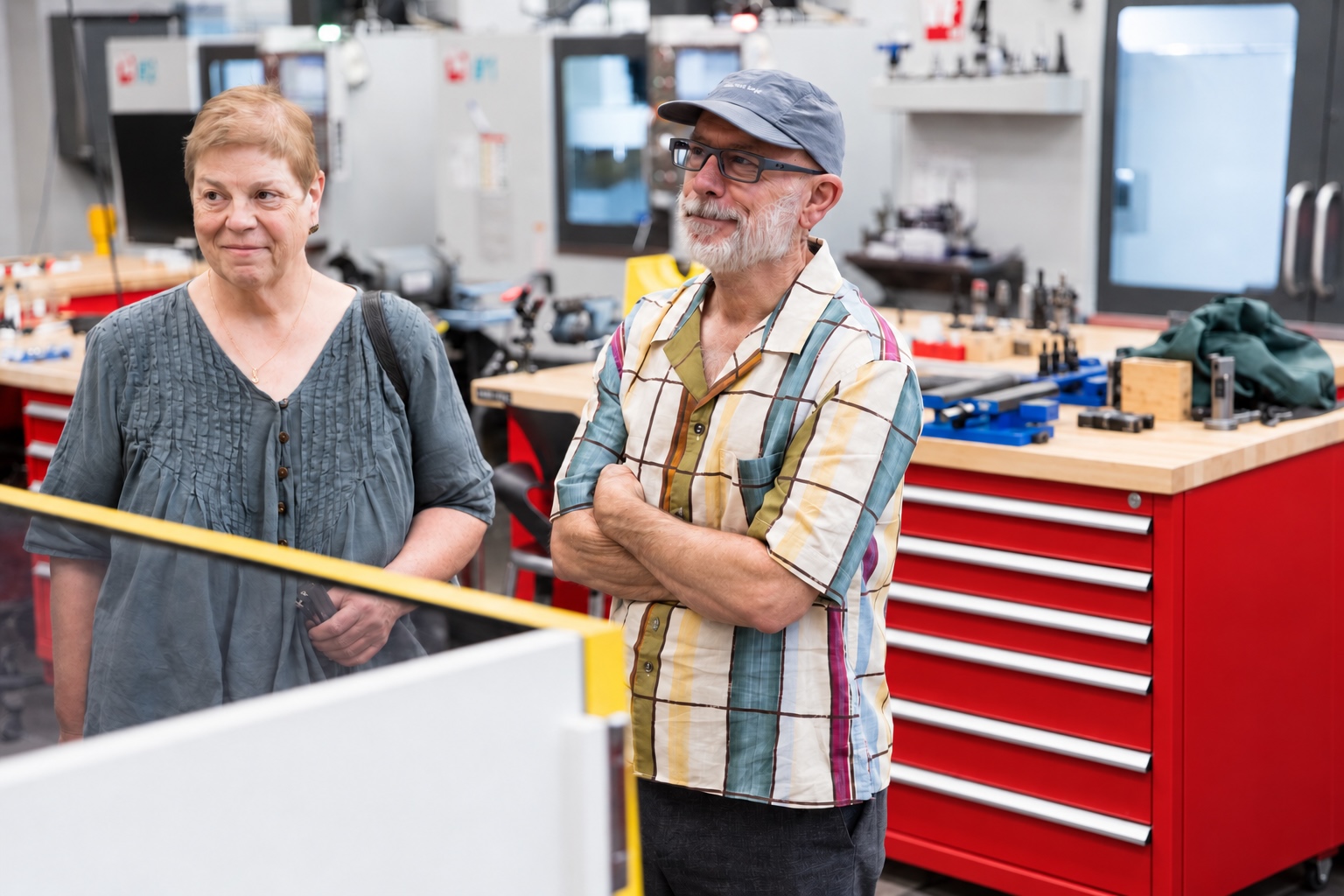
Nothing comparable existed when he was a student. The scale and sophistication of the equipment were new. But the premise behind the place was immediately familiar: students from different disciplines could walk in, make something, discover that it did not work, change it and try again.
Hands-on. DIY. Learning by doing … and Lauterbach loved it.
“I’m very in favor of that orientation,” he said, “learning by doing, and learning a broad swath of technologies.”
There is a straight line between that enthusiasm and the support Gary and Valerie Lauterbach are now providing to NJIT. Through a transformational $2.7 million gift, the Lauterbach family is expanding opportunities for students, including through the Gary & Valerie Lauterbach Excellence & Access Scholarship.
For Gary, philanthropy begins with the circumstances that made his own education possible.
“NJIT gave me an opportunity to have a career in the computer industry that wouldn’t have happened otherwise,” he said, “and I feel a responsibility to provide that opportunity to other young people who come from backgrounds that are less advantaged than typical, which was certainly my case.”
Valerie Lauterbach, herself an electrical engineer, arrives at much the same idea from a different direction. She grew up in the household of a minister, where giving — often of time rather than money — was part of family life. For her, philanthropy is also an acknowledgment that achievement is rarely solitary.
Giving back, she said, means “recognizing that you didn’t get there just on your own efforts,” and helping create opportunities for people who come next.
Gary’s career makes that philosophy unusually tangible.
Opportunity was affordable tuition and a carpool to Newark. It was a ham-radio mentor. It was a bulletin-board posting. It was a Bell Labs employee who allowed a bunch of teenagers to wander around. It was a laboratory 50 feet down the hall and a technical library that stayed open after everyone else had gone home.
None of those things guaranteed what followed, they simply gave a curious person somewhere to go.
Asked what he hopes his support will ultimately provide for NJIT students, Lauterbach did not invoke inventions, companies or careers like his own.
He wished them something broader: “a productive, happy, fruitful future.”
For a lifelong tinkerer, perhaps that is the point. Give people the tools. Give them the foundation.
Then give them room to wander.
