
Construction is a physically demanding profession. But for many in the industry, a far greater challenge is managing mental and emotional well-being. Anxiety, depression, substance abuse and addiction in construction workers often go unreported and untreated. Long workdays, hazardous conditions, unpredictable schedules and financial uncertainties chip away at mental health and drive risky behaviors. And a job culture steeped in bravado and toughness discourages people from discussing their problems with supervisors and peers, or seeking professional help.
But thanks to an initiative co-developed at New Jersey Institute of Technology, help is on the way. Roni Barak Ventura, an NJIT assistant professor of applied engineering and principal investigator of the People + Interfaces + Data (PID) Lab, is a co-creator of Protecting Under the Hard Hat, designed in partnership with Chris Lalevee of the International Union of Operating Engineers (IUOE) Local 825, which has about 8,000 members. According to its creators, the initiative aims to reduce the stigma surrounding mental health struggles for construction workers and connect them with organizations that can lend support and encourage treatment and recovery.
Eventually, Protecting Under the Hard Hat will provide researchers with valuable information about the extent and scope of mental health issues in the construction industry, and could help experts strategize solutions, says Ventura.
Private and confidential
In 2025, Ventura first reached out to Lalevee, who coordinates the Local 825 Member Assistance Program (MAP) and the IUOE peer support training program, and has advocated within the union for more than a decade for mental health and the prevention of overdoses and suicides.
Ventura began with an inquiry about existing mental health data, thinking that she could evaluate patterns for interventions to see what was working and what wasn't. But that approach turned out to be a dead end.
"There was no data, because people don't talk about those issues," Ventura says. The industry's culture of suppression and avoidance of mental health topics tends to magnify mental troubles and can lead to self-destructive habits, she explains.
"You have a lot of people with drinking problems, and people who use drugs recreationally and to manage their pain," she says. "We did focus groups, and we found out that gambling is a big problem, too."
Lalevee, an operating engineer, previously experienced work-related anxiety and self-medicated with alcohol. He recalls that at the time, in the 1990s, it was unthinkable for construction workers to seek help if they were in crisis.
"You never heard of a blue-collar person going to see a psychologist or psychiatrist," he says. "That was for movie stars."
With assistance from NJIT Albert Dorman Honors College students Andrew Couto, Franco Giovannetti, and Krish Patel, Ventura built a web-based platform with a survey to anonymously gather mental health data from construction workers and provide resources based on users' responses. Lalevee manages the distribution and display of the project's outreach materials — posters and stickers with the survey's scannable QR codes — at construction sites in New Jersey.
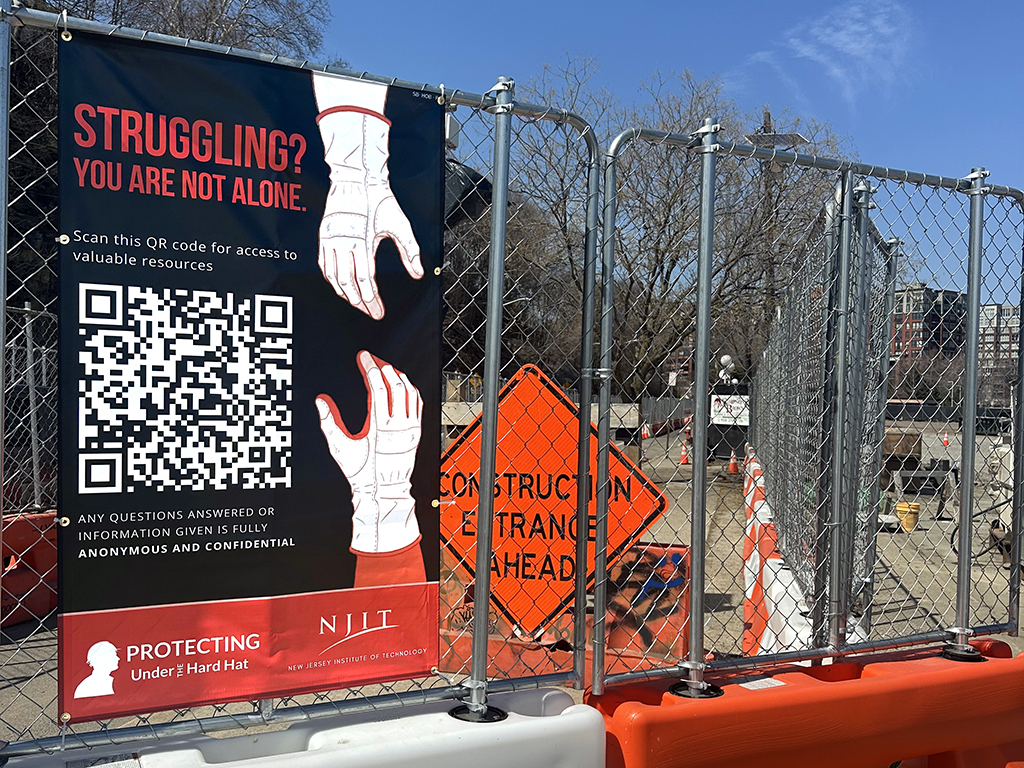
A poster at a New Jersey construction site displays a QR code that workers can scan to take a confidential survey.
By the beginning of 2026, Ventura and her students had developed a working prototype of the platform, which they tested for the next few months on focus groups of construction workers. They then launched a pilot program at a handful of construction sites in Hudson and Essex Counties. On April 10, Ventura and Lalevee presented Protecting Under the Hard Hat at the Associated Construction Contractors of New Jersey Safety Council Meeting, and then deployed the program at sites in all New Jersey counties and in select locations in New York and Long Island. All sites use the same QR code; survey results indicate county location but all other information is anonymous, Lalevee says.
After taking a survey, users receive recommendations for groups that can best support their needs. Such services and organizations include the 988 Suicide and Crisis Lifeline, the National Alliance on Mental Illness (NAMI), the American Foundation for Suicide Prevention, the Construction Industry Alliance for Suicide Prevention, and the Alliance for Naloxone Safety in the Workplace.
There's a lot of information that we can use to help people
Positive responses to the initiative are already rolling in, says Lalevee, who has received calls from construction workers who took the survey and said that the questions made them realize for the first time how much they were drinking, or how often they felt sad or lonely.
"We also have a lot of people who expressed interest in Pennsylvania, in North Carolina and in Vermont," Ventura adds. "I think we can probably grow much bigger."
By combining public access to the platform with the confidentiality of private use, Ventura and Lavlevee hope to reduce longstanding stigmas around mental health on construction sites, encourage workers to acknowledge their own struggles and prompt those who are struggling to take steps to find support. Questions in the survey come from established psychological screening tools such as the Kessler Psychological Distress Scale (K10), the Alcohol Use Disorders Identification Test-Concise (AUDIT-C), and the Brief Biosocial Gambling Screen (BBGS).
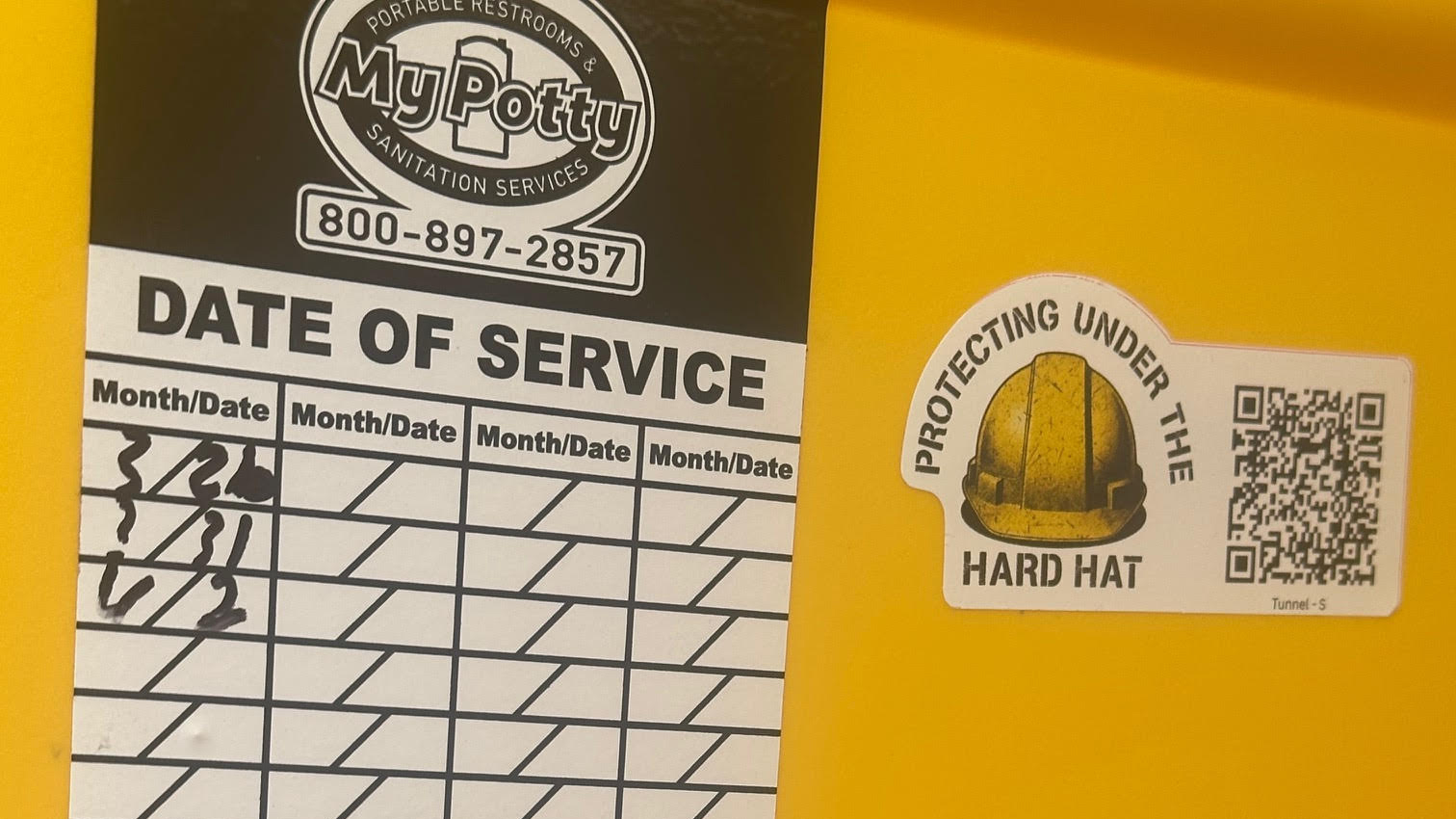
On construction sites, portable restrooms provide privacy for scanning the survey's QR codes and answering questions about mental health.
Suicide rates in the construction industry are among the highest of all industries in the United States, and about four times higher than in the general population, according to the Centers for Disease Control and Prevention (CDC). Lalevee, who volunteers on the 988 suicide hotline, says that openness about mental health struggles in construction has improved over the past decade, but there is more work to be done to support workers who are struggling. And while the platform is designed to directly help individuals, its benefits will ultimately have broader applications, Ventura says.
"We're collecting anonymous data that could help us to better understand how prevalent those issues are," she explains. This data could inform future research directions, such as tracking workers' access to resources, finding patterns among those who complete the survey, and learning what actions they take.
"There's a lot of information that we can use to help people later," she says.
