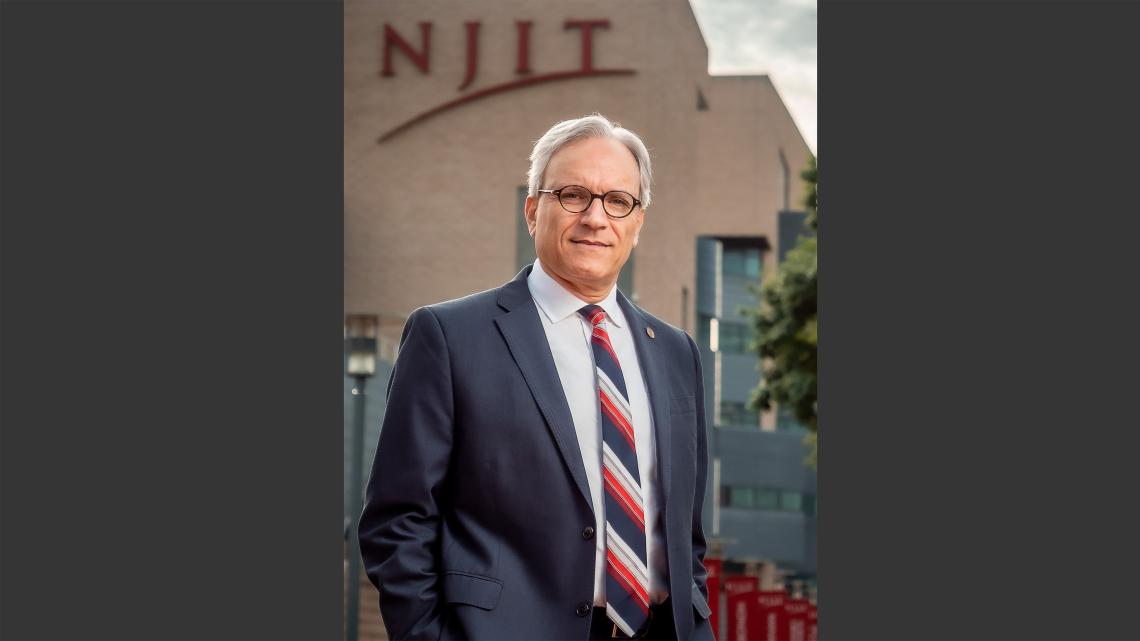
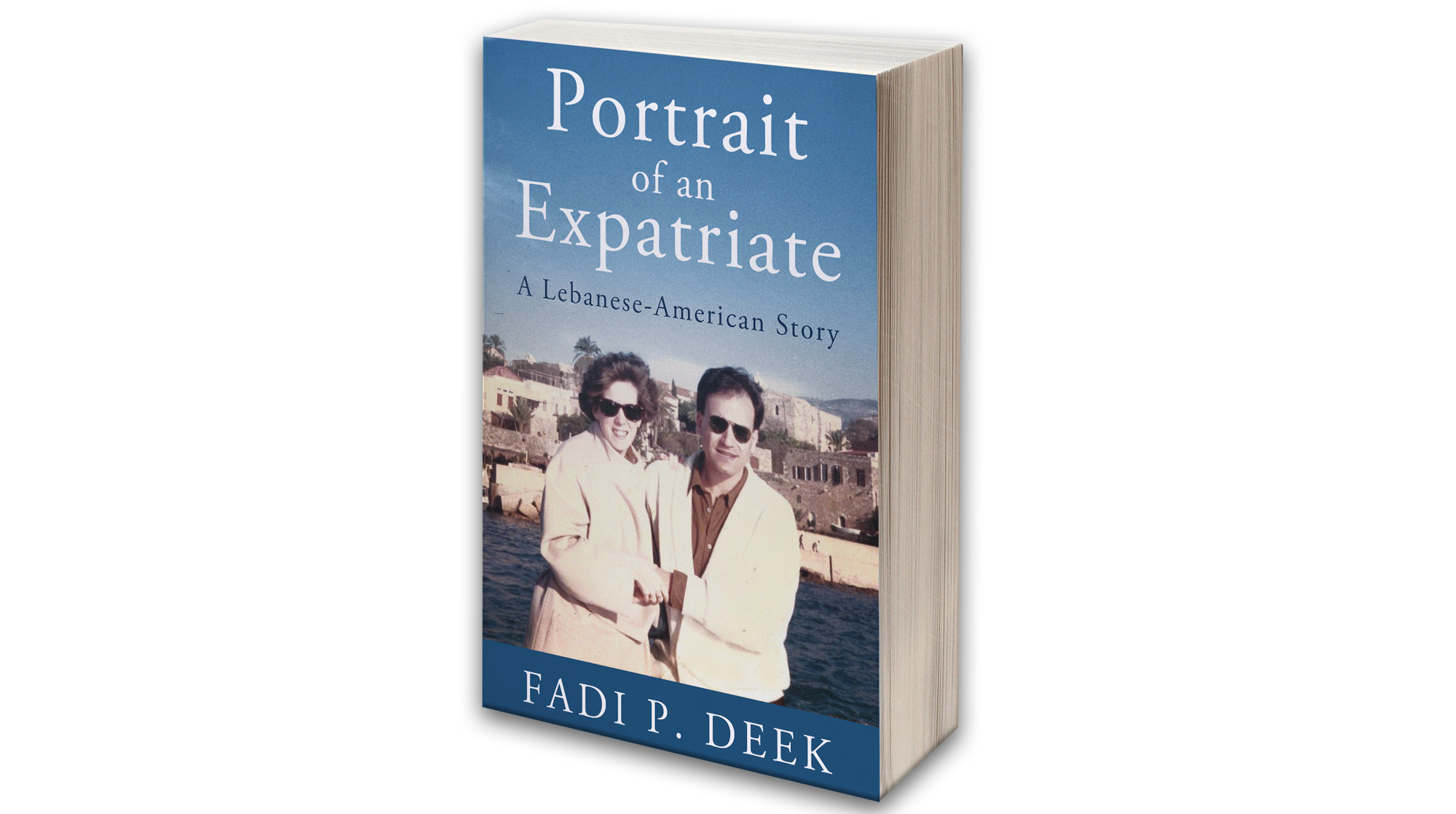
Fadi P. Deek’s new memoir, “Portrait of an Expatriate: A Lebanese-American Story,” begins in Byblos, Lebanon — the modern-day city of Jbeil — with memories of family, faith, tradition, the Mediterranean Sea and the mountains of Mount Lebanon. But it is also a story shaped by civil war, displacement and the search for stability, opportunity and meaning across continents.
Deek, Distinguished Professor of Informatics and Mathematical Sciences at New Jersey Institute of Technology, has spent more than four decades at the university as a student, scholar, mentor and academic leader. An NJIT alumnus who earned his bachelor’s, master’s and doctoral degrees at the university, he later served in leadership roles including dean of the College of Science and Liberal Arts and provost and senior executive vice president.
In “Portrait of an Expatriate,” Deek reflects on the Lebanon he left behind, the life he built in the United States with his wife, Maura, and the values he hopes to pass on to his grandchildren. The book establishes at once personal history and family legacy, and is a message of resilience for those whose lives have been shaped by migration, uncertainty and hope.
What prompted you to write “Portrait of an Expatriate” now, more than four decades after leaving Lebanon for the United States?
I primarily wrote this book for my grandchildren. I hope they will find in my story purpose, resilience, sacrifice and love. I wish them to carry their heritage with pride and step into the future with confidence. I did this not to impress, but to inspire.
I want them to know where they come from, what their ancestors have endured and accomplished, and the values that shaped the family Maura and I built together. I wish it to serve both as a personal history and as a message of hope for their own journeys.
Though I will not always be around to guide them, I wish for the stories in this book to stay with them, even in some small way. I also want them to know that Maura and I value knowledge and diligence, and that they can overcome whatever challenges life may place in their path, just as we did.
The book begins with childhood memories of Byblos/Jbeil, family, faith and tradition before turning toward war and displacement. What did you most want readers to understand about the Lebanon you knew before the conflict?
I would like readers to understand Lebanon’s many layers of history. It is truly a living museum. This small, diverse country is a melting pot of cultures and religions.
I also wanted readers to have an appreciation for the country’s stunning landscape — the Mediterranean coastline, the rugged mountains and the fertile valleys — and to understand the warmth of the Lebanese people, their hospitality, their pride in their heritage, their resiliency and vibrancy, especially in the arts, culture and cuisine.
How did leaving Lebanon in the middle of the civil war shape the way you thought about education, opportunity and building a life in the United States?
My intention was to eventually return to Lebanon trained, skilled and experienced, to my own personal and professional benefit, but also to contribute toward helping my country regain stability and prosperity.
It was very normal to think this way then, as it had been common for generations for the Lebanese to seek trade, professional or higher education opportunities abroad and return with financial assets, knowledge and skills, academic degrees or other resources that were instrumental in propelling Lebanon into economic prosperity. This contributed to making modern Lebanese society vibrant and its culture progressive.
You have spent much of your adult life at NJIT — first as a student, then as a professor, dean, provost and senior executive vice president. How does NJIT fit into the larger story of your life as an expatriate and Lebanese-American?
NJIT has given me stability and community, a place that sustained me through my B.S. and M.S. in Computer Science, and Ph.D. in Computer and Information Science. It is also where I made my academic and administrative career over more than four decades. This is where I flourished.
I have been privileged to be part of NJIT’s remarkable progress over four decades. This is also where I met Maura Ann McShane, an Irish-American girl who was taking computer science courses as a bridge into the graduate program, having shifted her focus from environmental science to computer science. This is where our own children earned their first college degrees.
One aspect that left an impression on me is how seamless and welcoming it was for me to transition from a student to an employee, eventually reaching the highest academic and administrative ranks. Specifically, how normal it felt to be working closely with people who had taught me only a few semesters earlier. Even as I moved up through the organization’s layers, these very same people were not only supportive but proud.
This memoir moves between personal history, national history and family legacy. How did you decide what belonged in the book?
This book is a companion to an earlier book I wrote, “The Enduring Presence of Christianity in Lebanon,” which was published in November 2025 and focused on collective history. “Portrait of an Expatriate: A Lebanese-American Story” focuses on personal history.
For some time, I have carefully thought about Lebanon’s history and wanted the first book to be a reflection on the patterns and consequences of past events and decisions as a means to understanding the present and perhaps informing the future. I did not want to simply restate what others had already said.
For the second book, I simply wanted an opportunity to give gratitude for the people who impacted me, for the moments of challenge that refined me, and for the moments of triumph that grounded me.
You conclude with a letter to your grandchildren. What message did you most want to leave for them — and perhaps for younger readers more broadly — about identity, resilience and hope?
For those who are already here, I would like them to lead the way and help guide those who come after them, including their siblings and cousins, or others who may need their help when they are here.
This letter is a small piece of my life, my thoughts and the lessons I have learned along the way, shared with the hope that they may help my grandchildren in their own journey. I wanted them to know that beside me, always, has been Maura, their grandmother and my partner in all things, with whom we built not just a life, but a home.
I also wanted them to know that they can overcome whatever challenges life may place in their path, just as we did.
You have also been described as an activist for peace and prosperity in Lebanon. What role do you hope personal stories like this can play in helping people understand places often seen only through the lens of conflict?
It is true that Lebanon is a nation whose identity has been forged through generations of conflict that have become synonymous with the country, perhaps even defining it. Yet it has a rich heritage, enduring traditions and remarkable human achievements. To understand its struggles, one must first understand the greatness that preceded them.
That is what I tried to convey in both of my recent books through personal stories that resonate with others who may not have had the same experiences as I have, but also more certainly with those who have had such experiences.
For NJIT students, especially those whose families have crossed borders or lived through instability, what do you hope they might take from your story?
That we will all experience success in both personal and professional life, and that it is important to celebrate this. However, we are also certain to have our share of setbacks.
In such situations, rather than lamenting what went wrong, we can pause, assess the situation and focus on the things within our control. Channeling our energy into finding solutions for such things will allow us to continue on with our journey, with grace and determination.
