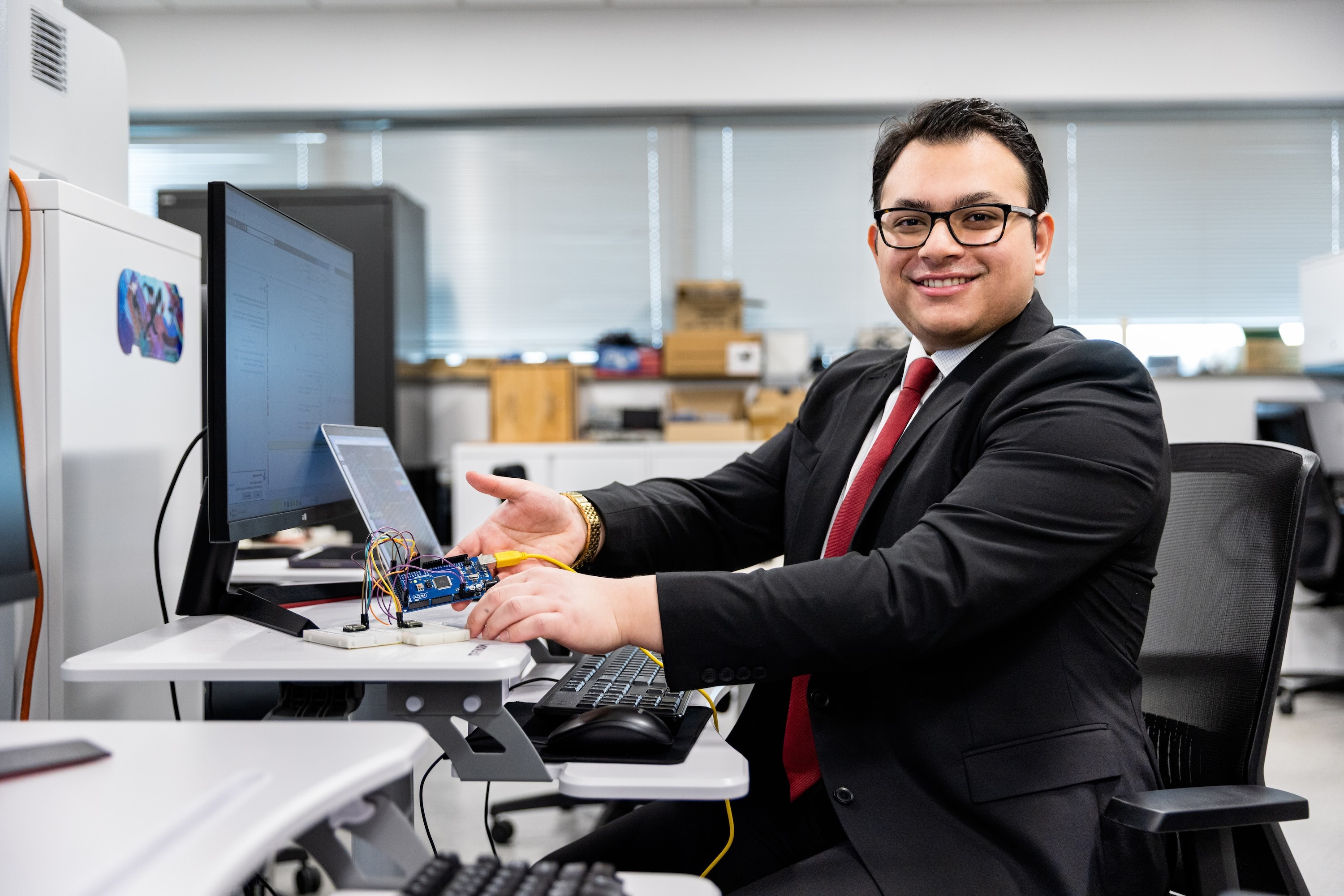
Good things may come to those who wait, but Krish Poudel '26 isn't waiting to pursue his lifelong dream of a medical career. It took him just three years to earn a bachelor's degree in biomedical engineering as part of New Jersey Institute of Technology's accelerated B.S./M.D. program, and he now continues his M.D. studies at Rutgers New Jersey Medical School.
A graduate of Newark College of Engineering (NCE) and an Albert Dorman Honors College (ADHC) Scholar, Poudel grew up in Massachusetts and traces his interest in medicine to high school. His studies support a longstanding determination to connect medical research, engineering and patient care. After the death of his grandmother in a rural area of Nepal where she lacked access to lifesaving treatments, Poudel recognized the value of working directly with people, "taking all the things I would innovate and research and actually delivering them to patients," he says.
During his senior year of high school and the two summer breaks before college, Poudel completed the National Institute of Health's Summer Research Program and the Massachusetts Life Sciences Center Summer Program, learning from the lab's principal investigator (PI), graduate students, and physicians at the University of Massachusetts, Amherst. In the program, he designed software for identifying tumors in lung tissue; the algorithm detected white blood cells and necrotic tissue, calculated the number of tumors and determined what percentage of the total lung tissue was cancerous.
He presented the research at the 2022 National Institute of Diabetes and Digestive and Kidney Diseases (NIDDK) Research Symposium, and it was incorporated into a peer-reviewed study on tumor ablation — treatments that destroy cancerous cells in tumors by rupturing, freezing or burning them. Poudel is a co-author of the paper, published in 2023 in the journal Frontiers in Immunology.
Motivation and Innovation
Poudel also contributed to building a device for electrically stripping chlorophyll from spinach leaves, enabling modification of the plant's cellulose into scaffolding for use in organ transplants. Later, when he met and spoke with people who were waiting for organ donations and who could potentially benefit from the device, he was deeply affected by their stories.
"Seeing that human reaction was really motivating to me," he says.
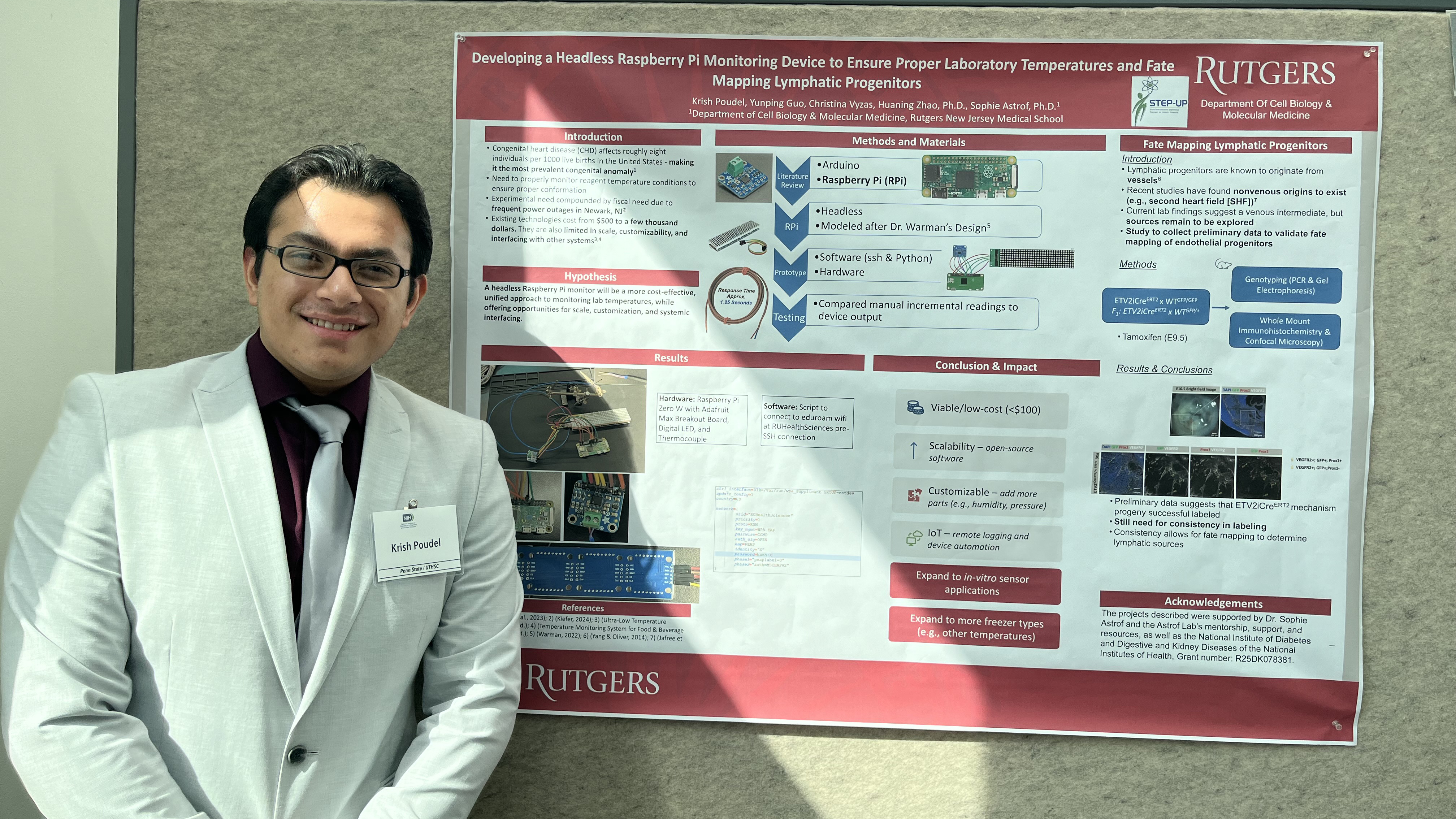
Poudel returned to the NIDDK program in 2024, this time joining a cardiovascular research lab at Rutgers New Jersey Medical School (NJMS). He studied how heart tissue responds to cardiac stress and engineered a Raspberry Pi-based system to monitor laboratory freezer temperatures.
Working under the mentorship of the lab’s PI and graduate students, Poudel learned techniques such as whole-mount immunohistochemistry — a process for staining and visualizing three-dimensional tissue structures — and confocal microscopy, a type of optical imaging. He credits these skills with sharpening his approach to hands-on research in "wet labs," where scientists handle chemical solutions, biological samples and other liquids.
He presented both projects at the 2024 NIDDK Research Symposium — his second time sharing research there.
Pursuing Patents
Soon after his arrival at NJIT, Poudel joined the Clinical Neuromuscular Adaptation Laboratory (CNAlab) under Jongsang Son, an assistant professor in the Department of Biomedical Engineering. There, Poudel designed an app and wearable device to monitor posture, balance and motion in elderly people who are high-risk for falls — work for which he is now pursuing a patent.
"Seven seconds before they're likely to fall, I use a predictive algorithm to catch that and then alert the user," he explains. "The device will start vibrating, and so they can quickly grab a seat and prevent that acute risk of falling."
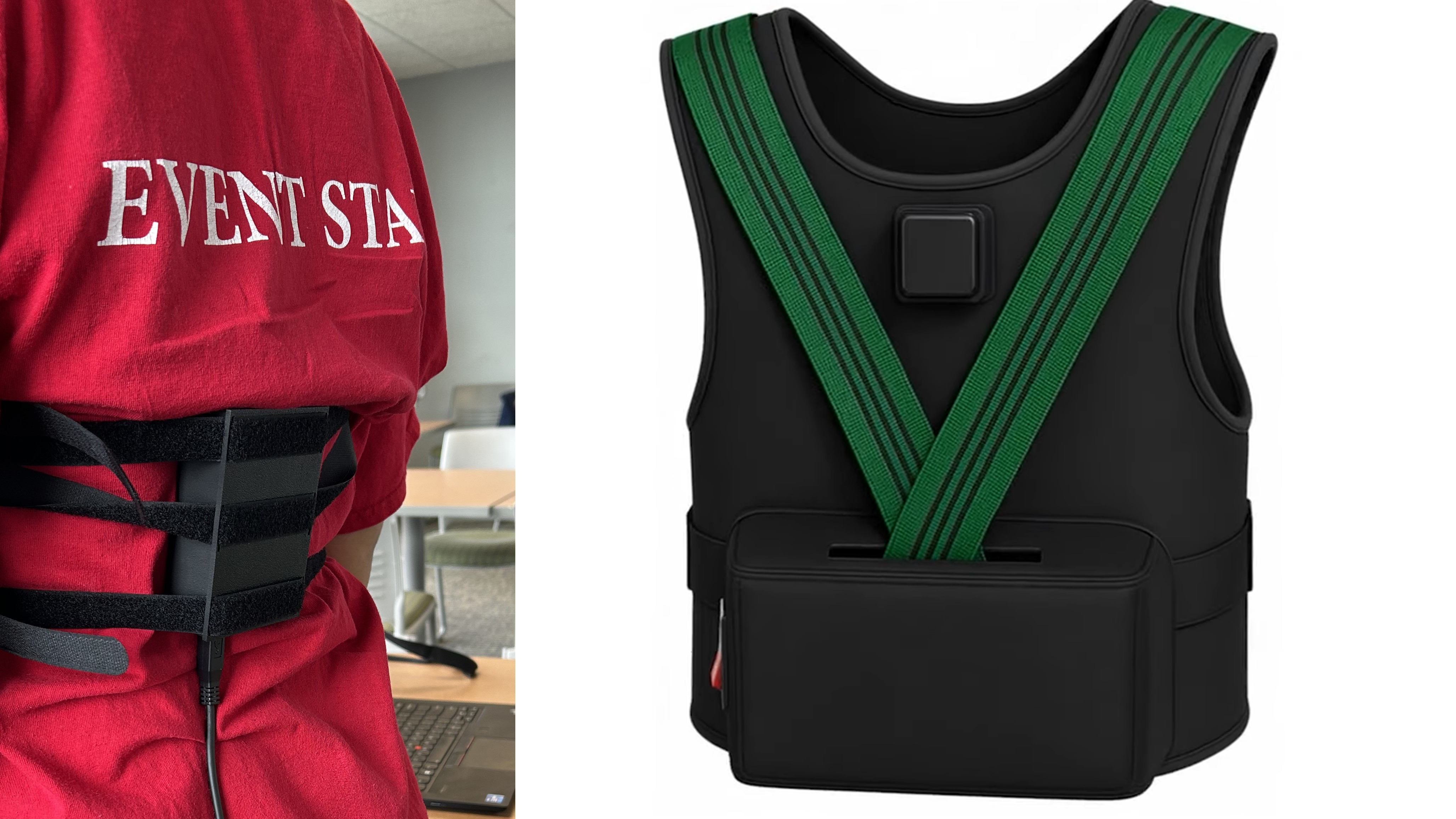
In that lab, Poudel also led a four-person team on a year-long senior capstone project: a wearable rehabilitative exosuit that uses motor-driven elastic bands to nudge its wearer toward a healthier posture, designed to help patients with spinal deformities, muscular imbalances or chronic poor posture.
The exosuit took third place at NJIT’s 2026 Biomedical Engineering Undergraduate Showcase, and the team is pursuing a patent for the design. Poudel’s progress across both projects was supported by two master’s-level courses he completed as an undergraduate.
Communication is key
His work in a biomedical engineering class then caught the attention of the course's professor, Xiaobo Li, who invited Poudel to join the Computational Neuroanatomy and Neuroinformatics (CNN) Lab, a neurology-based environment integrating statistics with artificial intelligence (AI) and machine learning for analysis of cognitive and behavioral disorders. In the CNN Lab, Poudel used computer modeling to trace how environmental variables — family conflict, screen time and parental monitoring, for example — interacted with the developmental trajectories of children who had experienced traumatic brain injuries (TBI), to produce psychopathology over time.
He is now extending his work by conducting neuroimaging studies of brain regions and neural activity "so we can find and implicate neural structures and design interventions to help these kids," he says. To prepare for that neuroimaging work, he completed a doctoral-level course.
As the only undergraduate student in 2026 to successfully defend an honors thesis, Poudel received a plaque from Bryan Pfister, chair of the Department of Biomedical Engineering.
As Poudel advanced through the accelerated program, another instrumental figure emerged: ADHC advisor Paul Hoyt-O'Connor, supervisor of all B.S./M.D. majors. "He's been there every step of the way," Poudel says. "He helped me find communities on campus. He helped me find my niche here and realize my research potential."
One of Poudel's campus communities was the Tau Beta Pi Engineering Honor Society, an academic honor society that accepts eligible individuals from all engineering disciplines. He joined in the spring of 2025, and later was elected as vice president of alumni affairs, a role that he held for three semesters.
"Communication is something I pride myself on, and I wanted to be the interface and the bridge between the alumni of the club and the current students," he says. "Organizing things like an intern panel or alumni tabling events — where alumni would come back and support people in our organization to help them find jobs or sharpen their interviewing skills — that was really meaningful to me."
I want research to be involved in my career
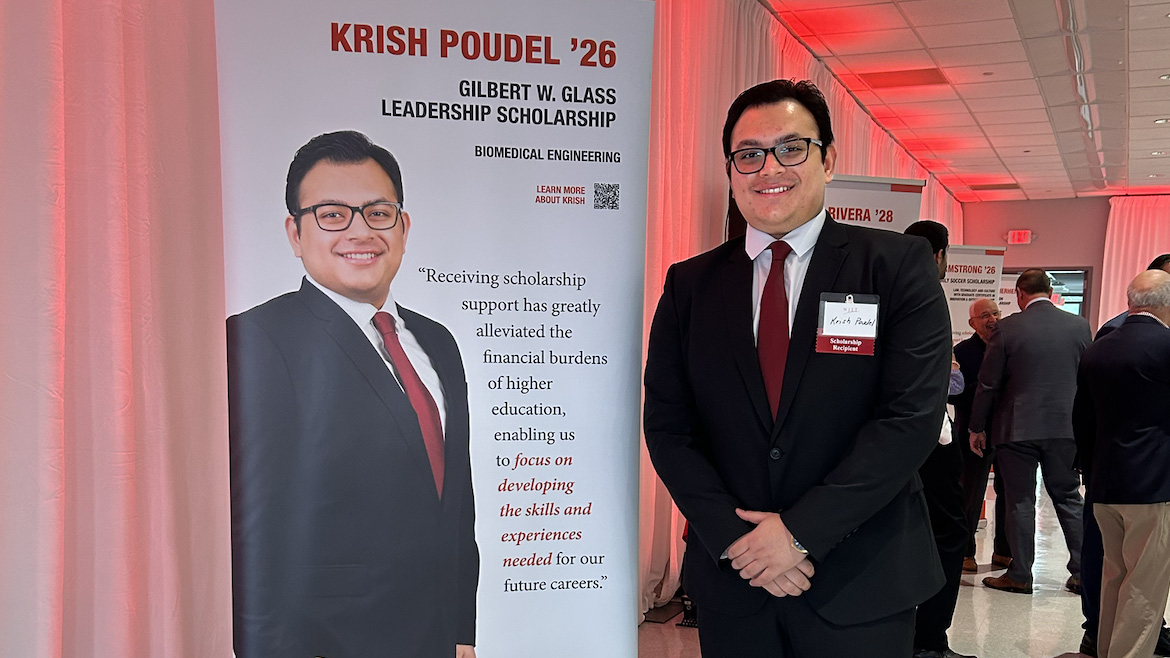
In 2026, Poudel was named an NCE Outstanding Senior for the Department of Biomechanical Engineering, at NJIT's 28th Annual Salute to Engineering Excellence, and he was chosen as NCE’s Gonfalon Carrier, an honor reserved for a distinguished graduate who leads their college in the commencement procession. During the April 16 Outstanding Senior ceremony, he received the Gilbert W. Glass Leadership Scholarship for his work in peer mentoring and NJIT community leadership, commemorating the hundreds of hours he spent tutoring fellow students in math, science, and engineering at the University’s Norma J. Clayton Learning Center.
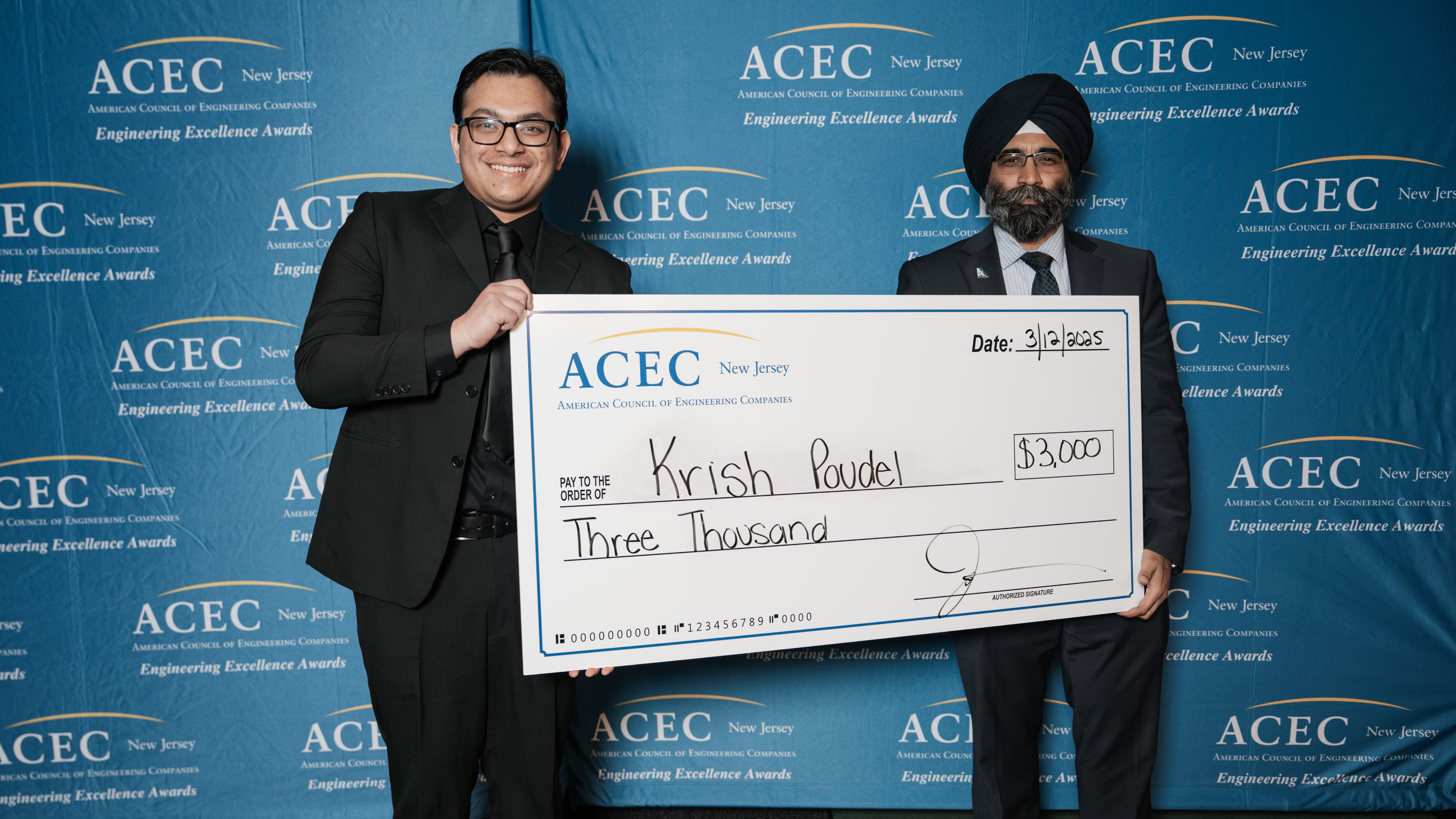
Those recognitions cap a long list of NJIT distinctions. Poudel earned the American Council of Engineering Companies of New Jersey (ACECNJ) Scholarship for Engineering Excellence; took top honors at the NJIT Honors Interdisciplinary Research Forum for his holistic analysis on health disparities; and was the only NJIT student invited to a panel otherwise composed of alumni, spotlighting Asian American and Pacific Islander trailblazers in STEM. He also competed nationally through HOSA-Future Health Professionals, placing first at the New Jersey state conference and third at the international level.
To close out his time at NJIT, Poudel wrote a 90-page honors thesis titled “Longitudinal Bidirectional Associations Between Psychosocial Risk Factors and Youth Psychopathology Induced by Pediatric Traumatic Brain Injury,” defending it to a faculty group that included Li and Hoyt-O'Connor. Building on that research, he is now conducting neuroimaging studies for a paper for which he will be the lead author.
"By doing the thesis, I grew in my ability to conceptualize new research questions and address them with innovative study designs," he says. The experience helped him practice writing for audiences that include people who are familiar with his research topic, and people who are not.
"The biggest professional takeaway that I got from NJIT was the desire to pursue an M.D. with research integrated into my career," he explains. "I realized that I like research, and I want research to be involved in my career, to the point that I would like to split my attention between pursuing translational research and providing clinical care."
Poudel says that he has always tackled problem-solving by analyzing how large-scale problems break down into smaller, interconnected elements. In the coming years, he hopes to apply this type of systems-level thinking to his medical studies, research and future career.
"That mindset can be really successful when you're able to conceptualize a problem in a very big scope, and then narrow down to specific things that you want to do."
