Fresher Premade Meals Sell Faster, NJIT Research Finds
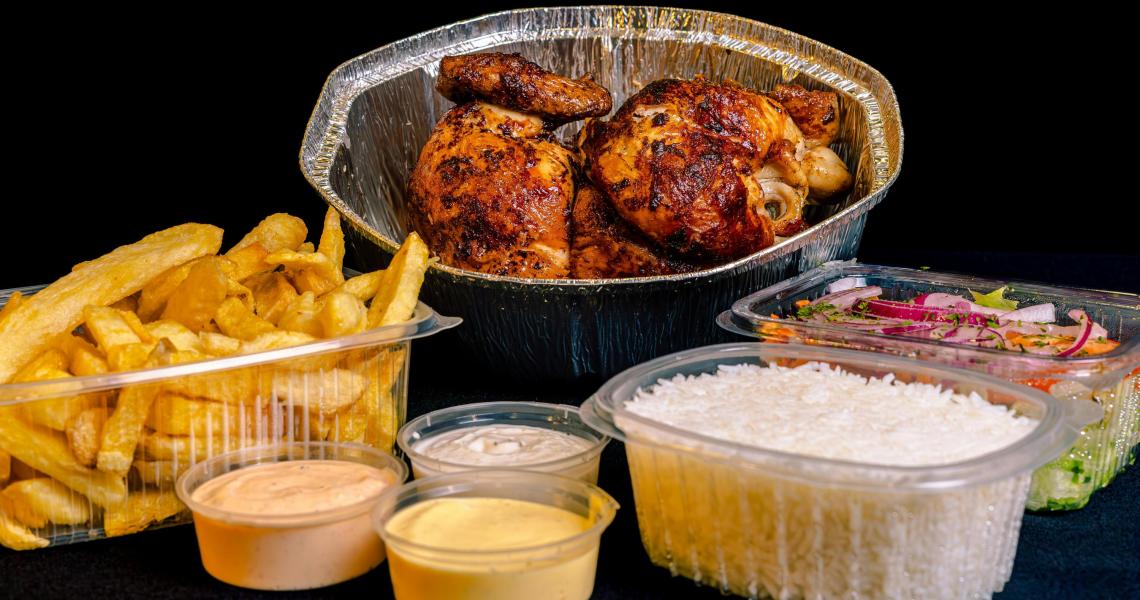
Why did the rotisserie chicken cross the aisle — and end up in your shopping cart? Maybe you grabbed the container that was closest to you, or maybe you examined all of the chickens, checking dates and timestamps to see when they were cooked. Markets follow various display strategies for prepared foods, with many stores making older items more visible so they'll be sold before they spoil. However, a theoretical model created by an NJIT researcher suggests that customers prefer finding the freshest items at the front of the displays.
From chicken to salads to sushi, ready-to-eat meals are popular with busy shoppers, with demand growing over the past decade. But premade meals rapidly lose their appeal as their freshness declines, so stores want to move these foods as quickly as possible. Waste is a big problem; a large retailer recently found that it was discarding about 9% of its prepared foods. To understand how to make premade meals more appealing — and less likely to be thrown away — the retailer turned to operations management researchers at NJIT and Stanford University.
Jae-Hyuck Park, an assistant professor of decision science and business analytics at NJIT's Martin Tuchman School of Management, studies sustainable operations in grocery stores. Working with Dan Iancu and Erica Plambeck, professors of operations, information and technology at Stanford Graduate School of Business, Park created a model to analyze buying patterns for premade foods and evaluate how information such as timestamps, price and display order might convince a customer to choose an item or pass it over. The findings were published in the journal Management Science.
One tactic for selling premade foods is called "first-in, first-out," or FIFO, in which items that are prepared earlier are displayed more prominently. But some stores favor the "last-in, first-out" (LIFO) strategy, which prioritizes the most recently-cooked items for display and easy access.
According to Park, both approaches offer different advantages.
"FIFO can work better when holding items on the shelf is costly — for instance, due to heating or labor costs," Park explained. Premade items that spoil quickly also benefit from the FIFO method, he added.
"But when items can sit longer and freshness drives customer satisfaction, a LIFO-type strategy can work better," Park said. "And timestamps are most useful when shoppers differ in how much they care about freshness." However, the LIFO approach means that more items accumulate on shelves, which can increase costs for the store and lead to more waste, the study authors reported.
Higher sales, lower waste
Park's model determined sales rates by calculating factors such as how much premade food was prepared at once; when the first items were put out and when they were replaced; age and estimated quality of the food, based on freshness; item shelf life; and customer traffic. The researchers also analyzed decades of data going back to the 1980s, much of which suggested that FIFO was generally better for managing perishable inventory because it prioritized selling older items first.
But the new model showed that this was not always true. For certain foods — rotisserie chickens, for example — customers are highly aware of freshness. In those cases, "selling the freshest items first can actually be optimal," Park said.
"In these settings, a LIFO-type display strategy can increase sales and improve customer experience, a pattern that we also observe in practice at some large U.S. grocery retailers."
Their model also suggested that adding timestamps actually cut down on sales by reducing an item's shelf life, creating more waste. In the study, the scientists suggested that retailers could sell more by omitting timestamps. Even in circumstances where retailers used timestamps to reduce prices for older items, sales were higher if all items were the same price and not timestamped. In the absence of timestamps, customers judged the quality of an item through visual comparison rather than age.
Policy makers can also learn from these findings, the authors wrote, as increasing sales and cutting down waste can have wider benefits. In California and across France, new laws require that markets donate unsold food or pay a penalty. As a result, retailers may opt to extend the shelf life of unsold items, shortening their viability after donation. Strategies that improve sales may therefore affect the quantity and quality of food that stores donate.
"Retailers could see higher sales, lower food waste, and better alignment between operational efficiency and consumer preferences," Park said. "Importantly, our results suggest that these gains do not have to come at the expense of customer welfare, which makes the findings particularly relevant for sustainability-focused retail strategies."