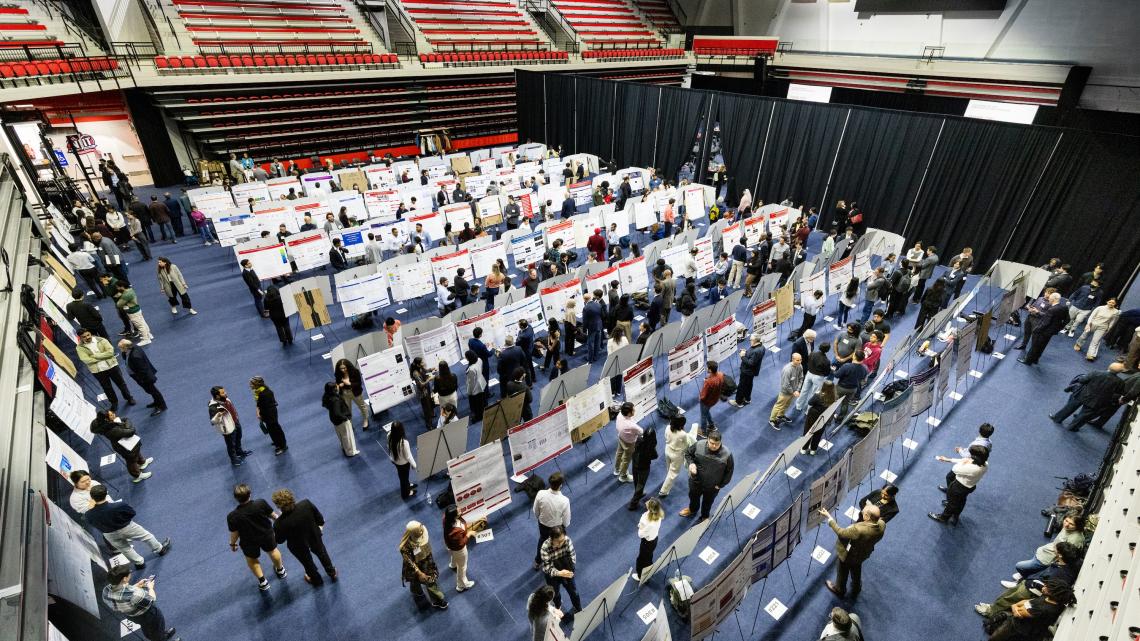
NJIT’s Dana Knox Research Showcase filled the Bloom Wellness and Events Center with student research spanning science, engineering, computing, management and the humanities. With poster presentations, two-minute elevator speeches and Board Day luncheon attendees moving through the event, the showcase offered a cross-disciplinary snapshot of research activity across the university.
This year’s showcase featured 242 student researchers across 10 disciplines, including 122 graduate projects and 80 undergraduate projects, reflecting the scale and range of research underway across NJIT.
At the Board Day luncheon that preceded the showcase, Provost John Pelesko underscored that point directly.
“These students are building real things, right now, that address real problems. These are not hypothetical projects,” Pelesko said.
He also encouraged luncheon attendees — including board members and guests — to connect directly with the students presenting their work.
“I encourage you to engage with the bright minds behind the posters and let us carry forward the legacy of Dr. Knox, celebrating the spirit of inquiry and excellence that defines NJIT,” he said.
Named for Dr. Dana E. Knox, a beloved professor and associate provost for undergraduate programs, the showcase honors a legacy of academic excellence and mentorship that continues to shape NJIT’s research culture. That spirit was evident in the range of work presented this year, from environmental toxicology and traumatic brain injury treatment to solar physics, marine biology, advanced materials and digital privacy.
The event also includes one of its more personal traditions: the presentation of the Mr. and Mrs. R.S. Sodhi Prize, which recognizes top student research at the annual showcase. The prize is made possible through the contributions of Department of Mechanical and Industrial Engineering Professor Raj S. Sodhi and his wife, Rani, and is presented in honor of his parents.
Among this year’s recognized projects, the Sodhi Prize winners offered a concise snapshot of the showcase’s range — and of the public-facing questions NJIT students are taking on through research.
Undergraduate Winners
First Place: Arena Chowdhury, Chemistry & Environmental Science, Albert Dorman Honors College
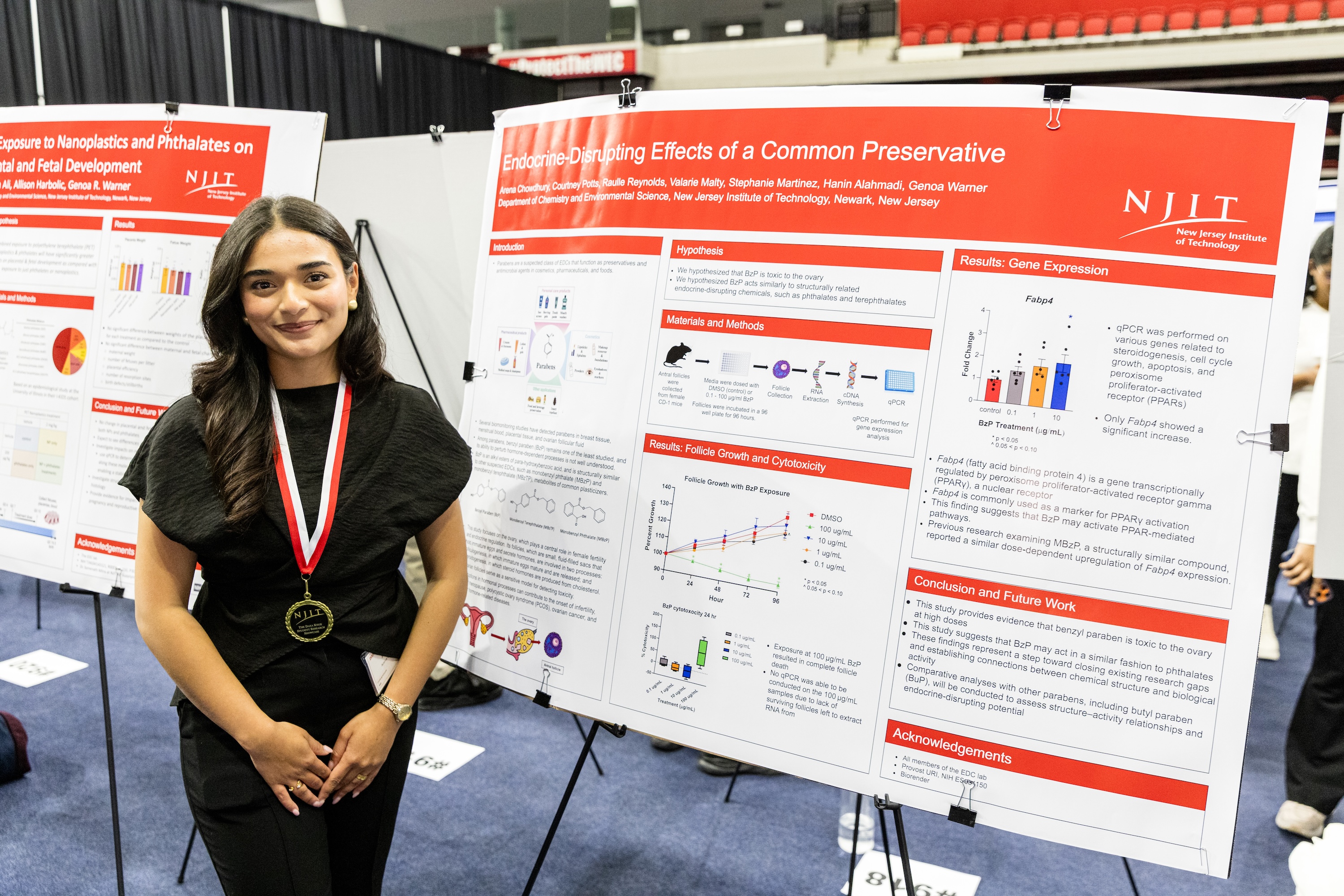
Chowdhury’s project, “Endocrine-Disrupting Effects of a Common Preservative,” examined the reproductive risks of benzyl paraben, a preservative used in cosmetics, pharmaceuticals and foods. Using an in vitro mouse follicle model, the research found dose-dependent ovarian toxicity, including complete follicle death at high concentrations and gene-expression changes at lower doses that suggest the chemical may act through pathways similar to other endocrine-disrupting compounds. The work adds to broader questions about the safety of parabens in consumer products and the cumulative effects of chemical exposure on reproductive health.
Second Place: Mark Nyevgen, Mechanical & Industrial Engineering, Albert Dorman Honors College
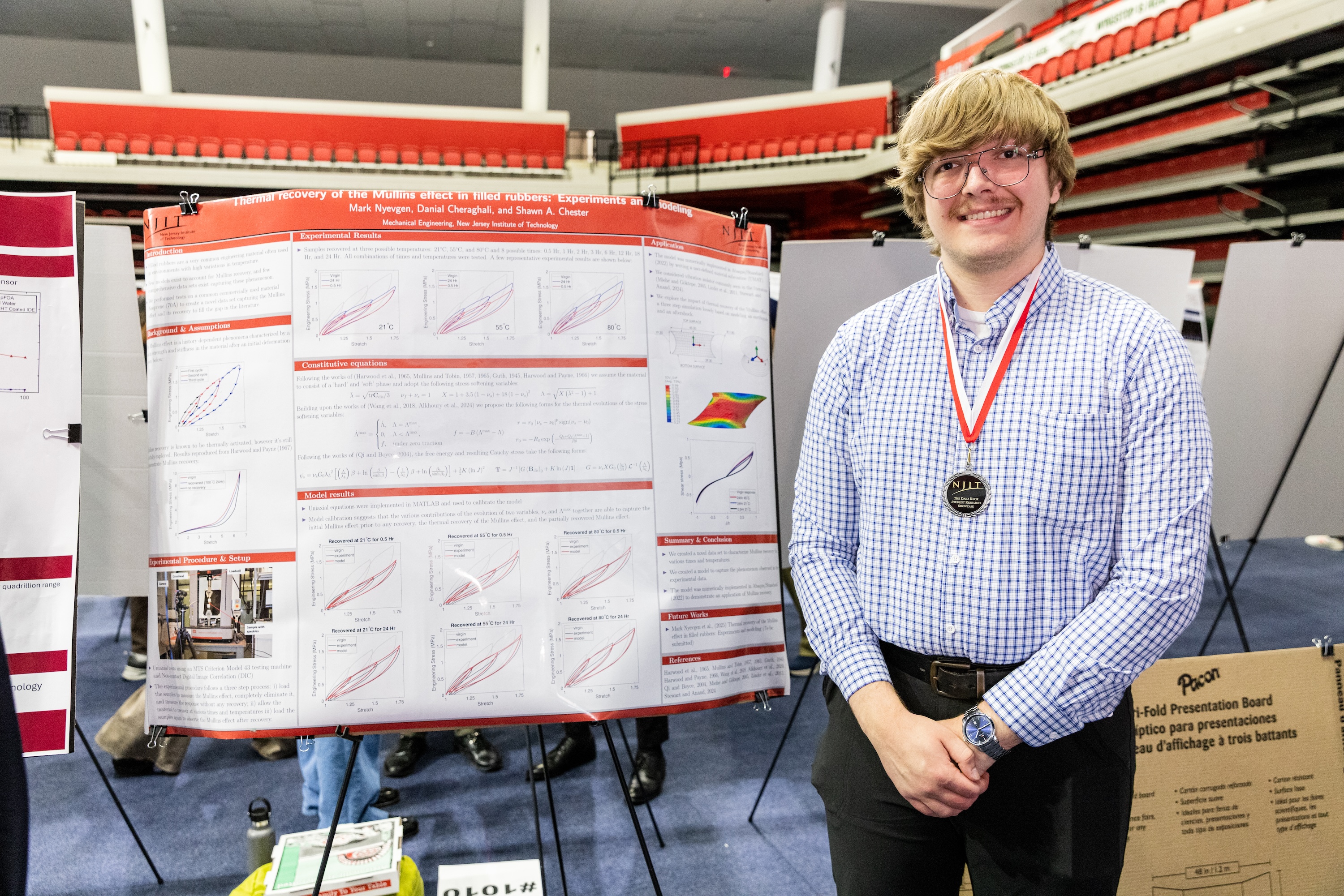
Nyevgen’s project, “Thermal recovery of the Mullins effect in filled rubbers: Experiments and modeling,” focused on how rubber materials lose strength and stiffness after deformation, and how those properties recover over time under different temperatures. By pairing experiments on neoprene with modeling and finite-element implementation, the work aimed to improve understanding of materials used in components such as gaskets, pipes, vibration isolators and tires. The research highlights how temperature-dependent material behavior can shape performance and safety in critical mechanical systems.
Third Place: Ishaakannan Rajeshkannan, Biomedical Engineering, Albert Dorman Honors College
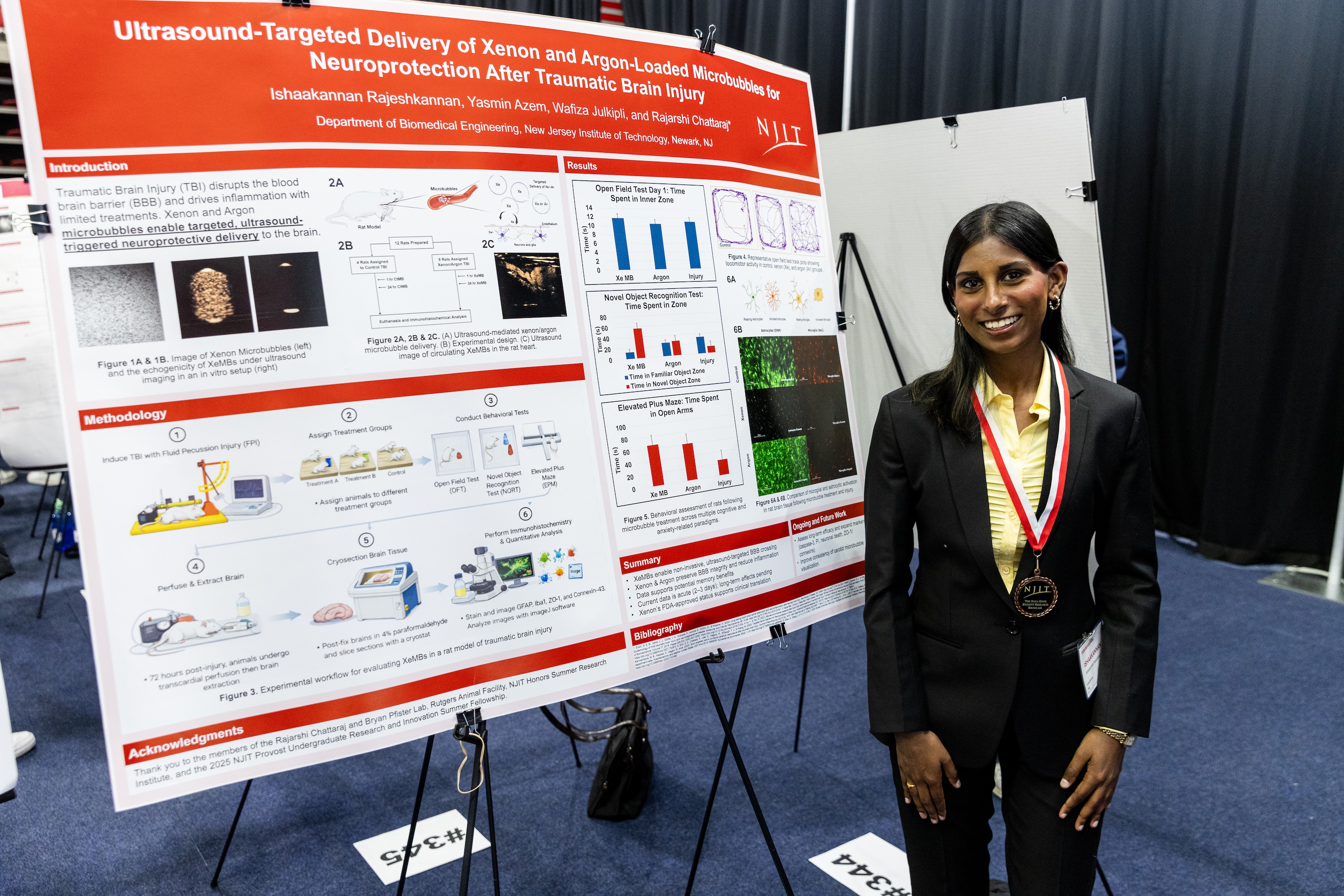
Rajeshkannan’s project, “Ultrasound-Targeted Delivery of Xenon-Loaded Microbubbles for Neuroprotection After Traumatic Brain Injury,” explored a new way to deliver a neuroprotective agent across the blood-brain barrier. In a rat model of traumatic brain injury, xenon-filled microbubbles were delivered intravenously and ruptured with ultrasound near the carotid artery, with early findings showing behavioral improvement and evidence that the treatment may help modulate neuroinflammatory responses after injury.
Graduate Winners
First Place: Hannah Suresh, Physics
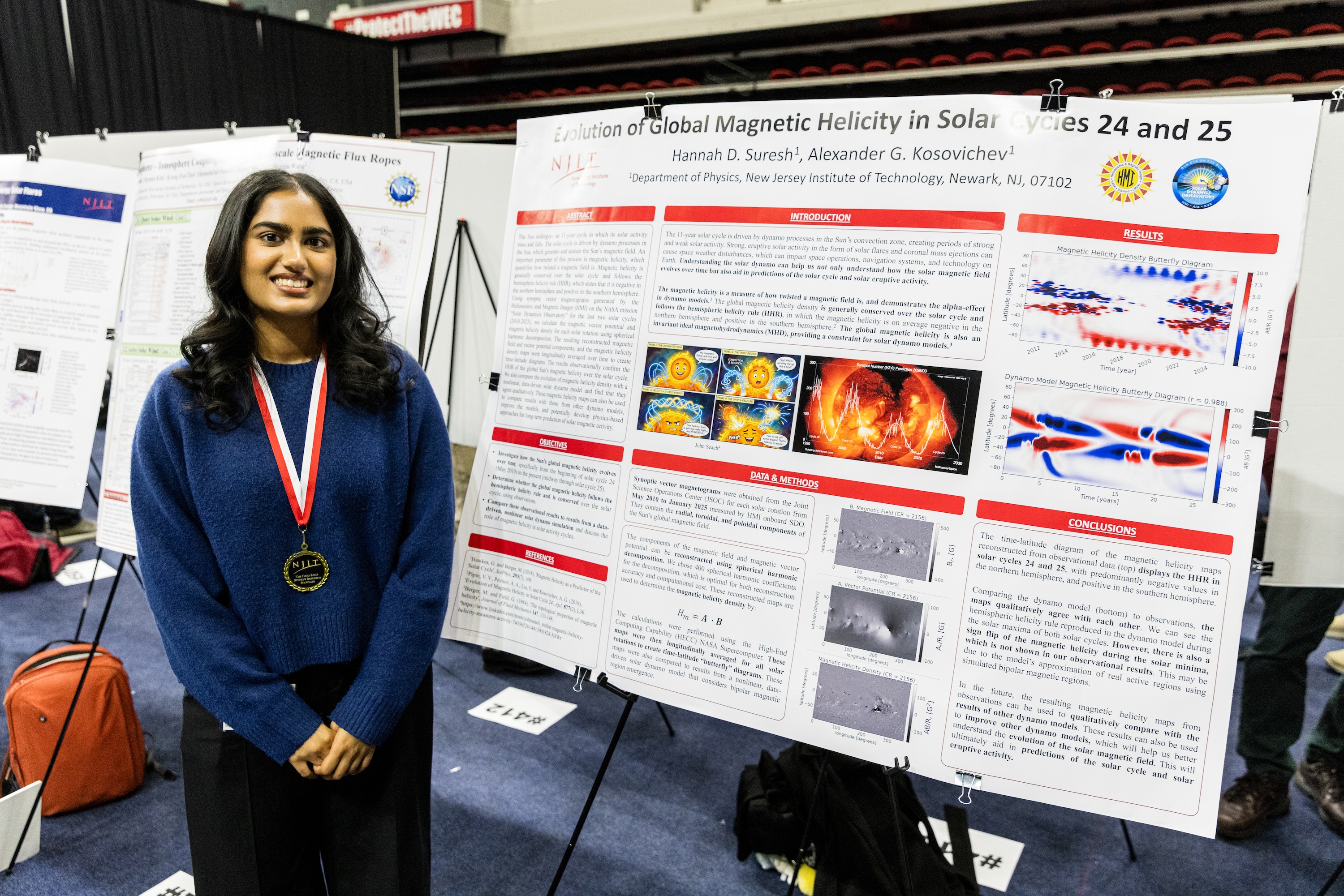
Suresh’s project, “Evolution of Global Magnetic Helicity in Solar Cycles 24 and 25,” investigated how the Sun’s magnetic field evolves over time by tracking magnetic helicity across two solar cycles. Using data from NASA’s Solar Dynamics Observatory and large-scale computational analysis, the research confirmed long-observed hemispheric patterns in solar magnetic behavior and could help improve long-term prediction of solar activity and space weather events that affect technology and infrastructure on Earth.
Second Place: Elias Joseph, Biological Sciences
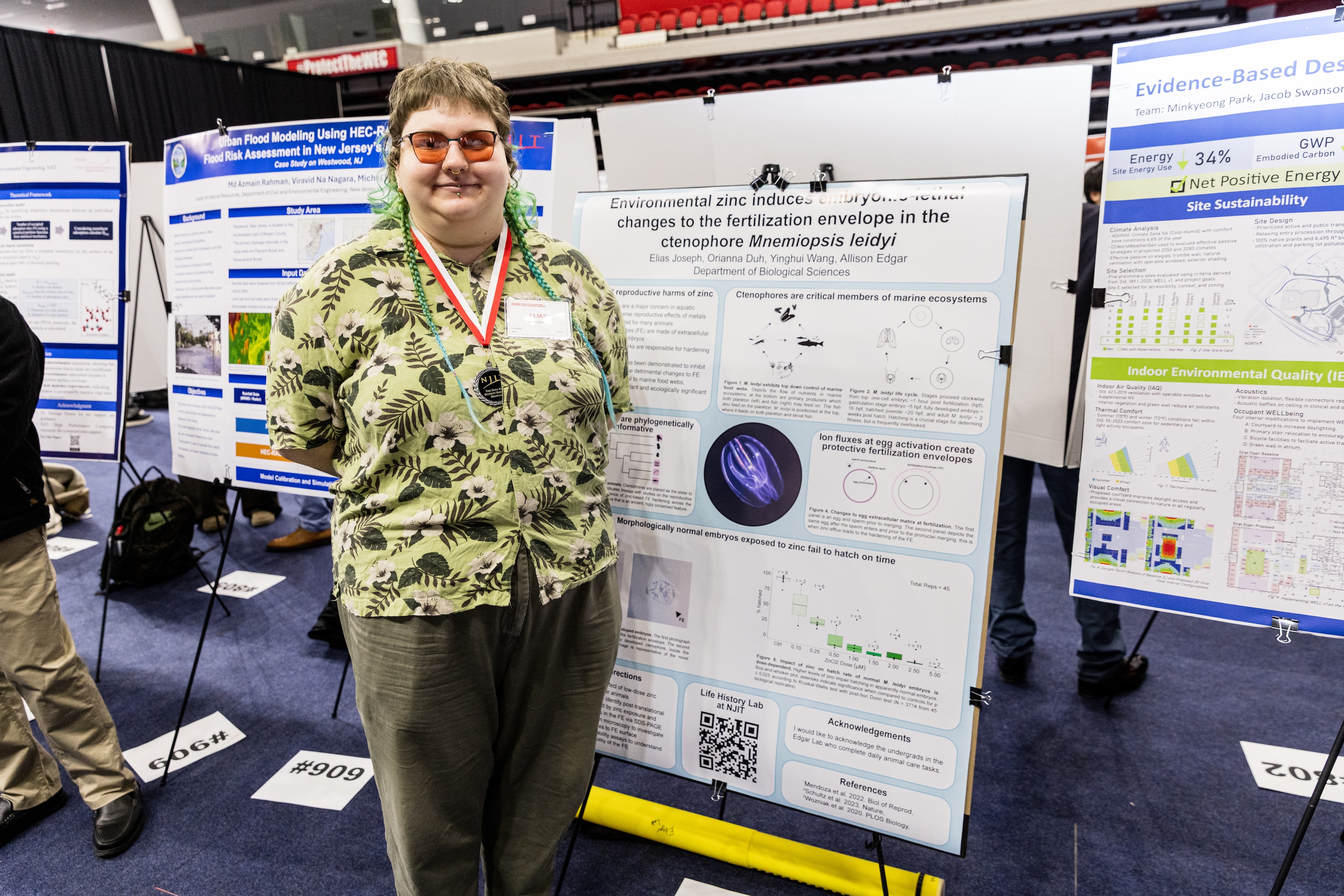
Joseph’s project, “Environmental zinc induces embryonic-lethal changes to fertilization envelope in the ctenophore Mnemiopsis leidyi,” examined how low-level zinc exposure affects reproduction in an ecologically important marine organism. The study found that zinc exposure at fertilization can prevent otherwise normal embryos from hatching, and that the effect appears at concentrations below what the U.S. Environmental Protection Agency currently considers safe for aquatic life. The findings raise questions about ecological protection standards and deepen understanding of how environmental pollutants may interfere with reproduction across species.
Third Place: Riley Grossman, Martin Tuchman School of Management
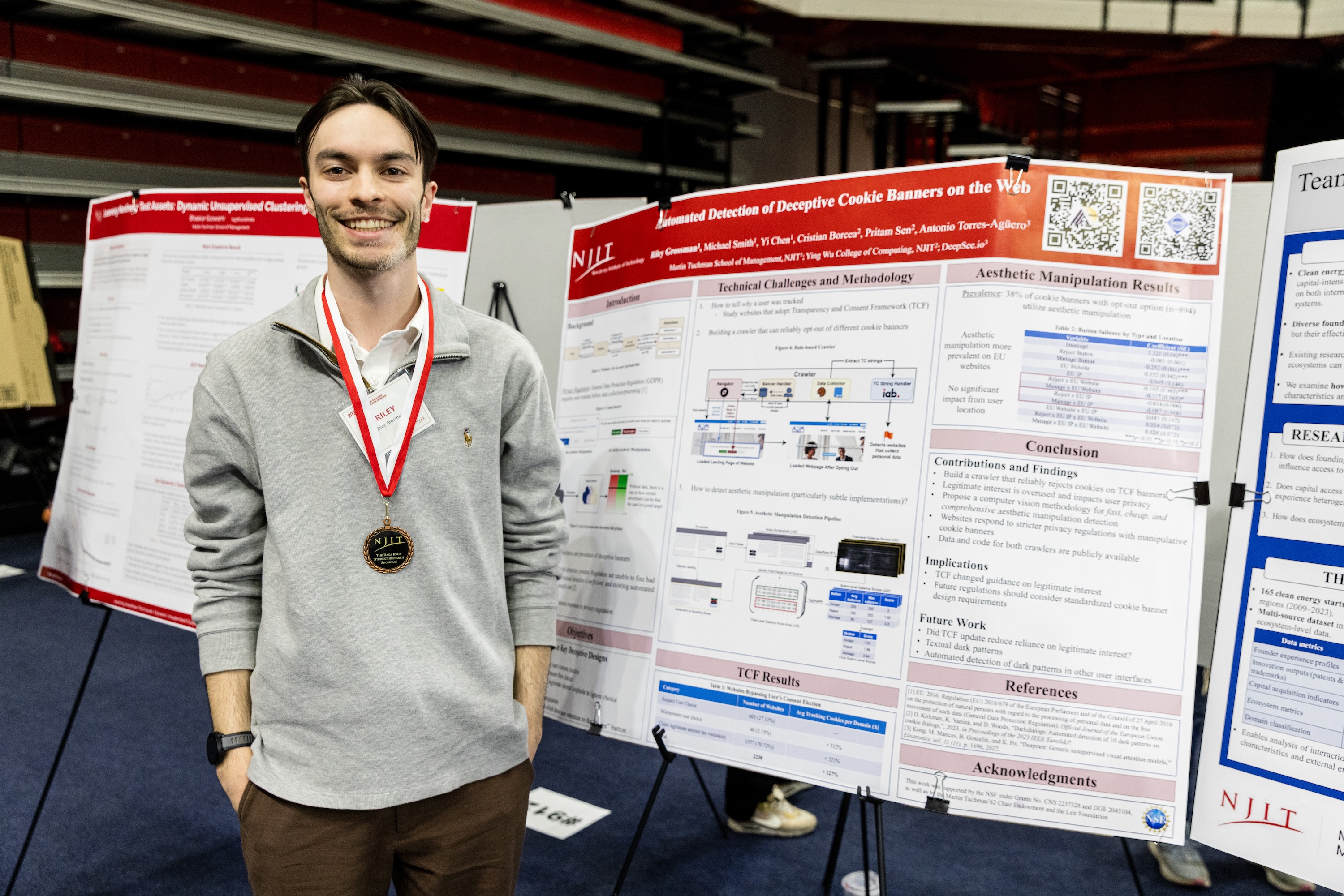
Grossman’s project, “Automated Detection of Non-Compliant and Manipulative Cookie Banners on the Web,” used web crawling and computer vision to identify websites that ignore users’ privacy choices or steer them toward consent through deceptive design. The research found that while only a small share of websites directly misrepresented users’ consent decisions, many more still exploited regulatory loopholes to process personal data. The work speaks to the limits of privacy regulation without scalable enforcement tools and to the increasingly important role research can play in strengthening digital trust.
Taken together, the projects recognized through the Sodhi Prize show how NJIT students are pursuing work that moves between theory and application, often with a clear line from laboratory or computational research to issues the public encounters in everyday life. From chemical exposure and material reliability to brain injury treatment, solar forecasting, aquatic ecosystem health and digital privacy, the connective thread is not just technical depth, but relevance.
