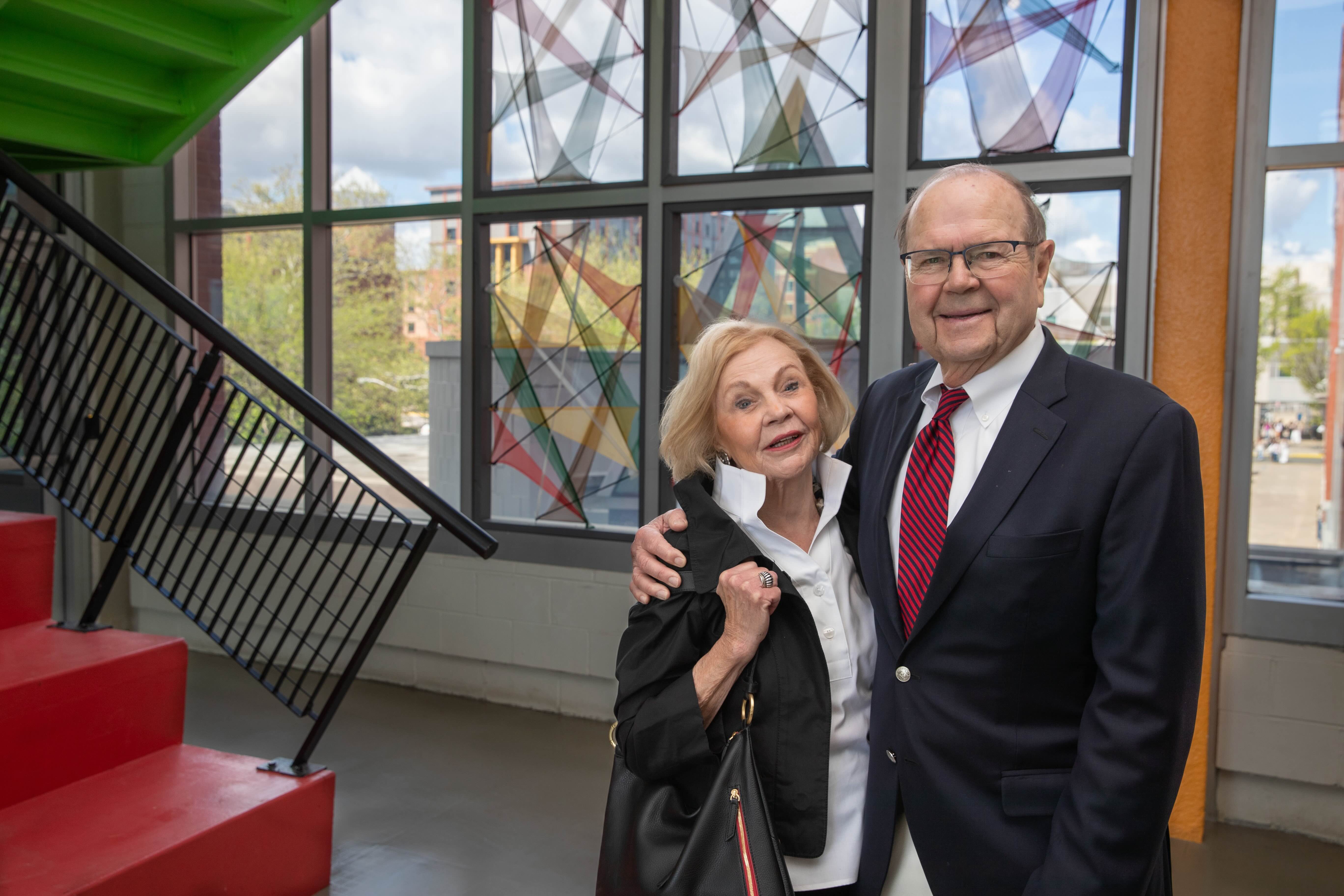
Ron Dooley remembers helping on his father’s milk route in Linden with the kind of hindsight that turns an old complaint into something like gratitude.
At 12, he was not especially eager to get up before dawn and do the work of Dooley’s Dairy. But what felt then like a chore now looks more like an education. His father’s one-man dairy operation taught Dooley not only discipline, but how to deal with people — how, as he put it, to work “with humanity.”
That sensibility carried him to Newark College of Engineering, where he earned a bachelor’s degree in industrial engineering in 1964, and then into the kind of stable technical career many graduates of that era would have recognized. He went to work at Public Service in electrical distribution, and the job gave him both professional footing and a path to further study, supporting the MBA he earned at New York University. The NJIT he knew was much narrower than today’s six-college nexus of innovation. But it gave him the rigorous technical training and the confidence to build from it.
Over time, Dooley built a successful career in medical supply manufacturing and, with his wife Carol, became a major supporter of both scholarships and the arts. Those commitments might seem separate at first glance. In his telling, they are not. NJIT helped launch his professional life. Experience taught him that success depends not only on technical skill, but also on vision, timing and opportunity. That belief now shapes two of the Dooleys’ most significant investments in the university: the Dooley Family Scholarship and the Arts@NJIT initiative housed in Hillier College of Architecture and Design, which is bringing School of Art + Design courses to students in every major across the university.
An Engineer’s Start
At the Newark College of Engineering Dooley attended in the early 1960s, the academic picture was simpler and more concentrated than it is now. As he remembered it, it was essentially engineering, full stop. It prepared him for a profession. It also gave him the kind of grounding that would later make risk feel possible.
For a time, his path looked conventional. Public Service offered the kind of path engineers kept for decades. He took advantage of a benefit that signaled a typical engineering career may not be for him when the company paid for graduate school. It allowed him to take night classes and earn an MBA from NYU. It was a dream arrangement: stable job, advanced degree, clear trajectory.
While he may not have been directly looking beyond, he said yes to an opportunity. At 29, with a wife and a one-year-old child, he moved to Michigan after a high school connection led what became Tri-State Hospital Supply, later Centurion Medical Products. It was not a small decision. He and Carol were East Coast people, he recalled with a laugh. Still, he took the chance, drawn by the possibility of building something of his own rather than waiting in line inside someone else’s organization.
The timing helped. Dooley entered the hospital supply business during a period of rapid health care expansion, and he understood that story as part skill, part circumstance. He spoke about Lyndon Johnson’s Great Society era and the growth of hospitals as the backdrop that made such a business possible. “Sometimes you’ve got to get lucky,” he said. “I think that’s a big part of it.”
Luck alone, though, does not explain a career spent designing and developing practical products for hospitals — necessary tools that keep complicated systems moving.
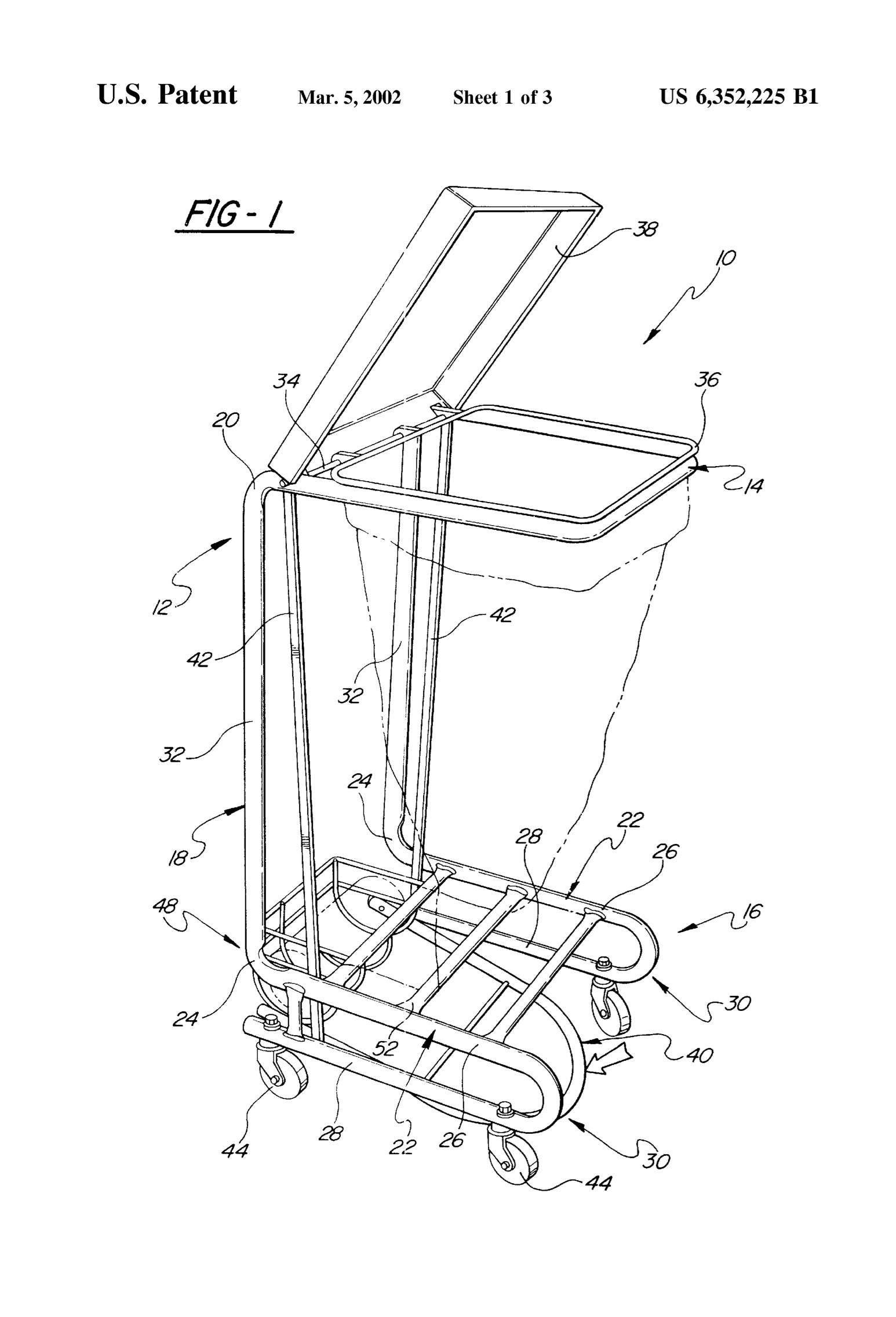
Dooley likes to point to one invention in particular: a hospital laundry and waste cart design that, decades later, he still spots in the background of medical dramas on television, like HBO’s “The Pitt.”
“You look around, you look at those carts that they have with the red bags and the yellow bags,” he said. “That’s my invention.” The line is funny, but it also suggests the kind of satisfaction he takes in practical ingenuity — the idea that something he helped create became part of the everyday workings of a hospital.
Arts@NJIT Will Help Students See Differently
If engineering taught Dooley how to solve problems, experience seems to have taught him that not every useful idea begins in a formula. When he talks about the arts now, he does not do so as a sentimental patron. He talks about perception — about what happens when engineers and scientists are invited to experience something other than calculation alone.
That is the thinking behind his belief in adding the “A” to STEM. During the interview, he reached for Gustav Klimt and Woman in Gold, describing the way a work of art can stay with a person not as an answer, but as an opening. “It’s sort of inspiring to look at things in a different way,” he said, “not just … with calculus or differential equations.” Art, in his formulation, plants “a seed in your mind.”
He does not turn that into a neat formula. Art is not a substitute for rigor, nor a tidy explanation for business success. But he does connect it to invention, saying his art background was among the inspirations behind the laundry cart design he still recognizes on screen. The point is not that art alone produced the idea. It is that creativity and engineering have never been as far apart as people sometimes pretend.
In that sense, Arts@NJIT is less a departure from Dooley’s life than a distillation of it. The initiative was established through a $2 million gift from Ron and Carol Dooley with NJIT and Hillier College intent on integrating the arts into the NJIT educational experience through courses, programming, visiting lecturer series and community engagement.
NJIT moved purposefully to ensure high impact. The first course offered, “Sketching for Art and Ideation,” was approved as a general education requirement class, a course designed to provide a breadth of knowledge and appeal to all undergraduates. Its first instance welcomed students majoring in computer science, business and biology, among others.
For Dooley, the deeper logic appears simpler: technical students should have the chance to encounter the kind of creative thinking that can broaden how they see the world.
He has watched the university evolve enough to appreciate what that means. The school he entered as Newark College of Engineering was, by his telling, a place of singular focus. Today’s NJIT is broader, with expanded offerings and a stronger emphasis on entrepreneurship than the one he knew as a student. If his own career was shaped by lessons he had to gather in sequence — engineering first, then business, then entrepreneurship, then a fuller articulation of what creativity can do — students now have more of those pathways visible from the start.
I’ve got to share some of this luck
Still, for all his enthusiasm about the arts, the deeper throughline in Dooley’s giving may be scholarship. He returned to it repeatedly. Long before Arts@NJIT, he and Carol had invested in educational access through the Dooley Family Scholarship, established in 2005 and supported steadily in the years since.
“Education has become so expensive,” he said. “I went to NCE. I didn’t have a student loan. My father was a milkman. He paid for three kids to go to college.” He carries that line with disbelief, but also conviction because his belief that now, more than ever, giving back is critical in the pursuit of expanding education.
What seems to move him most, though, is students themselves. Looking at scholarship recipient lists, he spoke with admiration about the number of names that reflected diverse backgrounds and families who had worked hard for a foothold — and success in this country.
And when he talks about giving, he tends to strip the idea down to its plainest terms. He does not make a grand theory of philanthropy. He talks instead about luck — being in the right place, having the right opening, recognizing the right chance when it arrived.
“I’m a lucky guy,” he said. “I’ve got to share some of this luck with other people.”
It is a modest explanation for a life that included technical training, entrepreneurial risk and real success. It may also be the clearest explanation for why he and Carol chose to give as they have: through scholarships that ease a path into college, and through Arts@NJIT, which advances a view Dooley holds strongly — that creative thinking is vital to professional success, and that students are better prepared for work when they are also taught to see differently.
It should widen the way students think, imagine and move through the world.
